Tesla Files to Buy German Machine Maker EMAG for Its Optimus Robots
Tesla has filed to buy German machine maker EMAG, in a move aimed at securing the precision gears its Optimus humanoid robots need. The filing was made public on November 27, 2026, and names Tesla as the buyer of EMAG assets. The deal is not done yet. Germany’s competition regulator must approve it first.
EMAG is based in Salach, a town near Stuttgart in southern Germany. The company builds machines that cut and shape metal parts, mostly for car drivetrains. Tesla wants that skill for a different reason: the small, exact gears inside robot joints.
What Tesla has filed to buy
Tesla submitted plans to the Bundeskartellamt, Germany’s Federal Cartel Office, to acquire EMAG assets. The filing is dated November 23, 2026, and carries the case number B5-132/26. It appeared in the regulator’s public list on November 27.
The filing is listed as “Tesla / EMAG-Gruppe (Vermögenserwerb)”. That last word means an asset purchase, not a straight takeover of the whole company. Tesla has not said which assets it wants, how much it will pay, or which Tesla company is the buyer. Tesla declined to comment.
No decision has been made. The cartel office has one month for a first-phase review. If the filing was complete when it was made, a decision would be due around December 23, 2026.

Tesla’s car business is changing fast at the same time. Tesla’s lineup shakeup dropped some models and refocused others this year, as the company shifts attention and money toward robots and driver-assistance technology. That driver-assistance technology faces a key EU vote on December 15.
Why EMAG’s machines matter
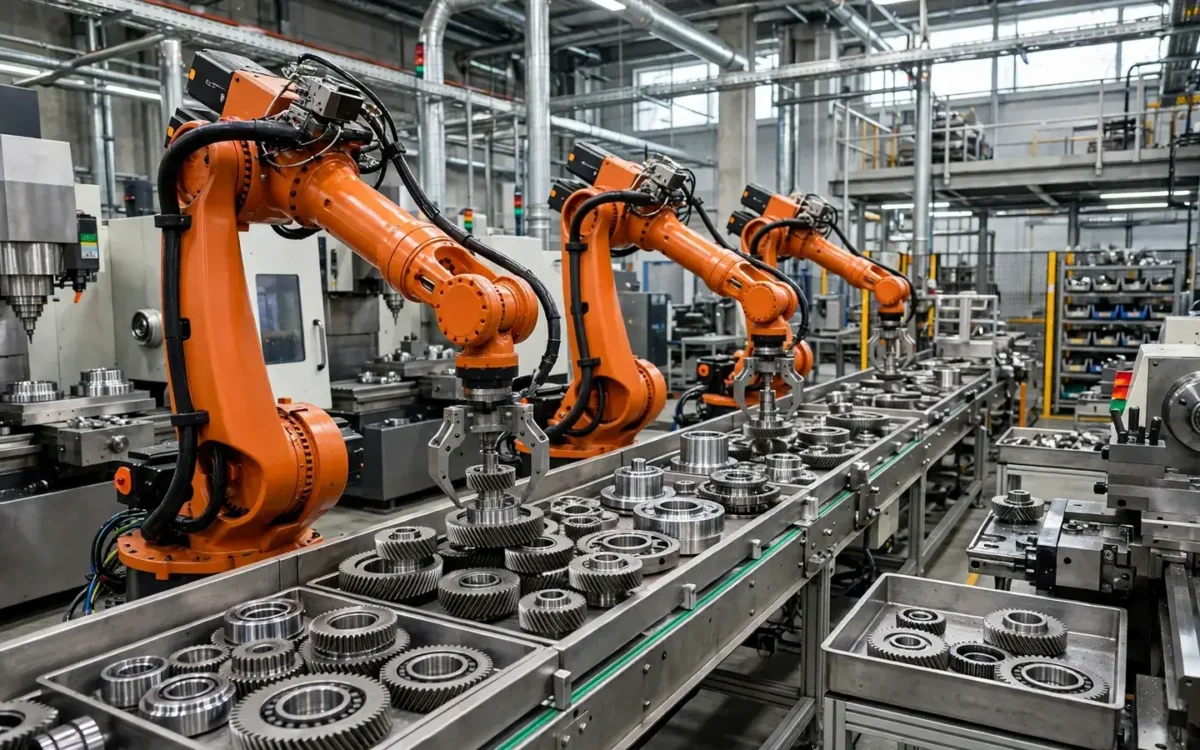
EMAG’s roots go back to 1867. It makes turning, grinding and gear-cutting machines. Most of its work serves car drivetrains, the parts that send power from a motor to the wheels. It also makes machines that produce parts for humanoid robot drive systems, including flexsplines, wave generators and planetary gears.
These are the small, strong gears that let a robot joint bend and turn smoothly in a tight space. A strain wave gear, the type used in robot joints, uses a flexible ring that bends to pass motion along. It is light, compact and exact, which is why robot makers use it.
On Tesla’s third-quarter earnings call in 2026, Elon Musk said the robot hand was Optimus’s main hardware problem. He also flagged custom gears as a worry for reliability. If a gear fails, the hand fails.

Optimus needs a lot of these parts. The 2022 design of the robot used 28 structural actuators per robot. An actuator is a part that turns power into movement. Each one needs gears that are small, strong and exact.
Tesla is installing a production line for Optimus in Fremont, California, designed to build one million robots a year. Early production has already begun. Humanoid robots are already moving into factories and warehouses, and the companies that can make them at scale will need their own supply of parts.
A new Tesla company at EMAG’s address
The filing follows an earlier step. In August 2026, Tesla registered a new company in Munich called Tesla Machining Technologies Management SE, with share capital of 120,000 euros. Its business address is Austraße 24 in Salach, the same address as EMAG’s headquarters.
The company was renamed from a shell called “Blitz 26-299 SE”, which was entered in the register on August 26, 2026. Its managers include Maximilian Stromberger, Tesla’s head of sales in Germany, a robotics engineer from the United States, and the head of human resources at Tesla’s Giga Berlin plant. The mix of names points to a plan that covers sales, robotics and hiring.
The registration was first reported by Electrek’s report on Tesla’s move at EMAG’s headquarters. Dealroom’s report on the cartel office filing then confirmed that Tesla had filed to buy EMAG assets.
What it could mean for EMAG’s workers
EMAG has had a hard run. It lost 42 million euros on revenue of 496 million euros in 2024. About a year ago it cut 455 jobs in Germany, including roughly 300 at Salach.
German media have reported that around 220 EMAG employees could move to Tesla. Neither company has confirmed that number, and it should be treated as a report, not a fact.
The picture is mixed. A sale could save skilled jobs at a loss-making company. But an asset deal can also leave parts of a business behind. Until Tesla says which assets it wants, workers will not know where they stand.
Tesla has bought German know-how before
This is not Tesla’s first German purchase. In late 2016 it bought Grohmann Engineering, a maker of factory automation systems. In early 2025 it took over part of the business of Manz, a machine maker in Reutlingen, along with about 300 staff. In 2023 it bought Wiferion, a wireless charging firm, and later sold it on.
The pattern is clear. When Tesla needs a skill it cannot build fast enough, it buys the company that has it. EMAG would fit the same pattern, this time for robot gears. For readers following the car industry closely, our wider car industry news tracks deals like this as they develop.
Tesla’s cars are also built around software, with updates sent over the air to cars already on the road. The same idea now applies to its robots: the hardware must be right before the software can do its job.
What happens next
The cartel office will now review the filing. If it clears the deal in the first phase, Tesla can move ahead. If it has concerns, it can open a deeper review, which would take longer.
The key questions are simple. Which parts of EMAG does Tesla want, what will it pay, and how many of EMAG’s people will it keep? None of those answers is public yet. What is public is the direction of travel: Tesla wants to build its robots at scale, and it wants the gear-making skill in-house to do it.
Frequently Asked Questions
Has Tesla bought EMAG?
No. Tesla has filed with Germany’s Federal Cartel Office for approval to buy EMAG assets. No decision has been made yet, and the first-phase review lasts one month.
Why does Tesla want a machine maker?
Tesla needs precision gears for the joints of its Optimus humanoid robots. Elon Musk said on the third-quarter earnings call that the robot hand is Optimus’s main hardware problem and that custom gears are a worry for reliability.
What does EMAG make?
EMAG makes turning, grinding and gear-cutting machines, mostly for car drivetrains. It also makes machines that produce parts for humanoid robot drive systems, including flexsplines, wave generators and planetary gears.
What happens to EMAG’s workers?
German media have reported that around 220 EMAG employees could move to Tesla, but neither company has confirmed that. EMAG lost 42 million euros in 2024 and cut 455 jobs in Germany about a year ago.