Kentucky-Built Toyota Camry Returns to Japan — and Costs Less There
The Toyota Camry Japan comeback is official, and it comes with a twist: after three years away, the sedan is returning to its home market as an American import. Toyota has brought the Camry back to Japan built at its Georgetown, Kentucky plant, with sales starting on December 23, 2026.
Toyota stopped selling the Camry in Japan in December 2023, after 43 years on sale there. The current generation is now coming back, but this time no Japanese factory builds it. Every Japanese-market Camry will be shipped across the Pacific from the United States.
Orders opened on November 25. The car is offered in two trims, the G at 4.3 million yen and the Z at 5.2 million yen, including consumption tax. At current exchange rates, that is about $27,000 and $32,700 — less than the equivalent cars cost in the United States.
Why is the Camry cheaper in Japan than in America?
The price gap is the most surprising part of the story. In the United States, the Camry LE starts at $29,700 and the XLE at $34,900, and those prices do not include destination and handling charges. The Japanese G trim, equivalent to the LE, costs about $27,000 with tax included. The Z, equivalent to the XLE, costs about $32,700.
Part of the difference is what is included. The Japanese price already includes local taxes, and Japan has no destination charges or acquisition fees. The price buyers see is the price they pay.
Exchange rates also play a role, and they can move. Even so, it is striking that a car shipped thousands of miles across the Pacific can undercut its home-market price. The Japanese Camry even undercuts the Honda Accord, which is built in Thailand and sells in Japan from about $37,400 to $40,000.
What has changed for Japanese buyers?
Toyota has not simply shipped American cars to Japan untouched. The returning Camry has been adapted for Japanese roads and drivers, with right-hand drive, a right-side turn signal stalk and a fully localised Japanese multimedia and navigation system.
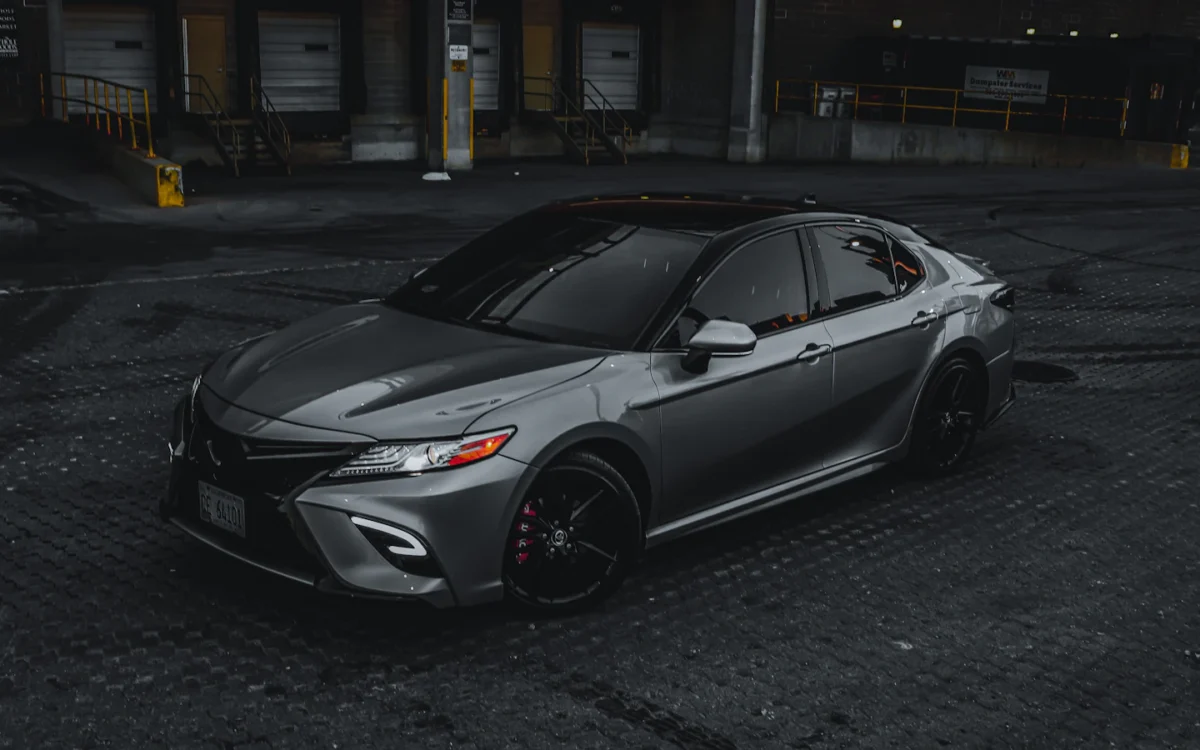
Equipment matches the American LE and XLE trims, with one notable exception: there is no all-wheel drive option in Japan, most likely because demand is low. Both trims have their badges deleted, and even the US-style side markers have been removed. The G trim gets darker painted wheels than the American LE.
Like all US-built cars sold in Japan under the recent trade arrangement, the Camry comes with a quality disclaimer. It warns buyers that the fit and finish may differ from usual Japanese domestic standards. Toyota is pushing back on that worry with the slogan “Made in the U.S., Made by Toyota,” calling the car an everyday premium sedan.
What powers the returning Camry?
Every Japanese Camry is a hybrid. A 2.5-litre naturally aspirated four-cylinder petrol engine works with an electric motor and an E-CVT gearbox, producing 225 horsepower through the front wheels.
The car measures 4,920 mm long, 1,840 mm wide and 1,450 mm tall. That is a large sedan by Japanese standards, where narrow streets and tight parking favour smaller cars. Toyota is counting on the Camry’s reputation and its hybrid efficiency to win buyers over.
The company is aiming for modest sales of about 850 cars a month, or roughly 10,000 a year. That is a small number for Toyota, but it reflects the reality that the Camry is now a niche product in Japan rather than a volume seller.
Why is Toyota doing this now?
The return is tied to trade politics. A July 2025 framework agreement between the United States and Japan allows US-certified passenger cars to be sold in Japan without extra testing. The Camry is the third American-built Toyota to use that route, after the Texas-built Tundra and the Indiana-built Highlander.
Toyota went further than the agreement required. Even though extra testing was not needed, the company still submitted the Camry to Japan’s Ministry of Land, Infrastructure, Transport and Tourism for official domestic vehicle type certification.
Chairman Akio Toyoda first hinted at the move in June 2026, saying that selling the US-made Camry in Japan could improve the trade balance a little and might invite a slight reconsideration of tariff issues. Toyota calls the arrangement a “win-win” amid trade challenges.
The timing fits a wider shift in the industry. Carmakers are pivoting back toward hybrids as EV demand cools and tariffs reshape trade, and hybrid SUVs such as the RAV4, CR-V and Tucson are winning buyers who want efficiency without range anxiety. The Camry, a hybrid-only sedan, sits squarely in that trend.
What does it mean for buyers?
For Japanese buyers, the Camry’s return offers something rare: a large, comfortable hybrid sedan at a price that undercuts its American equivalent. For American buyers, the story is a reminder of how trade flows are changing. A car built in Kentucky, by American workers, is now an import in its own brand’s home market.
There are risks. The quality disclaimer may put off buyers who expect Japanese-built precision, and 850 cars a month is a modest target that suggests Toyota itself is cautious. But if the car sells, it could open the door to more American-built Toyotas in Japan.
For now, the Camry is back where it started — just not built where it started. And for buyers comparing running costs, a hybrid sedan with no plug and no range anxiety remains one of the simplest ways to cut fuel bills.
More coverage of Toyota and hybrids can be found in our all Automotive News.
Small electric cars are gaining ground in Europe too — Suzuki has unveiled the Ignis EV, a tiny electric city car.
Frequently Asked Questions
When does the Toyota Camry go on sale in Japan?
Sales start on December 23, 2026, with orders having opened on November 25. The car returns after domestic sales ended in December 2023.
How much does the Camry cost in Japan?
The G trim costs 4.3 million yen (about $27,000) and the Z trim costs 5.2 million yen (about $32,700), including consumption tax. Both are cheaper than the equivalent LE and XLE trims in the United States.
Where is the Japanese-market Camry built?
It is built at Toyota Motor Manufacturing Kentucky in Georgetown, Kentucky, and imported to Japan as a fully built-up car. It is the first time Japanese-market Camrys have not been made in Japan.
What engine does the returning Camry have?
Every Japanese Camry is a front-wheel-drive hybrid, with a 2.5-litre petrol engine, an electric motor and an E-CVT gearbox producing 225 horsepower. There is no all-wheel-drive option in Japan.
Why is Toyota bringing an American-built car to Japan?
A July 2025 US-Japan framework agreement allows US-certified cars to be sold in Japan without extra testing, and Toyota says the move is a “win-win” amid trade challenges. The Camry is the third US-built Toyota sold in Japan, after the Tundra and Highlander.