

Compact Hybrid SUV Comparison: RAV4 Hybrid vs. CR-V Hybrid vs. Tucson Hybrid
Finding the best compact hybrid SUV in 2026 means choosing between three strong rivals. Toyota redesigned the RAV4 and made every one a hybrid, Honda refined the CR-V Hybrid again, and Hyundai sharpened the Tucson Hybrid on price and warranty.
All three seat five, all three offer all-wheel drive, and all three return real-world fuel economy in the high 30s or better. The differences are in the details: price, power, cargo room, warranty and how each one feels on the road.
Which compact hybrid SUV wins overall?
There is no single winner, because the three SUVs are built for different buyers. The RAV4 Hybrid wins on fuel economy and towing, the CR-V Hybrid wins on cabin refinement, and the Tucson Hybrid wins on price, power and warranty cover.
CreativeGuySteve’s review notes that Edmunds scored the new RAV4 8.1 out of 10 and ranked it third among small SUVs, behind the Tucson Hybrid and the Kia Sportage Hybrid. That ranking says a lot: the RAV4 is excellent, but its rivals are genuinely close.
If you want the lowest fuel bill, buy the RAV4. If you want the calmest cabin, buy the CR-V. If you want the most kit for the money, buy the Tucson. The rest of this guide proves each claim with numbers.
How much does each hybrid SUV cost?
The Weekly Driver’s 2026 comparison lists the RAV4 Hybrid from $33,350, the Tucson Hybrid from $32,450 and the CR-V Hybrid from $37,080. Those are starting prices with destination included, before tax, title and dealer fees.
The Review NYU checked the RAV4’s base price at $31,900 before a $1,450 destination fee. Add all-wheel drive to the base LE and the price rises to $33,300, so the cheapest RAV4 Hybrid with AWD costs about the same as the Tucson.
The CR-V Hybrid costs more because Honda sells it only in higher trims. CarWeek lists the hybrid range from $35,630 to $42,550, and the new TrailSport Hybrid sits near the top of that range.
Price gaps shrink once you compare like for like. A well-equipped Tucson Hybrid SEL costs about the same as a mid-range RAV4 XLE, while the CR-V Hybrid asks a premium at every trim level.
| Model | Starting price | Power | EPA combined mpg (AWD) | Cargo (seats up) |
|---|---|---|---|---|
| Toyota RAV4 Hybrid | $31,900 | 226–236 hp | 42 mpg | 37.8 cu ft |
| Honda CR-V Hybrid | $36,030 | 204 hp | 37 mpg | 36.3 cu ft |
| Hyundai Tucson Hybrid | $31,300 | 231 hp | 36 mpg | 38.7 cu ft |
Starting prices are US-market MSRP before destination, except where noted. Figures change by trim, so check current prices before buying.
How fuel-efficient is each one?
The RAV4 Hybrid is the efficiency leader. The EPA rates front-wheel-drive models at up to 44 mpg combined, and all-wheel-drive versions at 42 mpg combined, the best figures in this group.
The CR-V Hybrid trails it. The EPA rates the front-wheel-drive hybrid at 40 mpg combined and the all-wheel-drive version at 37 mpg combined, a gap that grows on long highway runs.
The Tucson Hybrid sits close behind the Honda. Its front-wheel-drive Blue trim returns 38 mpg combined, while most all-wheel-drive trims return 36 mpg combined.
The fuel gap is worth real money. CarThrive’s comparison works it out at 15,000 miles a year and $3.50 a gallon: about $1,250 a year for the RAV4 Hybrid against about $1,419 for the CR-V Hybrid.
Real-world tests back the EPA numbers. The Review NYU’s round-up of road tests reports Edmunds averaged between 35 and 40 mpg in its front-wheel-drive RAV4 on a long highway run, a strong result for a family SUV.
Which one is quickest?
The Tucson Hybrid is the quickest of the three on paper and in testing. Its turbocharged 1.6-litre engine and electric motor make 231 horsepower, and Autoblog estimates 0 to 60 mph in about 7.1 seconds.
The RAV4 Hybrid is close behind. Its 2.5-litre hybrid makes 226 horsepower with front-wheel drive and 236 with all-wheel drive, and Edmunds timed the front-wheel-drive car to 60 mph in 7.5 seconds.
The CR-V Hybrid is the least powerful here, with 204 horsepower and 247 lb-ft of torque. It still feels strong in town, because its electric motors deliver torque instantly from a standstill.
None of the three is fast by sports-car standards. The point is different: each one is quick enough for motorway merging, and the Tucson’s turbo gives it the easiest overtaking punch of the three.
Which has the most space for families?
The Tucson Hybrid has the most cargo room behind the rear seats, at 38.7 cubic feet. The RAV4 Hybrid follows at 37.8 cubic feet, and the CR-V Hybrid trails at 36.3 cubic feet.
Fold the rear seats and the order changes. The CR-V Hybrid opens up to 76.5 cubic feet, the most of the three, while the Tucson Hybrid reaches 74.8 cubic feet and the RAV4 Hybrid 70.4 cubic feet.
Rear legroom tells a similar story. The Tucson Hybrid offers up to 41.3 inches, the most in this group, while the CR-V Hybrid gives rear passengers 40.4 inches of legroom.
In practice, all three swallow a family holiday load. The Tucson wins the weekly shop, the CR-V wins the flat-pack furniture run, and the RAV4’s tall, square cargo area makes it the easiest to pack neatly.
Which is best to drive every day?
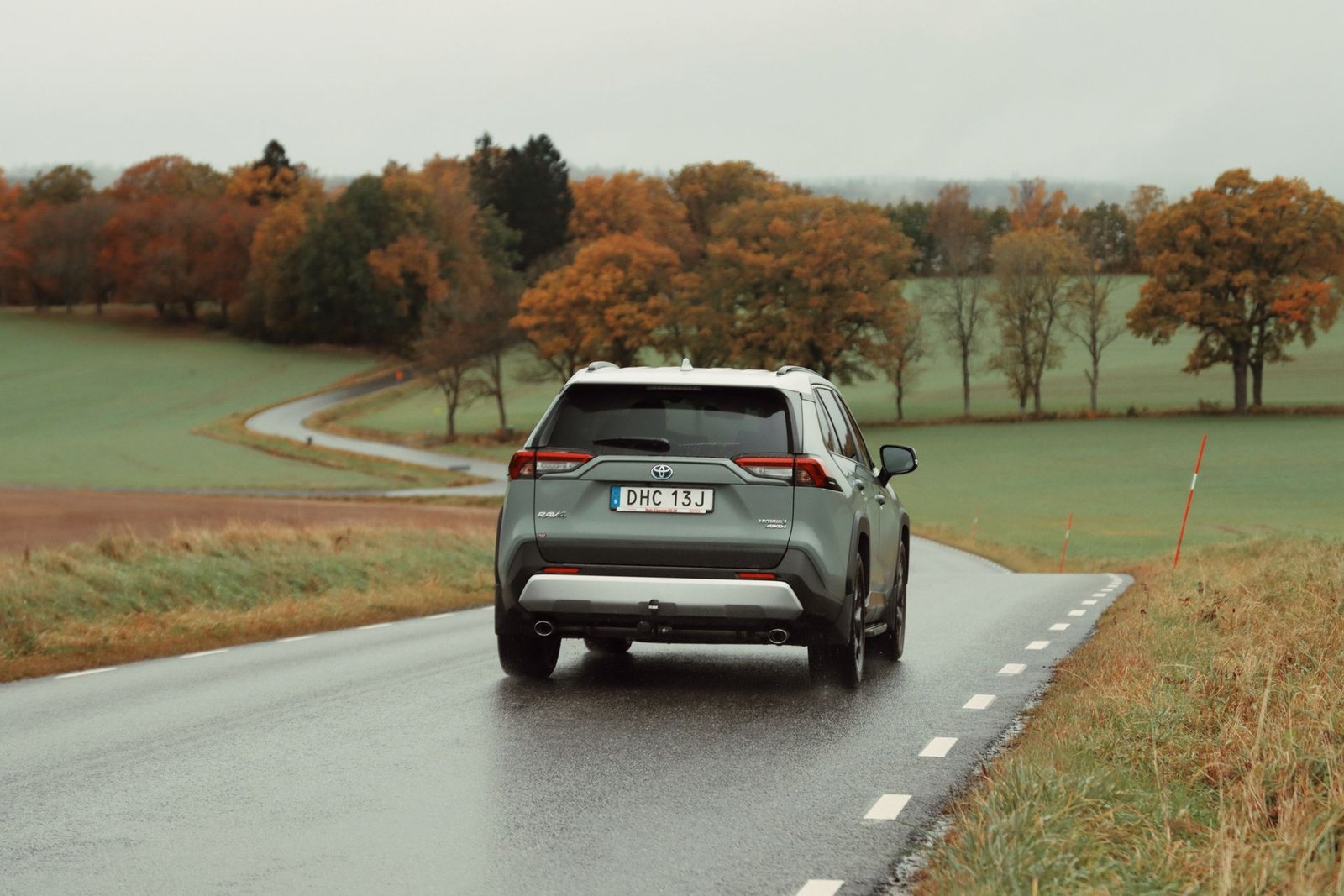
The CR-V Hybrid is the calmest of the three. Its ride is composed, its cabin is quiet, and its steering feels natural, which is why it has spent seven straight years on Car and Driver’s 10Best list.
The RAV4 Hybrid is the most improved. Edmunds gave the redesigned model 8.1 out of 10, praising its new infotainment and stronger performance, but noted its ride is less refined than expected.
The Tucson Hybrid is the most engaging to drive. Its turbo engine pulls harder at motorway speeds, and its conventional six-speed automatic feels more natural than the continuously variable transmissions in its rivals.
Towing separates them sharply. AutoEdgeView’s 2026 comparison lists the RAV4 Hybrid towing up to 3,500 pounds with all-wheel drive, the Tucson Hybrid up to 2,750 pounds, and the CR-V Hybrid up to 1,500 pounds.
Our Car Reviews coverage will keep testing each new model year as it arrives, because small updates to power, efficiency and equipment can change this ranking.
What about safety tech and screens?
Every RAV4 Hybrid comes with Toyota Safety Sense 4.0, the brand’s newest driver-assist suite. A 10.5-inch touchscreen is standard, with a 12.9-inch display available on higher trims.
The CR-V Hybrid carries Honda Sensing on every trim, with adaptive cruise control, lane keeping and automatic emergency braking. CarPro’s TrailSport review notes the new TrailSport Hybrid adds a 10.2-inch digital driver display.
The Tucson Hybrid gives every buyer a 12.3-inch touchscreen with wireless Apple CarPlay and Android Auto. Its Highway Driving Assist system adds semi-automated steering and speed control on motorways.
Screen size is not the whole story. The RAV4’s new infotainment earned Edmunds’ highest tech score in its review, while the Tucson’s dual 12.3-inch displays look the most modern of the three.
Which warranty protects you longest?
Hyundai’s warranty is the longest in the business. The Tucson Hybrid gets a five-year, 60,000-mile basic warranty and a 10-year, 100,000-mile powertrain and hybrid-component warranty.
Toyota covers the RAV4 Hybrid for three years or 36,000 miles basic and five years or 60,000 miles on the powertrain. Edmunds’ review notes the same three-year, 36,000-mile basic cover in its ownership breakdown.
Honda matches Toyota on basic cover: three years or 36,000 miles, and five years or 60,000 miles on the powertrain. AutoEdgeView’s TrailSport review puts the hybrid battery at eight years or 100,000 miles, rising to 10 years or 150,000 miles in CARB states.
Warranty length matters most for long-term owners. A Tucson Hybrid buyer keeps powertrain cover for twice as long as a RAV4 or CR-V buyer, which is worth real money after year five.
What does each hybrid SUV cost to own for five years?
Purchase price is only part of the bill. Fuel, insurance, maintenance and depreciation decide what each SUV really costs, and the RAV4 Hybrid’s fuel advantage grows with every mile you drive.
Fuel is the clearest gap. CarThrive’s fuel-cost maths puts the RAV4 Hybrid at about $1,250 a year and the CR-V Hybrid at about $1,419, a difference of roughly $850 over five years.
Warranty cover changes the maintenance maths. The Tucson Hybrid’s 10-year powertrain warranty means a major repair in year seven is Hyundai’s problem, while a RAV4 or CR-V owner pays out of pocket after year five.
Resale value favours Toyota and Honda. Both brands hold their value better than most rivals, which softens the CR-V Hybrid’s higher purchase price when you sell.
The Tucson closes the gap with its lower starting price and longer cover. For buyers who keep a car for a decade, that warranty is worth more than a small fuel-economy edge.
Which hybrid SUV should you buy?
Buy the RAV4 Hybrid if fuel economy and towing matter most. It is the cheapest to run, the strongest tow vehicle here, and the redesigned cabin finally matches its rivals for tech.
Buy the CR-V Hybrid if you want the calmest family car. Its cabin is the quietest, its rear seats are the roomiest for adults, and its seven-year 10Best run shows reviewers keep choosing it.
Buy the Tucson Hybrid if you want the most for your money. It is the cheapest, the quickest, the roomiest behind the rear seats, and its warranty covers you for a decade.
Whichever you choose, test-drive all three back to back. The spec sheets are close, but the driving feel, seat comfort and screen layouts are not, and those are the things you live with every day.
A final check before you sign: compare insurance quotes for all three. The RAV4 Hybrid’s popularity can mean higher premiums in some areas, while the Tucson’s lower price usually means a lower quote.
For more on the segment, see our Automotive coverage and our electric vehicles coverage, where the plug-in RAV4 Hybrid is a different story again.
Frequently Asked Questions
Which is the best compact hybrid SUV for 2026?
For most buyers, the RAV4 Hybrid edges it on running costs, with the best fuel economy and the strongest towing. The Tucson Hybrid is the better buy if you keep cars for a decade, thanks to its price and warranty.
How much does a 2026 RAV4 Hybrid cost?
The RAV4 Hybrid starts at $31,900 before a $1,450 destination fee, or $33,350 with destination included. The range runs to $43,300 for the top Limited AWD trim.
Is the CR-V Hybrid more expensive than the RAV4 Hybrid?
Yes. The CR-V Hybrid starts at about $36,030, roughly $4,000 more than the RAV4 Hybrid, because Honda sells the hybrid only in higher trims. The gap narrows once you compare similarly equipped models.
Which hybrid SUV has the best warranty?
The Tucson Hybrid, by a wide margin. Hyundai covers it for five years or 60,000 miles basic and 10 years or 100,000 miles on the powertrain and hybrid components, double the powertrain cover of its rivals.
Do any of these hybrids qualify for a federal tax credit?
No. The federal clean vehicle credit applies only to plug-in vehicles, and all three of these are standard hybrids. The RAV4 Plug-in Hybrid is a separate model with its own pricing.
Sources: The Weekly Driver, CarThrive, The Review NYU, CreativeGuySteve, CarPro, AutoEdgeView and CarWeek. Figures are as reported by those publications as of 25 November 2026.
Prices and specs are US-market 2026 guide figures — check current prices and specs before buying. The photos are stock images for illustration only.