
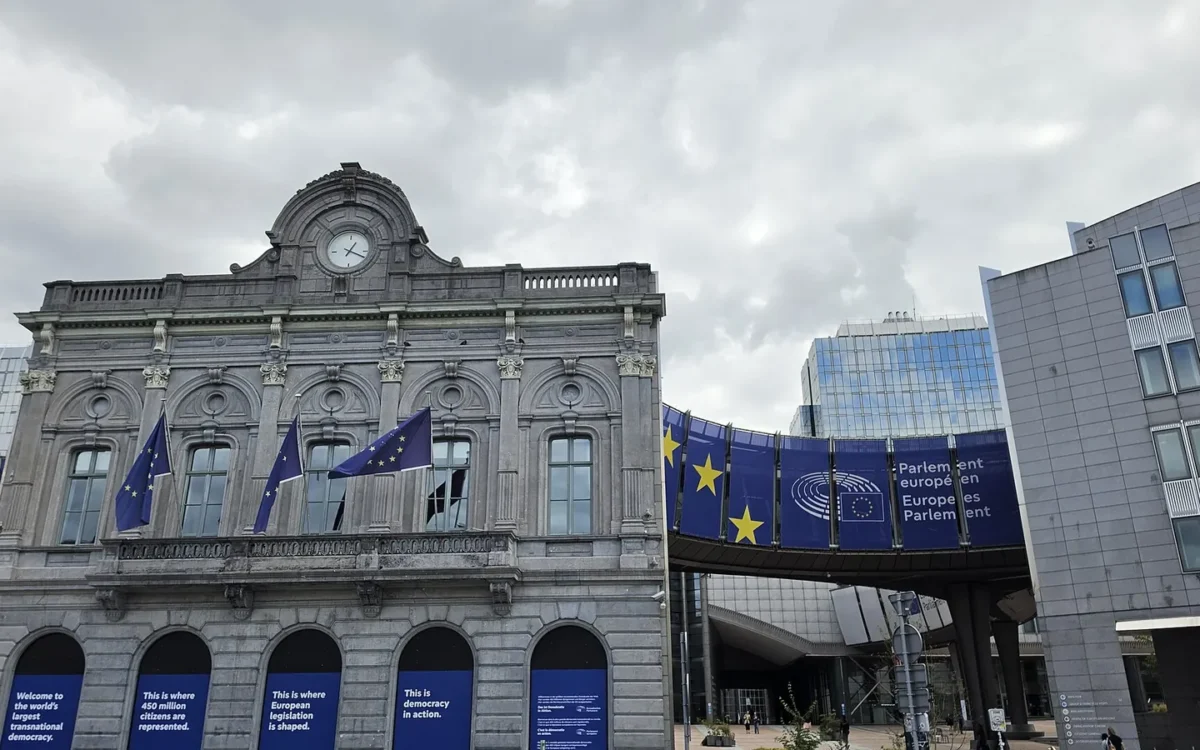
EU Summit Ends Without Deal on Budget or Ukraine Loan
European Union leaders ended a special summit in Brussels early on Friday, November 27, 2026, without agreement on the bloc’s next seven-year budget or a new loan of up to 45 billion euros for Ukraine. After more than 12 hours of talks, Council President António Costa gave reporters a blunt verdict: “We didn’t reach an agreement.”
The failure leaves two of Europe’s biggest decisions hanging. Leaders will try again at a summit on December 17 and 18, with Costa warning that a deal must be reached by the end of the year.
What the leaders failed to agree
The summit was called to settle two linked questions: the size of the EU’s next long-term budget, known as the multi-annual financial framework, and a European Commission proposal to lend Ukraine up to 45 billion euros in 2027, on top of a 90 billion euro loan already agreed for 2026 and 2027.
Costa had tabled a compromise putting the budget at about 1.78 trillion euros, roughly 10 percent below the Commission’s original proposal of almost 2 trillion euros. It included about 140 billion euros to repay pandemic-era borrowing and a 100 billion euro envelope for Ukraine over seven years. Even that trimmed plan was too much for some governments and too little for others.
Seven countries that want a smaller budget, including the Netherlands, Finland and Sweden, pushed for deeper cuts, while 17 countries that rely on EU farm and regional funds resisted cuts to those programmes. Dutch Prime Minister Rob Jetten said the proposal was “not acceptable for Dutch taxpayers.” German Chancellor Friedrich Merz said it was “not a basis for a conclusion,” because the overall size was still too high.
Italian Prime Minister Giorgia Meloni, who led the group defending farm and regional spending, was blunter: “We’re light-years away from a solution,” she told reporters during a break in the talks.
Why the Ukraine loan is stuck
The proposed loan would cover nearly two-thirds of Ukraine’s expected funding gap of about 70 billion euros next year. Up to 25 billion euros would go to military aid and up to 20 billion euros would support the Ukrainian government budget. The money would be raised on capital markets and guaranteed by the EU budget, and Ukraine would repay it only once Russia pays war reparations.
After the summit, Costa said 24 of the 27 member states backed the loan proposal. Bulgaria said it would take part only in the non-military part. That left Hungary, Slovakia and Czechia as the holdouts. The three had already opted out of the earlier 90 billion euro loan, and they want the same treatment this time.
Merz has tied the two questions together. Ahead of the talks, he threatened to hold up a budget deal unless all member states made a collective commitment to Ukraine. Estonia, Lithuania, the Netherlands, Luxembourg, Slovenia and Denmark backed the German position. Czech Prime Minister Andrej Babiš called the idea of linking budget money to Ukraine contributions “completely absurd.”
President Volodymyr Zelenskyy said on November 24 that Ukraine will need 115 billion euros in outside financial support in 2027, as Russia’s war in Ukraine continues to drain Kyiv’s budget. Non-EU partners, including Britain, Norway, Japan, Switzerland and Canada, are expected to add about 25 billion euros next year, but that still leaves the EU loan as the largest single piece of the plan.
What the budget fight is really about
The budget row is about more than numbers. The seven-year plan sets what the EU can spend on farming, poorer regions, defence, climate policy and support for partners such as Ukraine. It is worth only about 1 to 1.2 percent of the bloc’s combined national income, but it shapes what the EU can do as a whole.
Net contributors such as Germany and the Netherlands say they will no longer accept higher bills while their own national debts rise. Net beneficiaries such as Poland and Romania say the same rising debts make cuts harder to accept. Costa also proposed new EU-wide taxes, including a levy on digital services, to cut reliance on national contributions, but leaders could not agree on those either.
The talks broke down late on Thursday when the frugal camp walked out, saying further talks would not bring them closer to a deal.
Trade pressures add to the strain. Tariffs imposed by the United States on 14 trading partners have forced European governments to rethink export earnings, while tensions in the Strait of Hormuz keep energy markets on edge. Both squeeze the same budgets leaders are arguing over.
What happens next
Costa will draw his conclusions from the summit in the coming days and consult capitals again before the December meeting. He has said a new budget must be in place by January 1, 2028, so a final agreement is needed by the end of this year. Merz has already said the 204 billion euro cut in Costa’s compromise “will not stop at 204 billion.”

French President Emmanuel Macron set an end-of-year deadline of his own. He said he would sign “a good agreement” in December, but added that after December 31 it would not be possible to reopen or conclude the budget talks. France holds a presidential election in April, and far-right frontrunner Marine Le Pen has pledged to end French financial help for Ukraine and cut France’s EU contributions. That deadline gives the December summit a hard edge, and the French vote is one of several European elections our World News reporting will follow next year.
The European Parliament has already rejected the proposed budget size, arguing that the cuts would weaken investment in security, farming and social programmes. It wants a budget worth 1.27 percent of EU gross national income, excluding pandemic debt repayments, while Costa’s proposal sits below 0.97 percent. Any deal also needs the Parliament’s consent, so leaders cannot settle the matter among themselves.
For now, the summit outcome adds to a run of difficult European decisions this year. Ukraine’s government must plan its 2027 budget without knowing whether its largest expected source of outside money will arrive. Costa’s team will spend the next three weeks trying to turn 24 countries’ support for the loan into a deal all 27 can sign.
Frequently Asked Questions
What did EU leaders fail to agree at the Brussels summit?
They failed to agree on the EU’s next seven-year budget for 2028 to 2034 and on a proposed loan of up to 45 billion euros for Ukraine in 2027. After more than 12 hours of talks, Costa said, “We didn’t reach an agreement.” Leaders will try again on December 17 and 18.
How much is the proposed Ukraine loan, and what would it pay for?
The Commission proposed lending Ukraine up to 45 billion euros in 2027: up to 25 billion for military aid and up to 20 billion to support the government budget. The money would be raised on capital markets, guaranteed by the EU budget, and repaid only once Russia pays war reparations.
Which countries are holding out on the Ukraine loan?
Hungary, Slovakia and Czechia are the holdouts. They opted out of the earlier 90 billion euro loan and want the same exemption from the new one. Bulgaria said it would take part only in the non-military part. The other 24 member states backed the proposal, according to Costa.
Why does the budget need to be agreed by the end of the year?
The new budget must be in place by January 1, 2028, so Costa says a final agreement is needed by the end of this year. Macron has said it will not be possible to reopen or conclude the talks after December 31, and elections next year, including France’s presidential election in April, could make a deal harder.