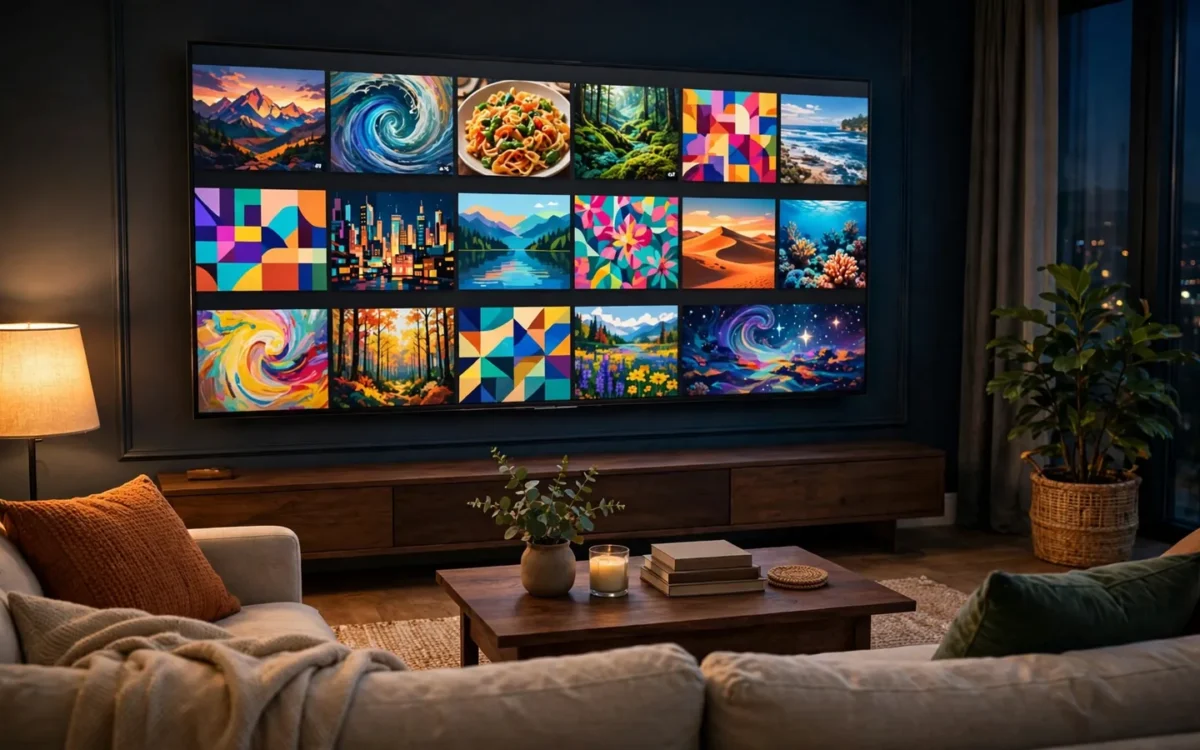
Imagine switching on the television and finding a channel made only for you. Not a channel you chose — a channel built for you, scene by scene, by artificial intelligence. That is the idea behind the Google AI video patent called My Channel, filed in May 2025 and published last week. It has already been rejected.
The patent describes a system that would take what Google knows about a viewer — their age, where they are, what they have watched, what is happening in the news and in sport, even what they post on social media — and turn it into prompts for a large language model. The model would then generate video, on Google’s servers, tailored to that one person. The Verge reported that the idea was spotted by the patent-watching site Patentlyze, and that the US Patent Office has rejected the application. Google can appeal, or file an amended version.
How would My Channel work?
The system starts with data. Demographic details, viewing history, an IP address and GPS location, the viewer’s age, the latest news and sports scores, and activity on social media would all feed into prompts. Those prompts would go to a large language model, which would generate video to match. The result would be a personal channel: not a list of recommendations, but new video made for one viewer.
The patent goes further than short clips. It suggests the system could churn out entire films, in different genres, and that it could connect to other streaming services as well. And the most striking detail is the starring role. The system could create a digital avatar of the viewer — built from their photos, videos and audio — and put that avatar at the centre of the story as the protagonist.
What would you actually watch?
The examples in the report give a flavour of the ambition. Christopher Nolan’s The Odyssey and Ash Koosha’s Odysseus: The Fall are cited as the kind of epic a viewer might be offered — and then receive, in a version shaped around them. A viewer could ask for a film in a genre they love and get one made on the spot, in a style they prefer, starring a version of themselves.
That is also where the idea starts to look strange. A film made for an audience of one is not really a film at all — it is a mirror. And a mirror does not surprise you.
Why did The Verge call it bleak?
The Verge’s verdict was unsparing. It called the idea a “panoptic JibJab” — a reference to the site that pastes your face into silly videos — and a bleak picture of entertainment’s future. The worry, as The Verge sees it, is not that the videos would be bad. It is that they would be too well aimed: a feed that only ever shows you more of what you already like, and never anything that challenges you.
There is a real argument behind the joke. Audiences are already drifting away from Google’s defaults towards feeds that show them more of the same, and personalisation has a habit of narrowing what people see. A channel built entirely from your own data would be the endpoint of that trend — television that never disagrees with you.
It is worth saying plainly that this is The Verge’s view, not a fact about the technology. A personal channel could also be a delight — a film that speaks your language, a story set where you live. The patent does not settle that argument. It just makes it concrete.
Why was the Google AI video patent rejected?
A rejection is not the end of the story. The patent office rejected the application, and Google may appeal or resubmit an amended version. Patents are also often broader than the products a company actually builds — they are a claim on an idea, not a product announcement. Google has not said it will build My Channel, and a rejected patent is not a launch plan.
Still, the direction of travel is clear. AI video is improving fast, and every big platform is looking for ways to keep viewers watching. Even AI leaders are warning about overblown AI claims, and the gap between a patent drawing and a product on your television is usually years wide. My Channel is best read as a signpost, not a schedule.
What happens next?
Three things are worth watching. The first is whether Google appeals the rejection or files a new version — that will show how much the company cares about the idea. The second is whether any of this appears in products people actually use, such as YouTube or Google TV, where personalisation already shapes what billions of people watch. The third is whether other companies file similar patents, which would tell us the idea is in the air rather than a one-off.
Around the same time, Kagi Mail launched as a paid alternative to Gmail — a small company betting that some people want less of Google, not more of it. The contrast is the story: one vision of the future builds a channel around you, and another lets you pay to step outside the bundle. Both are bets about what viewers actually want.
Frequently Asked Questions
What is the Google AI video patent?
It is a patent for a system that would generate AI video channels personalised to each viewer, using their demographic data, viewing history, location, age, news and sports scores, and social media activity.
Has Google been granted the patent?
No. The application was rejected, and Google may appeal or file an amended version.
Would My Channel replace Netflix or YouTube?
Not as described. The patent says the system could connect to other streaming services. It is an idea in a patent, not a product Google has announced.
Would I really star in the videos myself?
The patent describes digital avatars of the viewer as the protagonist, built from the viewer’s photos, videos and audio.
When could something like this exist?
There is no date. AI video is advancing quickly, but this patent is not a launch plan, and Google has not said it will build My Channel.
Sources
- The Verge — Google’s patent for custom AI video feeds paints a bleak picture of entertainment’s future — https://www.theverge.com/entertainment/1042221/google-my-channel-ai-video-patent