The Central Intelligence Agency and the Office of the Director of National Intelligence have discovered a cybersecurity breach that exposed some unclassified information, Reuters reported, citing a person familiar with the matter. The New York Times first reported the intrusion.
The CIA cybersecurity breach hit a network used to draw intelligence insights from public, unclassified material — the open-source side of the intelligence world. It is not clear exactly what was compromised, and information belonging to other government agencies is also believed to have been exposed.
What was hit in the CIA cybersecurity breach?
The intrusions affected the network that looks for intelligence insights in public, unclassified material. Open-source intelligence — information gathered from news reports, social media, satellite images and other public sources — has become a large part of modern spying, and the network that processes it is a target precisely because it sits outside the classified world.
What was actually taken is not clear. Reuters, citing the person familiar with the matter, said it was not clear specifically what unclassified material was compromised. Information at other government agencies is also believed to have been exposed, which suggests the intruders moved beyond the CIA and the ODNI — or that the network they reached touches more than one agency.
What was not affected?
Classified systems, according to the ODNI. The office said there were “no disruptions to critical capabilities or classified systems.” That is the most reassuring line in the story so far, and it is also the limit of what officials have said: no detail on what was taken, and no detail on how the intruders got in.
The distinction matters. Unclassified information can still be sensitive — it can reveal what the United States is watching, and how it watches it — but it is not the same as the loss of classified material. The breach is serious without being, on the evidence so far, a compromise of the intelligence community’s core secrets.
How did the breach happen?
That is not known. The Times report did not say how the breach occurred, and neither the CIA nor the ODNI has described the method. Fox News reported that hackers breached the CIA, the ODNI and the FBI on the same day using Artex, an AI hacking tool — but that account has not been confirmed by Reuters or the Times, and it should be treated as a claim, not a fact.
AI’s spread cuts both ways. The same technology that powers a new generation of video — Google has patented a system that would generate personal TV channels — is also being turned into tools for breaking into systems. The FBI has warned about weaponised AI agent frameworks being used in cyberattacks, and the reported use of an AI tool here, if confirmed, would fit that pattern.
Why does this keep happening?
Because this is not a one-off. The breach is the latest in a series of technology outages and cyber incidents across the US government, including a breach at the Department of Agriculture. Two separate breaches recently disclosed at the FBI, the Pentagon and the Department of Homeland Security also caught up those agencies. Recent outages have put US infrastructure under scrutiny, and the pattern suggests the problem is not one agency’s security but the scale of the target: thousands of systems, many of them old, holding information that hackers want.
The private sector is not immune either. A supply-chain hack hit 178 websites through the Optimizely platform, a reminder that a single weak link can expose many victims at once. The government incidents follow the same logic at a larger scale.
What happens next?
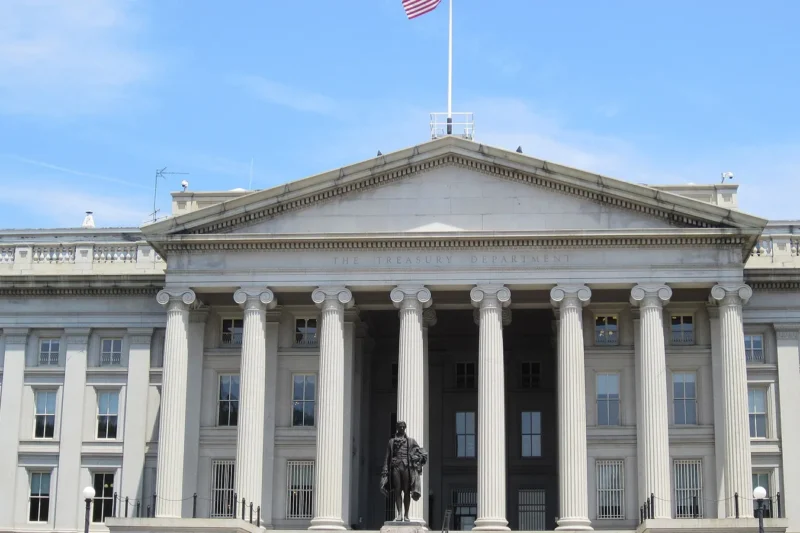
An investigation will determine the scope: what was taken, from where, and by whom. The FinCEN incident disclosed the same week — the Treasury’s financial intelligence unit took systems offline after unauthorised access — is not known to be related, and officials have not said the incidents are connected.
What to watch: whether the government says more about what was compromised, whether the intruders are identified, and whether the incidents turn out to be linked. The questions officials will face include whether an unclassified network that carries intelligence work was protected to the same standard as the classified systems it sits alongside. Until then, the honest summary is a narrow one: an unclassified network was breached, classified systems were not disrupted, and much of the story is still unknown.
Frequently Asked Questions
What happened in the CIA cybersecurity breach?
The CIA and the Office of the Director of National Intelligence discovered a breach that exposed some unclassified information on a network used for open-source intelligence. The New York Times first reported it, according to Reuters.
Was classified information exposed?
According to the ODNI, there were “no disruptions to critical capabilities or classified systems.” It is not clear what unclassified material was compromised.
What is an open-source intelligence network?
It is a system for drawing intelligence insights from public, unclassified material such as news reports, social media and satellite images.
How did the hackers get in?
It is not known. The Times report did not say how the breach occurred. Fox News reported that an AI hacking tool called Artex was used, but that account is unconfirmed.
Is this connected to the FinCEN incident?
It is not known to be related. FinCEN disclosed its own cybersecurity incident the same week, and officials have not linked the two.
Sources
- Reuters — US CIA, ODNI suffer cybersecurity breach of some unclassified information — https://www.reuters.com/world/us-cia-odni-suffer-cybersecurity-breach-some-unclassified-information-nyt-2026-11-24/
- Fox News — CIA suffers cybersecurity breach, unclassified info reportedly exposed (video) — https://www.foxnews.com/video/6408890098112