Retail Media Networks Explained: Why Amazon, Walmart, and Target Ads Are Surging
Retailers used to make money by selling products. Now some of their fastest-growing income comes from selling ads next to those products.
That shift has a name: retail media networks advertising. Brands pay retailers to reach shoppers at the exact moment they are ready to buy.
US advertisers are forecast to spend $71.09 billion on retail media in 2026, up 17.8% on 2025, according to eMarketer’s December 2025 forecast.
Amazon, Walmart and Target sit at the centre of the surge. Together with a long tail of smaller networks, they are changing how advertising budgets are planned.
What is a retail media network?
A retail media network is an advertising platform run by a retailer. It sells ad space on the retailer’s own website, app, stores and partner channels.
The retailer brings something other media cannot offer: first-party data on what people actually buy. That data comes from logged-in shoppers, loyalty cards and till receipts.
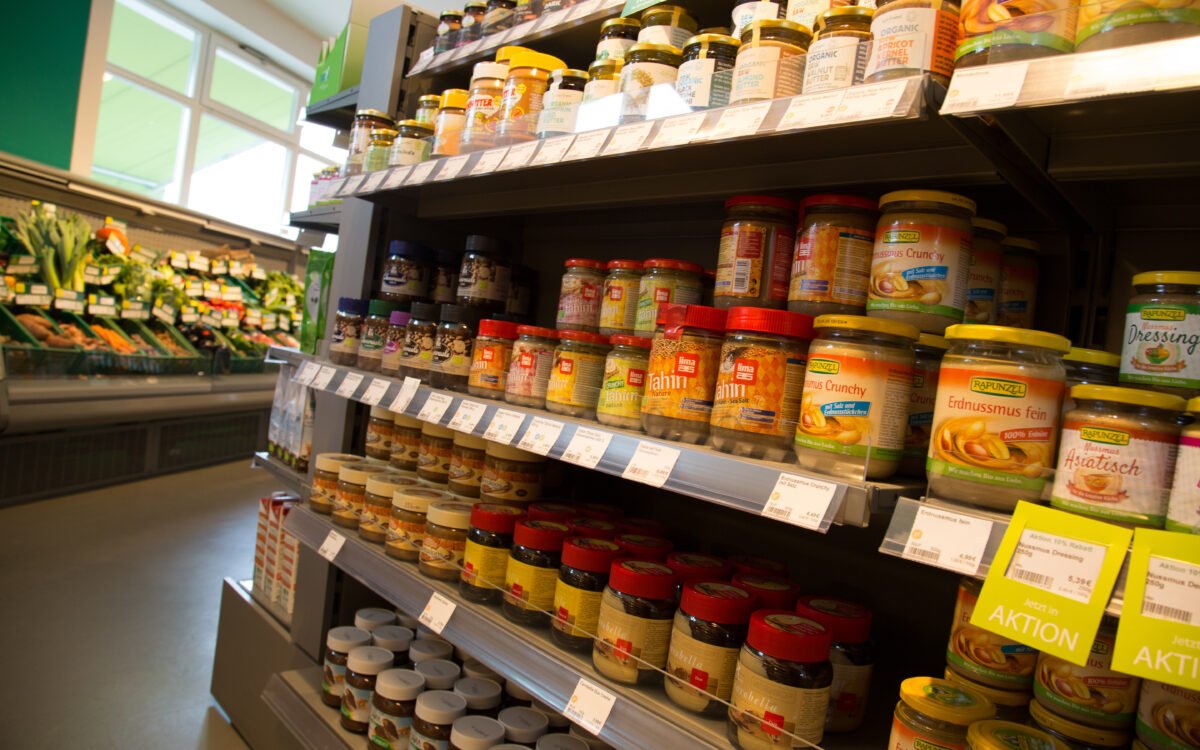
Ads appear where shopping happens. Sponsored listings sit at the top of search results, display banners run on category pages, and screens play ads inside physical stores.
The model is different from search or social advertising. Search knows what people look for, and social knows what they like, but retailers know what they purchase.
That purchase data is the reason brands are shifting budgets. An ad shown to a shopper who is already comparing products is worth more than one shown to a casual scroller.
How big is retail media advertising in 2026?
Retail media is now one of the largest channels in digital advertising. Its growth is outpacing both search and social, even as the wider ad market slows.
| Measure | Figure | Source |
|---|---|---|
| US retail media spend, 2026 forecast | $71.09 billion, up 17.8% | eMarketer, December 2025 forecast |
| US retail media spend, 2025 | $60.32 billion | eMarketer estimate |
| Global retail media spend, 2026 forecast | $200.4 billion | WARC, August 2026 |
| Amazon share of US retail media, 2025 | 79.7% | eMarketer |
| Walmart share of US retail media, 2025 | 8.0% | eMarketer |
| Target share of US retail media, 2025 | 1.5% | eMarketer |
| Retail media networks operating worldwide | 277 | Counted November 2025 |
The scale is striking, but the concentration is the real story. Two companies take almost all of the growth, while hundreds of smaller networks share the rest.
Amazon and Walmart together are expected to capture 89% of the incremental retail media dollars in 2026. That is about $9.42 billion of the $10.53 billion in new spending.
Growth is expected to cool slightly from here. WARC expects global retail media growth of 11.5% in 2027, slower than 2026 but still healthy for a channel of this size.
Forrester projects global retail media spending will reach $312 billion by 2030, up from $184 billion in 2025. The channel is maturing, not fading.
Why are Amazon, Walmart and Target ads surging?
The three leaders are surging for the same reason: they own the shopper. Each one turns its own traffic, search data and sales records into advertising inventory.
Amazon is by far the largest. Its advertising services revenue reached $68.6 billion in 2025, and it kept growing through 2026.
Amazon reported $17.2 billion of advertising revenue in the first quarter of 2026, up 24% year over year. The second quarter brought $19.8 billion, and the third $19.6 billion.
The PYMNTS report on retailers selling ads around the shopping cart puts the gap in plain terms: advertising is growing far faster than the retailers’ core sales.
Walmart is the fastest-growing challenger. Its global advertising business generated nearly $6.4 billion in fiscal 2026, up 46% on the year before.
Walmart Connect, its US advertising arm, grew 41% in the holiday quarter, excluding its VIZIO television business. Growth stayed strong into fiscal 2027, at 44% in the first quarter.
Target is smaller but still growing fast. Its advertising revenue reached $915 million in 2025, up from $649 million in 2024 and $522 million in 2023.
In the second quarter of 2026, Target’s advertising revenue was $279 million, up 29% year over year. Most of that comes through Roundel, its advertising business.
All three benefit from the same tailwind. Third-party cookies are fading, so advertisers are paying more for environments built on real, logged-in shoppers.
How does Sponsored Products advertising actually work?
Sponsored Products is the workhorse format of retail media. It puts a brand’s product at the top of search results inside a retailer’s store.
A shopper searches for a product, and sponsored listings appear above or beside the organic results. The brand pays only when the shopper clicks.
The auction works like search advertising. Brands bid on keywords, and the retailer ranks ads by a mix of bid, relevance and expected sales.
Relevance matters more here than in ordinary search. A retailer wants the ad to convert, because a sale earns it both the ad fee and the product margin.
Amazon Sponsored Products clicks rose 23% in the fourth quarter of 2025, while cost per click fell 1%, according to the Mediovsky analysis of the retail media duopoly. Demand is rising without pushing prices up.
Beyond sponsored listings, networks sell Sponsored Brands, which promote a brand’s whole range, and display and video ads across the retailer’s site and app.
Larger brands also buy through a demand-side platform. That lets them use the retailer’s purchase data to target ads on other websites, apps and connected television.
What is closed-loop attribution — and why does it matter?
Closed-loop attribution is the feature that makes retail media different. It connects an ad exposure directly to a purchase on the same retailer’s platform.
A brand can see that a shopper saw its ad and then bought the product. It does not have to guess from clicks or rely on modelled estimates.
That matters because most digital advertising is measured on proxies. Clicks, views and engagement suggest interest, but they do not prove a sale happened.
Retailers can prove the sale, at least within their own walls. That proof is what justifies the premium prices that retail media networks charge.
The loop has limits, though. It works inside one retailer, so a brand selling across ten retailers gets ten separate reports that do not add up neatly.
Measurement is still a weak spot for the industry. Only 15% of marketers say they can measure their retail media spending effectively, according to the Digital Applied decision matrix on retail media versus in-house spend.
Brands that treat retail media like ordinary performance marketing often miss the point. The value is in the sales data, not in the click rate.
Where does omnichannel ad spend fit in?
Retail media started on the retailer’s website, but it no longer stays there. Omnichannel ad spend now covers the store, the app, social feeds and the television in the living room.
Off-site formats are growing quickly. Retail-media-powered social advertising is expected to reach $7.76 billion in the US in 2026, with connected television at $6.10 billion.
The logic is simple: a retailer can use its purchase data to target an ad anywhere, not just on its own pages. The shopper sees the ad on social media, then buys in the store.
In-store media is growing too. Screens at the shelf edge, on freezer doors and at the checkout show ads to shoppers who are already inside the store.
Walmart’s purchase of VIZIO, the television maker, shows where this is heading. The retailer can now connect television viewing with in-store purchase data.
Delivery networks are part of the same story. Instacart’s advertising and other revenue reached $331 million in the third quarter of 2026, up 23% year over year.
The SellThrough statistics page on retail media in 2026 tracks these figures quarter by quarter, and the pattern is consistent: every part of the channel is growing.
What are the risks and limits for brands?
Retail media is powerful, but it is not a free lunch. The biggest risk is concentration: almost all of the growth flows to two companies.
Amazon and Walmart take about 89% of the new dollars in 2026. Every other network, including Target, competes for the remaining share.
That concentration gives the big networks pricing power. Brands that depend on Amazon for sales have little choice but to keep paying for visibility there.
Costs can also creep up in less obvious ways. Some retailers charge fees for access to data, for premium placements, or for the tools needed to manage campaigns.
Measurement remains fragmented. Each network reports in its own way, with its own attribution window, so comparing results across networks is hard.
There is no industry-wide standard yet, and eMarketer does not expect one soon. Brands must build their own way of judging whether the spending is incremental.
Finally, retail media can punish small brands. Minimum spends, auction competition and the cost of creative can shut out sellers who cannot afford to play.
How should a brand start with retail media in 2026?
The best place to start is where the brand already sells. A product with strong reviews and steady sales will convert better than a new listing with no history.
Begin with sponsored product ads on one or two networks. Test which search terms drive sales, not just clicks, and let the data decide where to spend more.
Measure incrementality, not just sales attributed to ads. Some of those sales would have happened anyway, so the real question is how many extra sales the ads created.
Protect the margin. Advertising costs, retailer fees and promotions all come out of the same product margin, so a campaign that looks efficient can still lose money.
Negotiate where possible. Larger brands can agree annual terms, data access and reporting standards, rather than accepting the standard self-serve deal.
Build retail media into the annual plan, not as an afterthought. It now takes a meaningful share of the advertising budget, so it deserves the same planning as search and social.
Our Digital Advertising coverage tracks how these channels are changing, and the Business section covers the retailers behind them.
What happens next for retail media networks?
The next phase of retail media will be defined by three shifts: off-site growth, in-store screens, and consolidation among smaller networks.
Off-site advertising is already the fastest-growing part of the channel. Retailers are selling their purchase data to advertisers who want to reach shoppers on social media and television.
In-store media is the other frontier. Digital screens, audio announcements and shelf-edge displays turn the physical store into advertising space.
Smaller networks will find it harder to compete alone. Many are partnering with technology providers or joining forces so they can offer the scale that big brands demand.
Regulation may also shape the channel. Retailers hold detailed data on what people buy, and privacy rules will decide how freely that data can be used for advertising.
The long-term direction is clear, though. Retailers have learned that their shoppers are an audience, and advertisers have learned that the audience is worth paying for.
The latest News and Digital Marketing coverage will show how the numbers move as the 2026 results come in.
FAQ
What is retail media networks advertising?
Retail media networks advertising is advertising sold by a retailer on its own website, app, stores and partner channels. Brands pay to reach the retailer’s shoppers, using the retailer’s first-party purchase data to target ads at people who are ready to buy.
How much do US advertisers spend on retail media?
US advertisers are forecast to spend $71.09 billion on retail media in 2026, up 17.8% from $60.32 billion in 2025, according to eMarketer’s December 2025 forecast. Global spending is forecast at $200.4 billion in 2026 by WARC.
Why is Amazon so dominant in retail media?
Amazon held 79.7% of US retail media spending in 2025 because it has the largest online shopping audience and the deepest purchase data. Its advertising revenue reached $68.6 billion in 2025, and its sponsored product ads convert at the point of purchase.
What is closed-loop attribution?
Closed-loop attribution connects an ad exposure directly to a purchase on the same retailer’s platform. A brand can see that a shopper saw its ad and then bought the product, rather than guessing from clicks or modelled estimates.
Is retail media worth it for small brands?
It can be, but only with discipline. Small brands should start with sponsored product ads on one network where they already sell, measure extra sales rather than clicks, and protect their product margin against ad costs and retailer fees.