
Zone 2 Cardio and VO2 Max: The Longevity Science Every Adult Should Understand
Zone 2 cardio VO2 max science has become the loudest conversation in fitness, and for once the noise has a solid core. Slow, steady exercise builds the fitness that large studies link to a longer life.
The idea is simple. You exercise at a pace where you can still talk in full sentences, for long enough that your body adapts. It sounds too easy to matter, which is exactly why it spreads so fast online.
This article separates what the research actually shows from what the hype claims. It covers what Zone 2 is, what VO2 max means, how much training helps, and where hard intervals fit in.
What is Zone 2 cardio?
Zone 2 is the second of five heart-rate zones, the easy-to-moderate one. You are breathing harder and clearly working, but you can still hold a conversation without gasping.
In 2025, a panel of 14 sport scientists and professional coaches agreed on a definition. Zone 2 sits just below the first lactate or ventilatory threshold, the point where breathing becomes noticeably harder.
The same panel added a warning that rarely appears in social media posts. The adaptations expected from Zone 2 might not be unique to it, and sessions a little harder or easier could produce them too.
In practice, most people find Zone 2 with the talk test. If you can speak in full sentences but would rather not sing, you are probably there. A heart-rate monitor can confirm it, usually around 60 to 70 percent of maximum heart rate.
The effort should feel almost boring. That is the point. Zone 2 is designed to be repeated often, without leaving you exhausted the next day.
What is VO2 max, and why does it matter so much?
VO2 max is the maximum amount of oxygen your body can use during intense exercise. It is measured in millilitres of oxygen per kilogram of body weight per minute.
It reflects how well your heart, lungs, blood vessels and muscles work together. A higher number means your body delivers and uses oxygen more efficiently under effort.
The reason it matters is the size of the link with survival. In a Cleveland Clinic study of 122,007 adults followed for a median of 8.4 years, the least fit group had about five times the risk of death of the fittest group.
A 2009 meta-analysis of 33 studies found the same pattern in smaller steps. Each 1-MET increase in fitness, about 3.5 ml/kg/min, was linked to roughly 13 percent lower all-cause mortality.
A 2024 overview in the British Journal of Sports Medicine pulled together 199 cohort studies and more than 20.9 million observations. People with high fitness had about half the risk of dying during follow-up compared with people with low fitness.
These are observational studies, so they show a strong link rather than proof. The overview rated the certainty of the evidence as very low to moderate. Even so, the pattern repeats across decades of research.
The American Heart Association recommended in 2016 that cardiorespiratory fitness be assessed as a clinical vital sign, alongside blood pressure. That is how seriously medicine now takes this number.
How does Zone 2 training change your body?
Zone 2 works mainly by building your aerobic base. At this intensity, slow-twitch muscle fibres burn fat efficiently and your cells build more mitochondria, the structures that produce energy.
More mitochondria means your muscles can sustain effort longer without tiring. It also improves how your body handles blood sugar after meals.
The gains are not instant. Mitochondrial and cardiovascular adaptations build over weeks of regular sessions, and they fade if training stops. Consistency is the mechanism, not any single workout.
Zone 2 also trains fat metabolism. At easy intensities your body uses a larger share of fat for fuel, which spares glycogen and lets you keep going longer.
None of this makes Zone 2 magic. A 2025 review in Sports Medicine, titled “Much Ado About Zone 2”, concluded that current evidence does not support Zone 2 as the best intensity for building mitochondrial capacity.
How much Zone 2 do you need each week?
Start with the official guideline: 150 to 300 minutes of moderate activity per week, or 75 to 150 minutes of vigorous activity, plus strength work on two days. That is the baseline every major health body agrees on.
In a 30-year study of 116,221 American adults, people who met the moderate-activity guideline long term, 150 to 299 minutes a week, had a 19 to 25 percent lower risk of death than people who did none.
For Zone 2 specifically, two or three sessions of 45 to 60 minutes is a practical target for most adults. That gives roughly two to three hours of easy aerobic work each week.
The steepest part of the curve is at the bottom. The least fit gain the most from any increase, which is good news for beginners. You do not need to become an elite athlete to capture most of the benefit.
More is not always better without limit. Very high volumes of endurance training add little extra survival benefit, so chasing six or more hours a week is a choice for athletes, not a health requirement.
Where do hard intervals fit in?
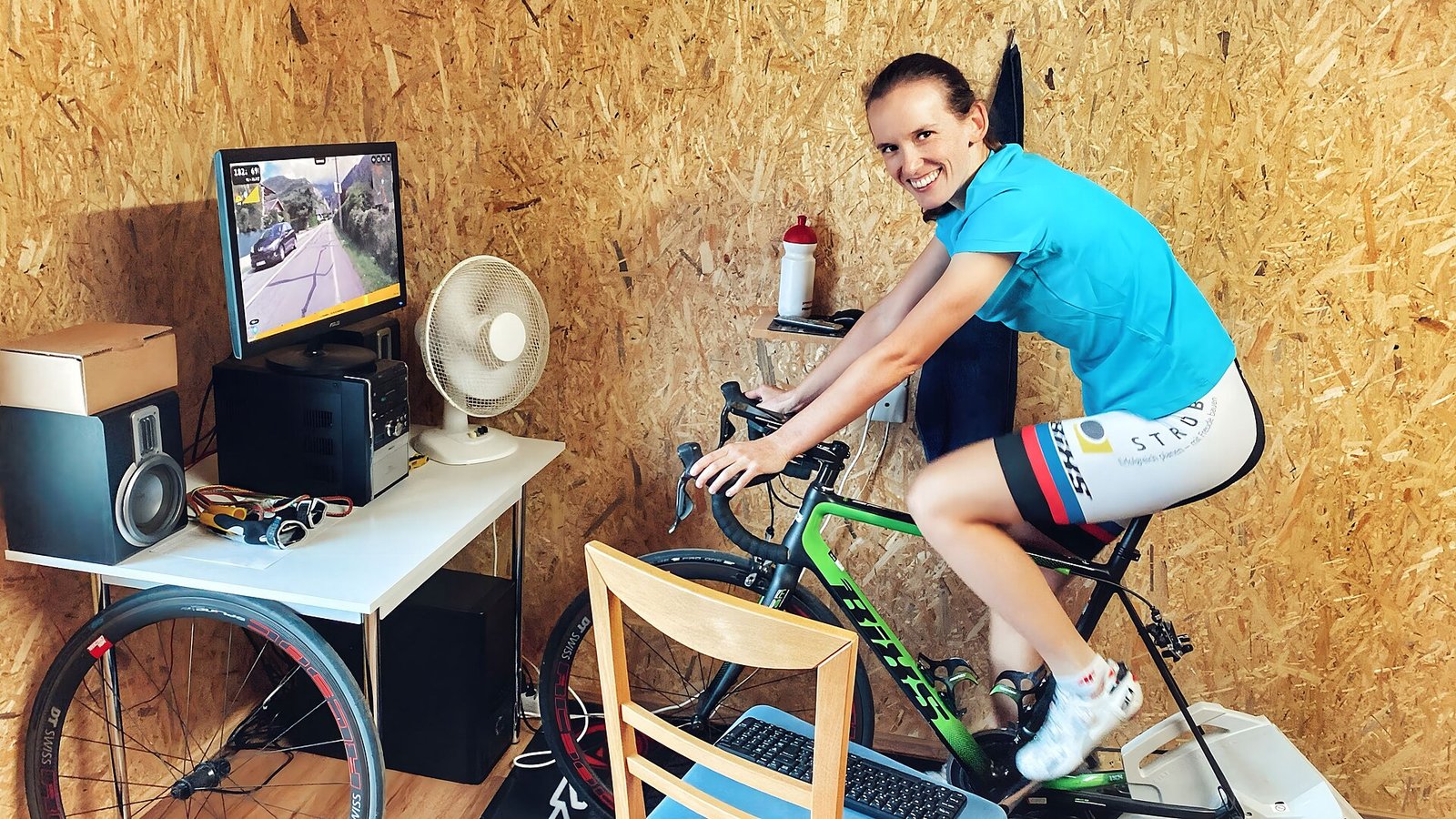
Zone 2 builds the base, but it is not the fastest way to raise VO2 max. Short, hard intervals do that more efficiently per minute, and the research is clear on this point.
In one 12-week trial, sedentary men who did three 10-minute sessions a week, including one minute of all-out sprinting, improved their VO2 peak by 19 percent. The total time was a fraction of a Zone 2 programme.
A 2025 review of the research found that both moderate continuous training and high-intensity interval training consistently improve VO2 max by 15 to 30 percent in sedentary people.
The well-known 4×4 protocol is four sets of four minutes at 85 to 95 percent of maximum heart rate, with three minutes of easy recovery between sets. It is effective, but it is hard, and it needs a proper warm-up.
A sensible week mixes both. Use Zone 2 for most of your aerobic minutes, then add one short interval session. That combination builds the base and lifts the ceiling at the same time.
Strength training belongs in the mix too. Thirty to 60 minutes a week of muscle-strengthening activity was linked to 10 to 20 percent lower all-cause mortality in large studies.
How do you find your own Zone 2?
The talk test is the simplest method. Run, cycle or walk briskly and try to speak in full sentences. If you can talk comfortably, you are in or below Zone 2. If you can only manage short phrases, you are above it.
A heart-rate monitor gives a number to aim for: roughly 60 to 70 percent of your maximum heart rate. Maximum heart rate is often estimated as 220 minus your age, but that formula is rough and varies widely between people.
A lactate test in a lab is the precise method, measuring the point where blood lactate rises above about 2 mmol/L. It is accurate, but most people do not need it to train well.
A fitness watch can estimate your VO2 max from heart rate and pace. These estimates are useful for tracking trends, but they are not as accurate as a lab test with a breathing mask.
The most reliable field tests are timed efforts, such as the Cooper 12-minute run or the Rockport walking test. Both are used in research as practical alternatives to lab testing.
What does a realistic week look like?
A week that fits a busy adult might look like this. Two Zone 2 sessions, one interval session, and two short strength sessions. That totals about three hours of training.
| Day | Session | Duration |
|---|---|---|
| Monday | Zone 2 walk, jog or cycle | 45 minutes |
| Tuesday | Strength training | 30 minutes |
| Wednesday | Rest or gentle walk | — |
| Thursday | Interval session | 20 minutes |
| Friday | Zone 2 walk, jog or cycle | 45 minutes |
| Saturday | Strength training | 30 minutes |
| Sunday | Rest or easy walk | — |
The order matters less than the total. If you miss a session, do not try to catch up in one long weekend workout. Spread the effort across the week instead.
Start smaller if you are new to exercise. Two 20-minute easy sessions a week is a real beginning, and you can add ten minutes a week as it becomes routine.
You can read more about building sustainable routines in our personal growth coverage, and find wider health and wellness guides across the site.
What are the limits of the evidence?
The biggest limit is that most longevity evidence is observational. Fit people may also eat better, sleep better and smoke less, and studies try to adjust for that, but they cannot remove it entirely.
Zone 2 itself has less direct trial evidence than its popularity suggests. Most of what we know comes from studies of elite endurance athletes, who do huge volumes of easy training and have exceptional mitochondria.
The 2025 expert panel was clear about this. Zone 2’s expected benefits might not be unique to that intensity, and slightly harder or easier sessions could produce similar adaptations.
VO2 max also has a genetic component. Some people respond strongly to training and others less so, even on the same programme. That does not make training pointless; it makes expectations personal.
The honest summary is narrower than the hype. Exercise is one of the strongest longevity tools we have, and fitness predicts survival well. Zone 2 is a good, low-stress way to build that fitness, not a secret shortcut.
How do you start safely?
If you are over 40, have a heart condition, high blood pressure, diabetes or any new symptoms, talk to your doctor before starting a new exercise programme. This article is general information, not medical advice.
Begin with walking if running feels too hard. Brisk walking on hills can reach Zone 2 for many beginners, and it carries a lower injury risk than running.
Increase volume slowly, by no more than about ten percent a week. Soreness that fades in a day or two is normal; joint pain or chest pain is a reason to stop and seek advice.
Track one number only at first: minutes per week. When that is steady for a month, add the interval session. Small, repeatable steps beat ambitious plans that collapse in week two.
For more on living well, browse our lifestyle section, and follow the latest news from our newsroom.
Frequently asked questions
How long does it take for Zone 2 training to raise VO2 max?
Most sedentary adults see measurable improvement within six to twelve weeks of regular training. Reviews find VO2 max gains of 15 to 30 percent from consistent aerobic programmes, though individual responses vary widely.
Is Zone 2 better than HIIT for longevity?
Neither wins outright. Zone 2 builds a large aerobic base with low stress, while intervals raise VO2 max faster per minute. The strongest evidence supports a mix of both, plus strength training twice a week.
Can walking count as Zone 2 cardio?
Yes, for many people. Brisk walking, especially uphill, can reach 60 to 70 percent of maximum heart rate. If you can talk in full sentences but feel warm and breathe harder, you are there.
What is a good VO2 max for my age?
There is no single target, because healthy values fall with age and differ by sex. What matters most is your trend and your fitness relative to your age group. A lab test or a validated field test gives the clearest picture.
Do I need a fitness watch to train in Zone 2?
No. The talk test is free and surprisingly accurate. A watch helps you track trends and stay honest about effort, but it is a convenience, not a requirement. The Zone 2 cardio VO2 max approach works with either method.