Thanksgiving Nor’easter Cancels Hundreds of Flights Across the Northeast
A powerful coastal storm swept up the East Coast on Thanksgiving Day, canceling hundreds of flights and cutting power to hundreds of thousands of homes. The Thanksgiving flight cancellations hit hardest at Baltimore/Washington International Airport, where Southwest Airlines bore the brunt of the disruption.
Reuters reported that FlightAware counted 417 cancellations and about 1,800 delays on flights within, into or out of the United States by Thursday afternoon. The numbers climbed through the day as the storm moved north.
By midday, about 400 flights had already been canceled and more than 1,000 delayed, according to Simple Flying, citing FlightAware data. The disruption struck at the peak of the busiest Thanksgiving travel period in 16 years.
Which airports were hit hardest by the Thanksgiving flight cancellations?
Baltimore/Washington International Thurgood Marshall Airport, known as BWI, lost more flights than any other major hub. The airport recorded 91 cancellations on Thursday morning, counting arrivals and departures together.
John F. Kennedy International Airport followed with 64 cancellations. LaGuardia recorded 36, Reagan National 34, Boston Logan 33 and Newark Liberty 21, according to FlightAware airport data.
At BWI, about one in six departing flights was canceled by midday. At Reagan National, one in five departing flights was delayed. The storm’s rain bands, low cloud and strong crosswinds forced air traffic controllers to slow operations at every major hub along the Interstate 95 corridor.
Why was Southwest Airlines affected most?
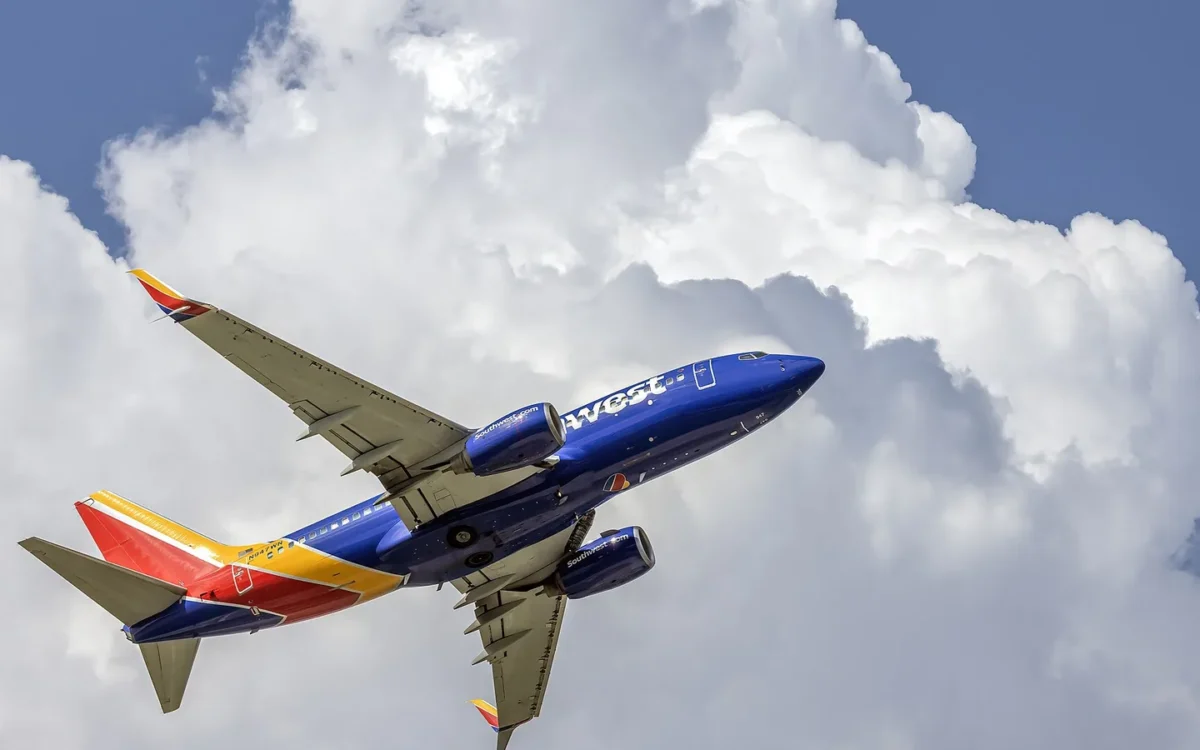
Southwest Airlines canceled 125 flights on Thanksgiving Day, more than any other carrier. Of those, 96 were at BWI alone.
The reason is simple. Southwest carries more than 70 percent of BWI’s passengers, so a bad day for the airline at that airport becomes a bad day for the whole airport. When the storm stalled operations at BWI, Southwest’s schedule unraveled fastest.
American Airlines canceled 37 flights, while Endeavor Air, a Delta regional partner, canceled 28. Delta canceled nine and United six in the morning counts. The numbers rose through the afternoon as the storm pushed north.
What did the storm bring beyond flight delays?
The storm was far more than an aviation problem. Wind gusts of 50 to 70 mph were reported or forecast across Virginia, Maryland, Delaware, New Jersey, New York and coastal New England, according to the National Weather Service.
More than 836,000 homes and businesses had no power by late Thursday afternoon. Virginia accounted for more than 174,000 of those outages, Maryland for 172,000 and Pennsylvania for almost 170,000, according to PowerOutage.us.
Heavy rain and king tides flooded low-lying coastal communities. New York City and New Jersey both declared states of emergency. In New York City, winds at LaGuardia Airport reached 56 mph on Thursday afternoon.
The storm also changed the holiday itself. The Macy’s Thanksgiving Day Parade was postponed to Saturday, the first time the event has ever been moved because of weather.
Can affected passengers change their flights for free?
Yes, in most cases. The four largest United States airlines all issued weather waivers ahead of the storm, and the terms are generous.
Southwest lets customers booked through its six listed airports on November 26 rebook or fly standby within 14 days of their original date, between the same cities, without paying a fare difference. The airports are BWI, Boston, Long Island MacArthur, LaGuardia, Philadelphia and Reagan National.
American Airlines waived change fees for tickets bought by November 23 for travel on November 26 at nine Northeast airports, including BWI, JFK, LaGuardia, Newark and Boston. New travel dates must fall between November 23 and 29.
Delta issued a similar waiver for nine Northeast airports, and United waived change fees and fare differences for November 26 flights at seven Northeast airports, provided the new flight departs between November 25 and 28 in the same cabin and between the same cities.
Passengers whose flights are canceled also have a right to a refund under United States Department of Transportation rules if they choose not to travel.
How bad is this Thanksgiving for air travel overall?
The timing could hardly be worse. Thanksgiving air travel is the ‘Super Bowl’ of flying, and the Federal Aviation Administration forecast more than 417,000 flights over the nine-day holiday period, the busiest Thanksgiving in 16 years.
AAA projected 81.5 million Americans would travel at least 50 miles from home between November 24 and 30. The TSA screened a record 2.8 million travelers the day before Thanksgiving, the most ever for the day before the holiday.
Wednesday was already chaotic. FlightAware recorded more than 6,800 delays and over 60 cancellations that day, before the storm even arrived in force.
This year’s holiday also follows the FAA outage that stranded travelers earlier in November. A router failure on November 13 caused a nationwide ground stop of nearly five hours, affecting more than 18,000 flights and about one million passengers.
What happens next for Thanksgiving travelers?
Conditions should gradually improve across the Mid-Atlantic overnight as the heaviest rain and strongest winds move into New England, the National Weather Service said. Blustery conditions with gusts of 25 to 35 mph are still expected across parts of the East Coast on Friday.
That matters because Friday is a heavy travel day, with more than 42,000 departures scheduled nationwide. Airlines will spend Friday working through aircraft and crew backlogs, so residual delays are likely even after the weather clears.
The real test comes on Sunday, November 29, the busiest return day of the holiday. The TSA expects to screen more than 3 million passengers that day, which would come close to the all-time record of about 3.13 million set on the Sunday after Thanksgiving last year.
Travelers should check their flight status with the airline before leaving home. The FAA posts live airport conditions on its National Airspace System Status page. Anyone flying through the Northeast should also allow extra time at the airport and keep their airline’s app open for rebooking alerts. Our guide to airport security and lounge strategy can help make a long wait more bearable.
For the full picture of holiday travel this week, see our Travel & Tourism News coverage.
Frequently Asked Questions
How many Thanksgiving flights were canceled on November 26, 2026?
FlightAware counted 417 cancellations and about 1,800 delays on flights within, into or out of the United States by Thursday afternoon, according to Reuters. The totals rose through the day as the nor’easter moved up the East Coast, with midday figures at about 400 cancellations and more than 1,000 delays.
Which airport had the most Thanksgiving flight cancellations?
Baltimore/Washington International Airport, known as BWI, had the most cancellations, with 91 flights scrubbed on Thursday morning. John F. Kennedy International Airport was next with 64, followed by LaGuardia with 36, Reagan National with 34, Boston Logan with 33 and Newark with 21.
Can I change my Thanksgiving flight for free because of the storm?
Yes, if your flight touches one of the airports covered by an airline waiver. Southwest, American, Delta and United all waived change fees and, in most cases, fare differences for travel on November 26 through affected Northeast airports. Check your airline’s travel advisory for the exact airports and rebooking window, and rebook as early as possible because seats fill fast.
Will the storm still affect flights on Friday and the weekend?
Yes, residual delays are likely on Friday as airlines reposition aircraft and crews, even though the worst weather moves out overnight. The bigger risk is Sunday, November 29, the busiest return day, when the TSA expects more than 3 million passengers at checkpoints. Check your flight status before heading to the airport.
What should I do if my flight is canceled?
Do not go to the airport without checking your flight status first. Use the airline’s app to rebook, or ask for a refund if you choose not to travel, which you are entitled to under Department of Transportation rules when an airline cancels a flight. Keep receipts for any extra costs, and check whether your travel insurance covers weather disruption.