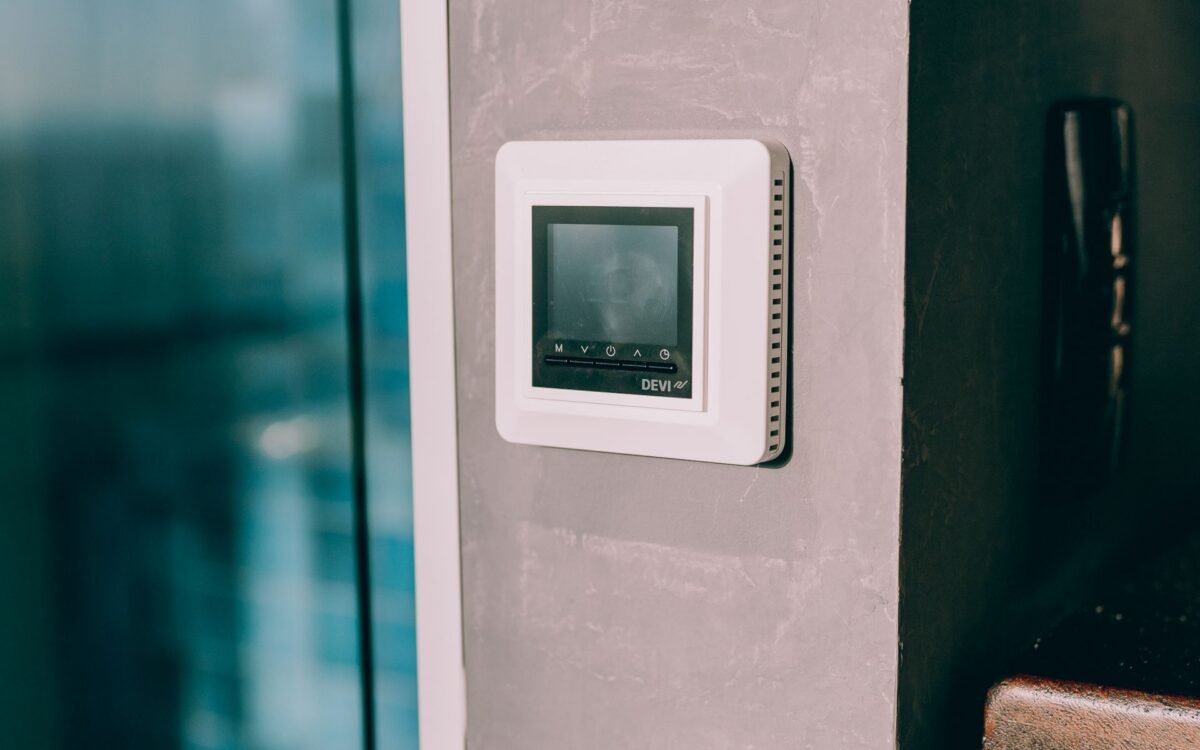
Smart Energy Management: Automated Thermostats, Smart Panels, and Solar Batteries
Smart home energy management is the quiet system behind a cheaper power bill. It links a thermostat, an electrical panel and a battery so your home uses power when it costs least.
None of the three parts is new on its own. What is new is how they talk to each other, and how little you have to do once they are set up.
Our Smart Home coverage follows these devices as they improve, and the pattern is clear: the system matters more than any single gadget.
What is smart home energy management?
It is the coordination of when your home uses electricity, not just how much it uses. A thermostat decides when to heat or cool. A smart panel decides which circuits get power. A battery decides when to store power and when to release it.
Left alone, each device saves a little. Connected, they save more, because each one knows what the others are doing. The thermostat can pre-cool the house before the expensive evening window. The panel can pause the dryer while the battery charges.
The goal is simple. Use cheap power when it is available, store it when you have too much, and avoid expensive power when you can.
Our Home Decor coverage shows how to fit the hardware into a room without it looking like a laboratory.
How much can a smart thermostat really save?
The honest answer is less than the box promises, but more than nothing. The US ENERGY STAR programme puts the average at about 8% of heating and cooling bills for certified models, or roughly $50 a year.
SolutionEnergy’s review of the field data reports the same 8% figure, and notes that makers quote 12% to 26% against their own baselines. Those maker numbers are best cases, not averages.
Independent studies land lower still. Web of Mike’s billing-study roundup cites a Northwest study finding about 5% gas savings, and an Oregon analysis of 13,762 homes finding about 3%.
The range matters more than any single number. Your savings depend on your climate, your heating system, and whether anyone is home all day.
How does a smart thermostat save energy?
It saves by running your heating and cooling less, and at better times. The US Department of Energy says turning the thermostat back 7 to 10 degrees for eight hours a day can save as much as 10% a year on heating and cooling.
HVACBase’s breakdown of the certification thresholds explains how the savings are measured. Certified models must cut heating run time by at least 8% and cooling run time by at least 10% in field data.
Three features do most of the work. Learning schedules adapt to your routine. Geofencing turns the system down when your phone leaves home. Remote control lets you fix a forgotten setting from anywhere.
None of this helps if you override it constantly. One utility study found that half to three-quarters of programmable thermostat users overrode their schedules regularly, which defeats the purpose.
What does a smart panel actually do?
A smart panel replaces your breaker box with one that measures and controls every circuit. Each circuit is metered individually, and many can be switched on or off by software.
EnergyScout’s guide to smart panels describes the core shift. Instead of one dumb box, you get per-circuit visibility and remote control, plus automation that reacts to the battery and the grid.
The most useful trick is load shedding during an outage. The panel keeps the fridge, lights and Wi-Fi running while it pauses the EV charger, the pool pump and the dryer.
It also helps before an outage. When a big appliance would push your home past its service limit, the panel slows one load instead of tripping the whole house.
How much does a smart panel cost in 2026?
Prices vary widely by region and by approach. A full replacement panel costs far more than a retrofit module that bolts onto the panel you already have.
FCE Pro’s smart-panel guide puts a full replacement at roughly $7,000 to $11,000 installed, and a retrofit at about $4,500 to $7,000 installed. A traditional manufacturer’s smart panel lands near $4,000 to $7,000 installed.
EnergyBS’s 2026 panel comparison adds the hardware prices behind those totals. One leading full-replacement model lists at $2,550 to $4,100 for the hardware alone, before labour and permits.
The biggest saving is often the one you avoid. A utility service upgrade can cost $3,000 to $20,000 and take months, and a smart panel can sometimes remove the need for it entirely.
One warning from the same comparison: there is no federal tax credit for a panel installed in 2026, because the relevant credit ended on 31 December 2025. Do not let a quote subtract money that no longer exists.
What is a solar battery for, and how big should it be?
A home battery stores electricity for later. It charges from your solar panels during the day, or from the grid overnight, and discharges when power is expensive or the grid is down.
Most homes buy between 10 and 20 kWh of storage, with 13.5 kWh the typical size, according to Berkeley Lab data reported by SolutionEnergy’s battery cost research. That is enough to keep essential devices running through an outage.
Size it for the job, not the catalogue. A battery that only backs up the fridge, lights and Wi-Fi can be small. One that must run air conditioning through the night needs to be much bigger.
Also check the power rating, not just the capacity. Capacity is how much energy it holds. Power is how fast it can deliver it, and that decides which appliances it can run at once.
How much does a home battery cost in 2026?
A typical installed home battery costs about $15,650 before incentives for 13.5 kWh of storage, according to EnergySage’s 2026 installer quotes reported by SolutionEnergy’s 2026 battery cost guide. That works out to roughly $1,159 per kWh.
Brand averages for a typical system run from about $13,000 to $18,500 before incentives. Prices vary sharply by state, because labour, permitting and installer experience differ so much.
The federal picture has changed. There is no federal homeowner credit for batteries installed after 31 December 2025, according to the same guide. State and utility incentives may still exist, so check what applies where you live.
Payback is the hardest question. A battery rarely pays for itself on bill savings alone, unless your utility charges very different prices at different times of day. Backup power and independence are part of the value, and they are hard to price.
What are time-of-use rates, and why do they matter?
Time-of-use rates charge different prices at different hours. Peak power in the early evening costs the most, while overnight power costs the least.
Webiano’s time-of-use explainer puts the typical peak window at 4 to 9 p.m. on weekdays. Peak prices often run 1.5 to 3 times the off-peak rate.
The gap is the whole point of smart energy gear. Home Energy Planner’s 2026 time-of-use guide found peak prices running 12 to 31 cents per kWh above off-peak across seven real US plans.
On one California EV plan, charging a car that uses 270 kWh a month at the off-peak price instead of the peak price saves about $84 a month in summer, according to the same guide. That is real money, earned by a timer.
Time-of-use plans can also backfire. If most of your use happens at 5 p.m. and you cannot shift it, the plan can cost more than a flat rate. Check a year of your own usage before you switch.
How do the three parts work together?
The thermostat, the panel and the battery form one loop. The thermostat shifts heating and cooling to cheap hours. The panel shifts big loads and protects the battery. The battery stores cheap power and releases it at peak prices.
A typical evening shows the loop in action. Solar stops producing as the sun sets, just as the peak window opens. The battery takes over the house, the panel pauses the dryer, and the thermostat lets the temperature drift a degree or two.
Overnight, the loop reverses. The battery recharges at the cheapest rate, the water heater runs, and the EV charges while you sleep. By morning, everything is full and the house is cool.
None of this needs your attention day to day. The value of the system is that the decisions happen automatically, hundreds of times a week, without you thinking about them.
Our latest news tracks how these systems keep improving, and which new rules change the maths for homeowners.
What should you buy first?
Start with the thermostat. It is the cheapest part, it installs in an afternoon, and it teaches you how your home actually uses energy.
SolutionEnergy’s installed-cost summary puts a smart thermostat’s installed cost at about $350 at the mid estimate, in a range of $200 to $550. That is a small bet for a real, if modest, return.
See our Home & Living coverage for more ways to cut household costs without a major renovation.
Add the smart panel second, if you have solar, a battery, or an EV on the way. It is the most expensive piece, and it pays best when there is a lot of power to manage.
Buy the battery last, unless outages are your main worry. It is the biggest cost and the slowest payback, so size it after you know what the thermostat and panel have already saved.
What mistakes do people make with smart energy gear?
The first mistake is buying the battery before the cheap wins. A thermostat and a few timers cost a fraction of a battery and often save more per dollar spent.
The second is ignoring the tariff. Smart gear earns its keep by shifting load to cheap hours, so it does little on a flat rate. Check your utility’s plans before you buy anything.
The third is sizing for the catalogue, not the house. A battery that cannot start your air conditioner is a disappointment, however big its capacity number looks.
The fourth is forgetting the internet. Most of these devices need Wi-Fi to work well, and a dead router during an outage can leave a smart home dumb at the worst moment.
The fifth is trusting one number. Every savings claim depends on a baseline, a climate and a household. Compare at least two independent sources before you believe a percentage.
Frequently Asked Questions
How much does a smart thermostat save on average?
ENERGY STAR puts the average at about 8% of heating and cooling bills for certified models, or roughly $50 a year. Independent billing studies have found less, around 3% to 5% in some regions.
Your result depends on your climate, your heating system, and how much you already set back the temperature by hand.
Is a smart panel worth it without solar or a battery?
Usually not. A smart panel earns its keep by managing solar, batteries and EV charging, and by avoiding a costly service upgrade. In a grid-only home with modest loads, it is a luxury rather than a saving.
The exception is a home adding an EV charger or a heat pump, where the panel can keep the existing service from being overwhelmed.
How long does a home battery last?
Most lithium home batteries are warrantied for about 10 years or a set number of cycles, whichever comes first. Real life depends on how deeply you cycle it and how hot it gets.
Check the warranty terms before you buy, and ask what capacity the battery is guaranteed to keep at the end of the warranty period.
Can smart energy gear work during a power cut?
It depends on the setup. A battery with a smart panel can keep essential circuits running, but a thermostat alone cannot heat or cool a home with no power at all.
Some systems also need an internet connection for full control, so local control matters more than the app during an outage.
Do I need a time-of-use tariff for smart energy management to pay off?
Not strictly, but it helps a lot. Time-of-use pricing is what turns load shifting into money, because cheap hours and expensive hours are priced differently.
On a flat rate, the savings come mostly from using less energy overall, which is a smaller prize.
Sources: SolutionEnergy, HVACBase, CliQ for Home, Web of Mike, EnergyScout, FCE Pro, EnergyBS, Home Energy Planner and Webiano.
Figures are as reported by those publications as of 25 November 2026. Prices are 2026 guide ranges — check current prices and incentives before buying.