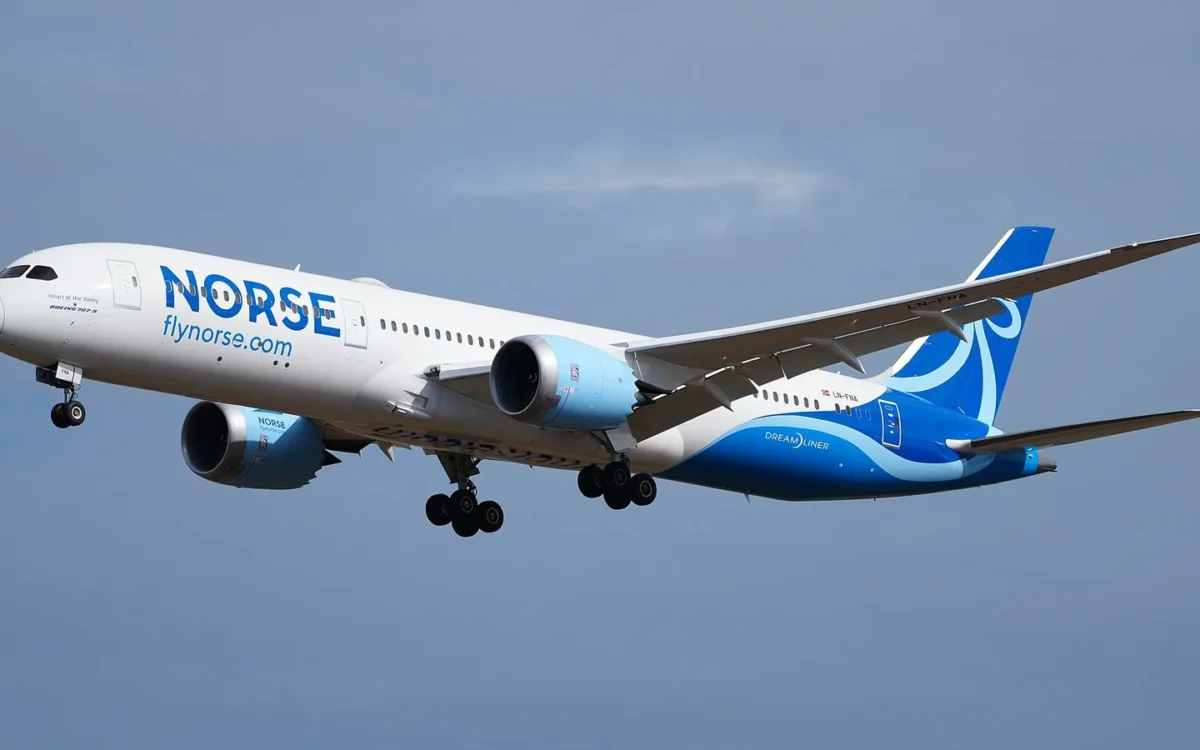
Norse Atlantic’s Norwegian Arm Files for Bankruptcy as 787 Fleet Is Grounded
Norse Atlantic Airways has filed for bankruptcy for its Norwegian operating company, a day after the low-cost carrier stopped all flights. The board of Norse Atlantic Airways AS said on Friday, November 27, 2026, that there was no longer a basis for the unit to keep flying. The filing ends the airline’s short run as a low-cost long-haul carrier.
The petition covers the Norwegian operating company only. The listed parent company, Norse Atlantic ASA, and the British operating arm are not part of the filing, and Norse said work is still going on to find a way for the rest of the business to keep going. But for now, every Norse Atlantic flight is cancelled and ticket sales have stopped.
What happened on Friday
In a stock exchange filing on Friday, Norse confirmed that the board of its Norwegian operating subsidiary had decided to file a bankruptcy petition with the Agder District Court in Norway. The court will appoint a trustee to run the process. Skift reported that the filing came a day after the carrier suspended flights and two days after it described its cash position as critical.
The move followed a grim week. On Wednesday, November 25, Norse told investors its financial position was critical and it needed new short-term funding to stay in business. On Thursday it suspended all flights while it looked for a rescue. By Friday, no rescue had arrived, and the board chose bankruptcy for the Norwegian unit instead.
Hours before the filing, Norse confirmed it had received lease termination notices covering all 12 of its Boeing 787 Dreamliners. Simple Flying reported that the notices came from the aircraft owners, and Norse is contesting whether they are valid. With the leases ended and the cash gone, the airline had no planes it could count on and no money to keep flying them.
Why the airline ran out of money
Norse had cut its annual net loss from $135.5 million in 2024 to $61.9 million in 2025. But that progress fell apart in 2026. In the first half of the year, income fell 10.8 percent to $292.3 million, while the net loss widened to $94.6 million, up from $20.8 million a year earlier.
Fuel costs and no hedges
Fuel was the sharpest pressure. Average jet fuel prices rose by 92 percent year on year in the second quarter of 2026, according to figures cited by Simple Flying. Norse had no fuel hedging in place, so it had no shield against the rise. It cut its own-network capacity by 64 percent in the quarter, yet its fuel bill still grew, and many other costs stayed fixed.

Staff costs rose 7.6 percent in the first half of 2026, to $78 million. Technical maintenance costs jumped 30.1 percent, to $60.3 million. Financing costs also surged, with net financial expenses up 177 percent to $54.1 million.
A business that kept shrinking
Norse launched in June 2022, flying between Oslo and New York and aiming to fill the gap left when Norwegian Air pulled out of long-haul flying. But the original low-cost transatlantic model never held up, and the airline slowly shifted its focus to Southeast Asia and to flying planes and crews for other airlines.
The scale of that retreat is clear. Between the summers of 2025 and 2026, Norse cut its US capacity by more than 60 percent, its routes fell from 12 to four, and departures dropped from 1,801 to 710. Load factors did improve, from 90.8 percent to 92 percent, but the network was far smaller.
Flying for other airlines grew fast, from 11 percent of Norse flights in the second quarter of 2025 to 56 percent a year later. That work cut the airline’s exposure to fuel prices, but it also tied its fate to a small number of customers. When a six-aircraft deal with IndiGo ended, Norse replaced it with a smaller agreement with Pakistan International Airlines.
What happens to the 12 Dreamliners
Norse operates a uniform fleet of 12 Boeing 787-9 Dreamliners. Seven are registered in Norway and five in Britain. Six of the jets are leased from AerCap and six from BOC Aviation. Each plane carries 338 seats, 56 in premium economy and 282 in economy, and is powered by Rolls-Royce Trent 1000 engines.
The aircraft could be in demand. There is a shortage of modern widebody jets, and Boeing has a long waiting list for new 787s. Simple Flying named LOT Polish Airlines, British Airways and Thai Airways as possible takers. Norse signed its leases during the pandemic, when demand for widebody jets had collapsed, so the terms were attractive to other carriers.

What passengers should do now
All Norse Atlantic flights have been cancelled, including return legs booked on the same ticket. Ticket sales have also stopped. The routes hit hardest are London Gatwick to Orlando, the airline’s only remaining US route, Gatwick to Cape Town, and flights from London, Oslo and Stockholm to Bangkok and Phuket.
Passengers with bookings should not travel to the airport for a cancelled flight. The airline has not published a refund process, so travellers will need to check with the card company they paid with or their travel insurer. Our guide to travel insurance explains what cover usually applies when an airline stops flying.
What could still be saved
The parent company and the British arm are still alive, at least on paper. Norse Atlantic ASA remains listed on the Oslo stock exchange, and the UK subsidiary is not part of the bankruptcy filing. Chief executive Eivind Roald said the board, management and advisers of the listed company and the UK arm are working to find a solution for the remaining part of the business to continue operations.
“We are deeply sorry for the impact this has on our passengers, employees and partners,” Roald said in a statement. “The Board, management and advisers of the listed entity Norse Atlantic ASA and the UK subsidiary are working to find a solution for the remaining part of the business to continue operations.”
Any rescue would face long odds. The airline has no planes it clearly controls, no flights running, and a brand tied to a bankruptcy filing. Investors had been talking with Norse about a possible takeover, but that plan needed urgent short-term funding that never arrived. Norse had already suspended all flights a day earlier after warning that bankruptcy was likely, and Friday’s filing turned that warning into fact. The US aviation system has also had its own severe disruption this month, but Norse’s failure came from its own balance sheet.
Frequently Asked Questions
Which part of Norse Atlantic filed for bankruptcy?
The Norwegian operating company, Norse Atlantic Airways AS, filed the petition with the Agder District Court in Norway. The listed parent company and the UK subsidiary are not part of the filing, and Norse says work continues to save the rest of the business.
Are all Norse Atlantic flights cancelled?
Yes. All flights have been cancelled and ticket sales have stopped. The routes affected include London Gatwick to Orlando, Gatwick to Cape Town, and flights from London, Oslo and Stockholm to Bangkok and Phuket.
What happens to the airline’s 12 Boeing 787s?
Lessors have sent termination notices for all 12 Boeing 787-9 Dreamliners, six leased from AerCap and six from BOC Aviation. Norse is contesting the validity of the notices. The jets are likely to be sought by other airlines because modern widebody aircraft are in short supply.
Why did Norse Atlantic fail when its planes were full?
Full planes were not enough. Jet fuel prices rose 92 percent year on year in the second quarter of 2026 and Norse had no fuel hedging. Income fell while costs rose, and the net loss widened to $94.6 million in the first half of 2026.