Dopamine Detox and Attention Restoration: Reclaiming Deep Focus in a Hyper-Stimulated World
You open your phone to check one message. Forty minutes later, you are still scrolling, and the work you meant to do is untouched.
That gap between intention and attention is why the dopamine detox focus trend took off. It promises a reset: cut the stimulation, and your brain will feel sharp again.
The promise is half true. The name is wrong, and the method underneath it is mostly right. This article separates the two, so you can keep what works and drop what does not.
You will learn what dopamine actually does, what the strongest studies found, and how to build a short plan that restores attention without sitting in a grey room.
What is a dopamine detox supposed to do?
A dopamine detox is a set period of avoiding stimulating habits, usually phones, social media, games, junk food and streaming. The idea is that cutting them lowers dopamine and makes ordinary life rewarding again.
The term grew out of “dopamine fasting”, a 2019 idea from California psychologist Cameron Sepah. His guide, “The Definitive Guide to Dopamine Fasting 2.0”, framed it as a way to manage impulsive behaviour.
Sepah suggested limits at set times, such as one to four hours at the end of the day, one weekend day, one weekend a quarter and one week a year. The target was behaviour, not brain chemistry.
The version that went viral dropped that nuance. It became a weekend of no food, no music, no talking and no fun, sold as a chemical cleanse. That version is not what Sepah proposed.
Can you actually reset your dopamine?
No. You cannot lower, drain or reset your dopamine by avoiding pleasure. Your brain makes dopamine around the clock, whether you are gaming or meditating.
Peter Grinspoon, a primary care doctor and Harvard Medical School instructor, put it plainly in Harvard Health in 2020. Dopamine rises with rewards, he wrote, but it “doesn’t actually decrease when you avoid overstimulating activities.”
Neuroscientists interviewed by The Scientist were blunter. Stephanie Borgland of the University of Calgary said dopamine fasting “is probably not going to really do anything for you”, according to an evidence review of dopamine detox claims.
Talia Lerner of Northwestern University added that the name “is a weird, catchy thing that rubs scientists the wrong way.” The label, in other words, is marketing, not medicine.
A 2024 review in the journal Cureus reached the same verdict. Dopamine fasting has not been scientifically validated as a way to alter dopamine. Extreme versions can backfire into loneliness and anxiety.
Grinspoon called the extreme version a “maladaptive fad”. He warned that skipping food, exercise, music and human contact was never part of the original idea.
What does dopamine really do in the brain?
Dopamine is often called the pleasure chemical. That label is wrong, and it is the reason the detox idea sounds so plausible.
Dopamine is a neurotransmitter, a chemical messenger your neurons use to talk to each other. It is involved in movement, motivation, mood, attention, learning and sleep.
Its best-known job is not pleasure but wanting. Research by Kent Berridge and Terry Robinson showed that dopamine drives the pull toward a reward, not the enjoyment of it.
Dopamine neurons also fire on surprise. Wolfram Schultz showed in Science in 1997 that they spike when a reward is better than expected, then shift their firing to whatever predicts it.
That is why a notification badge is so hard to ignore. Your brain has learned that the badge predicts something new, so it pulls your attention before you decide.
Dopamine is not optional. In Parkinson’s disease, the loss of dopamine-producing neurons causes tremor, stiffness and slowed movement. Less dopamine is not a wellness goal.
What does the research say about phone breaks?
If the chemistry is a myth, the behaviour change is real. The strongest evidence comes from trials that removed one trigger and measured what happened next.
In a 2025 trial published in PNAS Nexus, 467 people blocked mobile internet on their phones for two weeks. Calls and texts still worked, and laptops were untouched.
The results were striking. Ninety-one percent of participants improved on at least one measure of attention, mental health or well-being. Daily screen time fell from 314 minutes to 161.
The attention gain was large. It matched reversing about ten years of age-related decline on the same test. Only about a quarter of people kept the block going for the full two weeks.
There is a catch. Within two weeks of the block ending, screen time had bounced back to 265 minutes a day. A break helps, but only a new setup keeps the gain.
An earlier experiment points the same way. In 2020, economists paid 2,743 Facebook users to deactivate their accounts for four weeks before the 2018 US midterm election.
Deactivation freed about 60 minutes a day, and well-being rose by a small but real amount. About 80 percent of the group said the break had been good for them.
A November 2025 study in JAMA Network Open found a similar pattern. After one week without social media, 373 young adults aged 18 to 24 reported better mood, anxiety and sleep.
What is attention restoration theory?
A break from screens is only half the story. Attention also needs something to recover with, and that is where an older idea comes in.
Attention restoration theory, developed by Rachel and Stephen Kaplan in the 1980s, says that nature restores the attention we spend on focused work.
The Kaplans split attention into two kinds. Directed attention is the effortful focus you use to work, ignore distractions and hold a thought. It tires with use.
Involuntary attention is automatic. It is captured by gentle, interesting things, such as clouds drifting, leaves rustling or water flowing. It costs almost nothing.
Nature is full of that second kind. The Kaplans called it soft fascination: interest without effort, which lets directed attention rest and refill.
A restorative setting needs four qualities, the Kaplans argued: being away from routine demands, extent, compatibility with your purpose, and fascination.
Restoration then runs through four stages: a clearer head, recovery from mental fatigue, soft fascination, and finally reflection. The last stage is the deepest.
How does nature restore focus?
The theory has been tested. In a 2008 study in Psychological Science, Marc Berman, John Jonides and Stephen Kaplan gave volunteers a hard memory task, then sent them for a walk.
One group walked through an arboretum. The other walked down a busy city street. Both walks took about 55 minutes, and both covered roughly the same distance.
The nature group improved on the memory task by about 20 percent. The city group did not improve at all. Simply viewing photographs of nature produced the same 20 percent gain.
The city was not restful because it demands directed attention. Traffic, horns and billboards all need to be filtered out. Nature asks for almost none of that work.
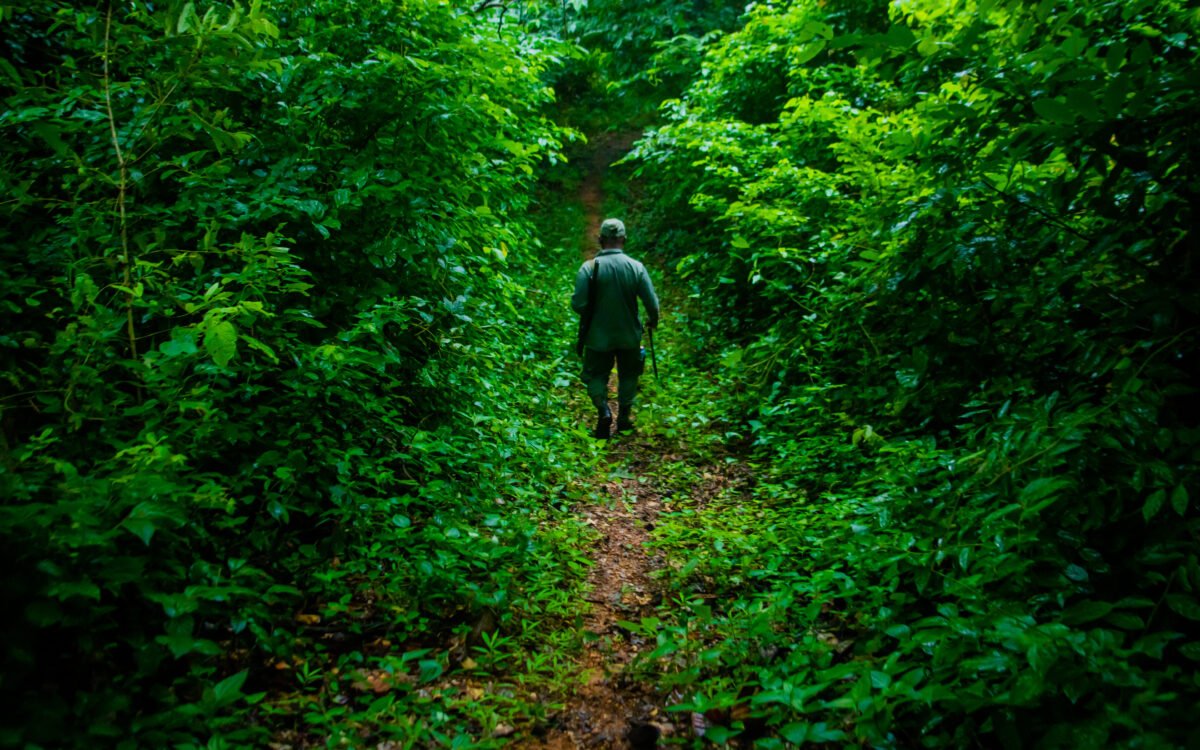
You do not need a forest. A park, a garden, a river path or even a window with a green view can work. What matters is gentle interest, not dramatic scenery.
What is the difference between a detox and a reset?
A detox promises to clean something out. A reset promises to return something to how it was. Neither word fits what is actually happening in your brain.
What changes is not your dopamine level. It is what your brain has learned to predict, and what your day is built around. That is a habit problem, not a chemistry problem.
Habit problems respond to design, not to suffering. Removing a cue for a day changes nothing if the cue is waiting in the same place on Monday.
That is why the two-week phone trial worked while it lasted, then faded. The block changed the environment. When the environment returned, the old behaviour returned with it.
How do you build a dopamine detox focus plan that works?
A plan that works targets one or two triggers at set times, and it plans what fills the gap. That is stimulus control, the ordinary technique from cognitive behavioural therapy that Sepah built his method on.
Pick the trigger that steals the most time. For most people it is the phone, and specifically one or two apps. Name them, and leave the rest alone.
Choose a window, not a whole life. One to four hours at the end of each day is Sepah’s original schedule, and it is enough to notice a difference.
Move the cue out of reach. Charge the phone outside the bedroom. Delete the app from the home screen, or use a blocker for the evening window.
Plan the replacement before you start. A walk, a book, cooking, a conversation. Boredom with nothing to do is the reason most detoxes collapse by day two.
Add one restorative break a day. A twenty-minute walk in a park, or even a green view from a window, gives directed attention the rest the Kaplans described.
For more on building habits that last, see our personal growth guides. They cover the same slow, steady approach this plan relies on.
| Day | Evening window | Replacement |
|---|---|---|
| Day 1 | Phone off after 9 p.m. | A walk around the block |
| Day 2 | No social apps after dinner | Cook a proper meal |
| Day 3 | Phone charges outside the bedroom | Read for 30 minutes |
| Day 4 | No phone during the first hour awake | A park walk before work |
| Day 5 | One app deleted for the weekend | Call a friend instead |
| Day 6 | A full phone-free morning | A long walk in nature |
| Day 7 | Review what worked, keep the best two rules | Plan next week |
What should you do instead of staring at a blank wall?
The viral version of the detox asks you to sit with nothing. That is not restoration. It is boredom, and boredom is not a treatment.
The gains in the trials came from what filled the gap. People in the phone trial spent more time offline, with other people, and sleeping better. Those changes carried the benefit.
Think of it as a swap, not a fast. Every hour you take from a feed needs a home: movement, people, sleep, or a task that holds your attention gently.
Focused work belongs here too. Attention grows when it is trained on one hard thing at a time, not when it is starved of everything. Our productivity guides cover how to protect that kind of deep work time.
Start small and keep the rule you like. A plan you keep for a month beats a dramatic weekend you abandon by Monday.
Browse our lifestyle section for more on habits, focus and rest. The best next step is usually the smallest one you will actually repeat.
When should you get professional help?
A planned break is a self-help tool, not a treatment. If phone use, gaming or any habit is harming your work, sleep or relationships, that is a different problem.
The same is true for low mood, anxiety or addiction. A detox will not fix those, and an extreme fast can make them worse. A doctor or therapist can help in ways a weekend offline cannot.
This article is general information, not medical advice. If you are unsure, talk to a qualified health professional before changing a habit that affects your health.
For the latest research stories, see our latest news coverage. Science moves fast, and so does the advice built on it.
Frequently asked questions
Does a dopamine detox really reset your brain?
No. Dopamine does not fall when you avoid stimulation, so there is nothing to reset. What a break can do is weaken a habit by removing its cue, which is a real and useful effect.
How long does a dopamine detox take to work?
The best trial evidence used two weeks of blocked mobile internet. People noticed changes within days, but the gains faded once the old setup returned. Lasting change comes from a new routine, not a countdown.
Is dopamine fasting safe?
A short, targeted break from one habit is low risk for most people. Extreme versions that skip food, exercise, music or human contact are not safe, and Harvard Health called that version a maladaptive fad.
Can a walk in nature really improve focus?
Yes, measurably. In a 2008 study, a 55-minute walk in nature improved memory scores by about 20 percent, while a city walk did not. Even viewing nature photographs produced the same gain.
What is the best way to restore attention after a long day at a screen?
Combine the two tools this article describes. First, close the trigger for an hour. Then spend twenty minutes in a green, low-demand setting, such as a park walk. The break stops the drain, and nature refills the tank.