Route 66 Centennial Revival: Classic Diners, Neon Motels, and Detours
Route 66 turned 100 on 11 November 2026. The Mother Road was designated as US Highway 66 on that date in 1926, and a century later it has never looked better cared for.
The centennial year brought the biggest restoration push in the road’s history. Towns along the 2,448-mile route from Chicago to Santa Monica spent 2026 fixing neon, reopening landmarks and throwing parties.
This guide covers the Route 66 road trip stops that matter most: the diners still serving, the neon motels still glowing, and the detours you need to plan around before you go.
Why is 2026 the year to drive Route 66?
The centennial was not a single party. It was a year-long programme across all eight states the road crosses, from Illinois to California.
The national kickoff took place in Springfield, Missouri, from 30 April to 3 May 2026. Springfield is where the road got its name, and the city hosted a concert, a parade and the dedication of a new Birthplace Plaza.
The headline concert featured Little Big Town, Chris Janson, Gary LeVox of Rascal Flatts, Gretchen Wilson and the Ozark Mountain Daredevils. The parade rolled through town on 1 May, and the Jefferson Avenue Footbridge was relit the same evening.
The anniversary itself fell on 11 November 2026, exactly a century after the road was designated. Tulsa marked the anniversary with a Veterans Day parade, a street party and a free concert.
Arizona kept the party going with the Route 66 UltraRun from 14 to 16 November, an endurance event following 140 miles of historic highway. A shorter 100-mile CenturyRun ran alongside it for the centennial.
What did the centennial revival actually restore?
Money, not just music, defined the centennial. Federal and state grants paid for repairs that had been waiting for decades.
Illinois put $1.5 million into its Heritage Corridor, adding selfie spots in Joliet, Pontiac, Dwight and Bloomington-Normal. The state also funded a neon sign park in Granite City and new Muffler Men statues.
Oklahoma, which holds more drivable miles of Route 66 than any other state, gave out more than $1 million in neon sign grants. The state also backed the restoration of the Blue Whale of Catoosa, the road’s most photographed landmark.
One 1950s gas station was remodelled and reopened as a visitor centre and restaurant with a $1.2 million grant from the Centennial Commission. It is the kind of project the centennial was built for: a dead building, brought back to life.
The work is not finished. A bipartisan bill to give Route 66 National Historic Trail status was introduced last year, and preservation groups say the centennial is a beginning, not an ending.
Which classic diners are still serving drivers?
Diners are the heartbeat of Route 66. They fed Dust Bowl migrants in the 1930s, truckers in the 1950s, and tourists ever since.
Lou Mitchell’s in Chicago is the traditional send-off breakfast, a block from the Begin sign. It has fed westbound drivers since 1923 and still hands out Milk Duds at the door.
Springfield, Illinois, claims the corn dog at the Cozy Dog Drive In, where a single corn dog costs about $5. It is a quick stop, and it pairs well with the town’s Lincoln sites.
In Stroud, Oklahoma, the Rock Café has served travellers since the 1930s. It sits on Main Street, and its stone walls have outlasted the interstate that bypassed the town.
Amarillo’s Big Texan Steak Ranch is the loudest stop on the road. It is part steakhouse, part show, and it draws crowds that have nothing to do with hunger.
Prices change, and hours change faster. Check ahead before you count on any single diner, because some old businesses close for good with little warning.
Where can you still sleep in a neon motel?
The motor courts are what make Route 66 feel different from any other drive. They were built for drivers, one room at a time, with neon signs you could read from a mile away.
The Wigwam Motel in Holbrook, Arizona, opened in 1950. Its concrete teepees are the most famous rooms on the road, and the motel is listed on the National Register of Historic Places.
Tucumcari, New Mexico, is home to the Blue Swallow Motel, a 12-unit court with restored 1960s neon. Its glowing swallow sign even inspired the Cozy Cone Motel in the film Cars.
In Cuba, Missouri, the Wagon Wheel Motel has welcomed drivers since the 1930s. Its stone cabins and neon sign sit on the oldest continuously operating stretch of the road in the state.
Carthage, Missouri, offers the Boots Court Motel, another restored court with period rooms. Lebanon, Missouri, has the Munger Moss Motel, in business since 1946 with its original cabins and a neon sign that still lights up.
Book the classic motels by phone, and book early in the centennial year. Many have only a dozen rooms, and they fill up fast on weekends.
What are the best Route 66 road trip stops, state by state?
The road runs 2,448 miles through eight states, and each one has its own character. These are the stops the best guides agree on.
| State | Miles | Stops worth your time |
|---|---|---|
| Illinois | ~300 | Begin sign in Chicago, Gemini Giant in Wilmington, Pontiac museum |
| Missouri | ~317 | Chain of Rocks Bridge, Ted Drewes in St. Louis, Cuba murals |
| Kansas | 13 | Galena, Rainbow Bridge near Riverton |
| Oklahoma | ~400 | Blue Whale of Catoosa, Round Barn in Arcadia, POPS 66 |
| Texas | ~180 | U-Drop Inn in Shamrock, Cadillac Ranch near Amarillo |
| New Mexico | ~400 | Blue Swallow Motel, El Rancho Hotel in Gallup, lava fields |
| Arizona | ~400 | Wigwam Motel, Petrified Forest, Oatman and Sitgreaves Pass |
| California | ~300 | Roy’s Motel in Amboy, Bagdad Cafe, Santa Monica Pier |
Illinois starts the trip with the Gemini Giant, a 30-foot fibreglass astronaut that moved to a new home in South Island Park, Wilmington, in 2024. Pontiac’s free Route 66 Hall of Fame and Museum fills an old firehouse.
Oklahoma’s Blue Whale of Catoosa is the road’s most beloved photo stop. The 20-foot-tall, 80-foot-long concrete whale was built in 1972 by zoologist Hugh Davis as an anniversary gift for his wife.
Texas gives you the U-Drop Inn in Shamrock, a 1936 Art Deco café and gas station with a stepped tower. Cadillac Ranch, west of Amarillo, lets visitors spray-paint ten buried Cadillacs.
New Mexico’s stretch runs through Albuquerque’s Central Avenue, where twin neon arches frame the road. Gallup’s El Rancho Hotel hosted film stars in the 1930s and still keeps its neon glowing. Sunset’s western-stretch guide lists 66 stops from New Mexico to California.
Arizona holds the longest unbroken run of old road, from Seligman to Kingman, about 90 miles with the interstate out of sight. The Wigwam Motel, the Petrified Forest and the mining town of Oatman all sit along it.
California ends the trip at Santa Monica Pier, where the road meets the Pacific. Roy’s Motel and Café in Amboy, with its Googie-style neon sign, is the desert stop every photographer wants.
Which detours should you plan for?
Route 66 is not one continuous road any more. About 85 percent of the early route is still drivable, but the rest sits under the interstate, behind a fence, or on closed pavement.
Navigation apps will put you on the interstate by default. To stay on the old road, set waypoints in the towns along it: Amboy, Oatman, Hackberry and Seligman in the west.
The Mississippi crossing at St. Louis is the first forced detour. The Chain of Rocks Bridge closed to cars in 1968, so traffic now crosses on the interstate bridge upstream.
Oklahoma’s Ribbon Road, a nine-foot-wide strip of original pavement near Miami, is closed for repaving. Two of its three miles are being torn out, and there is no published date for completion.
A section of the old road east of Amboy, California, is also closed, with no reopening date. The west-end guide’s road notes confirm the closure and the long gap in services that follows it.
Catoosa, Oklahoma, has its own headache. The I-44 and Highway 66 interchange, known locally as Dysfunction Junction, is under major construction. The old 1926 alignment through town avoids it entirely.
The rule is simple: carry a guide that was checked recently, because closures on this road change every season. Check the Oklahoma Route 66 Association’s bypass page before you set out, and a recently checked trip planner for the full route.
How long does the full drive take, and when should you go?
Fourteen days is the honest minimum for the full road. That works out to roughly 175 miles a day, which sounds easy until the photo stops begin.
Much of the old alignment is two lanes, with small-town speed limits and stoplights. A 200-mile day can take five hours of driving once you add museums, diners and roadside giants.
Three weeks is better if you like long lunches and museum stops. It leaves room for a rest day in Albuquerque or Flagstaff, and for the side trip to the Grand Canyon from Williams.
The best months are April to June and September to October. Summer is hot in the Mojave Desert and busy everywhere, while winter can bring snow to Flagstaff.
Drive east to west, from Chicago to Santa Monica. It is the direction the road was travelled in its most famous years, and you finish at the Pacific instead of in a Chicago traffic jam.
How much does a Route 66 trip cost?
Route 66 is still one of the cheapest great road trips in America. Most of the famous stops are free, and the museums charge very little.
The Pontiac museum in Illinois is free, with donations welcome. The Oklahoma Route 66 Museum in Clinton costs about $7 per adult, and the Will Rogers Memorial Museum in Claremore is free.
A send-off breakfast at Lou Mitchell’s runs about $15 to $20 per person. A cave tour at Meramec Caverns in Missouri costs about $28 per adult, and the tram to the top of the Gateway Arch runs about $19 to $20.
What changed for the centennial that will last?
The centennial’s real legacy is not the parties. It is the buildings that were saved, and the laws that may follow.
The Blue Whale of Catoosa reopened on 30 May 2026 with a new 4,000-square-foot visitor centre, a gift shop, a neon sign and a playground. The city bought the property in 2020 and put nearly $2 million of state funding into the site.
A bipartisan bill to designate Route 66 a National Historic Trail was introduced last year. If it passes, the road would gain the same federal status as the trails that carried pioneers west.
For readers planning the drive, our Road Trips coverage will keep following the centennial’s legacy. Our Automotive coverage covers the cars and the road, and our Travel coverage follows the journey. The latest news will carry any new preservation wins as they appear.
Frequently Asked Questions
What are the best Route 66 road trip stops?
The stops most guides agree on are the Begin sign in Chicago, the Gemini Giant in Wilmington, the Blue Whale of Catoosa, Cadillac Ranch near Amarillo, the Wigwam Motel in Holbrook and Santa Monica Pier. Each one is free to visit from the roadside.
When did Route 66 turn 100?
Route 66 was designated as US Highway 66 on 11 November 1926, so it turned 100 on 11 November 2026. The national kickoff celebrations ran from 30 April to 3 May 2026 in Springfield, Missouri.
Is Route 66 still drivable in 2026?
Yes, about 85 percent of the early route is still drivable, as state highways, county roads, business loops and frontage roads. It is not one continuous signed road, so navigation apps will keep putting you on the interstate unless you set town waypoints.
How long does a full Route 66 trip take?
Fourteen days is the honest minimum for the 2,448-mile drive from Chicago to Santa Monica, at roughly 175 miles a day. Three weeks is better if you want long lunches, museum stops and a side trip to the Grand Canyon.
Do I need to book the classic neon motels in advance?
Yes, especially in the centennial year. Many classic motor courts have only about a dozen rooms, and they fill up fast on weekends. Book by phone, and check current hours and prices before you travel.
Sources: Travel The Roads, Hitch Points, The Collector, Sunset, The USA Guides, Visit California, Springfield MO, EIN Presswire, The European, Wheels World Guide, Europe Trip, Oklahoma Route 66 Association, Outside Online, Wikipedia, SGN Magazine.
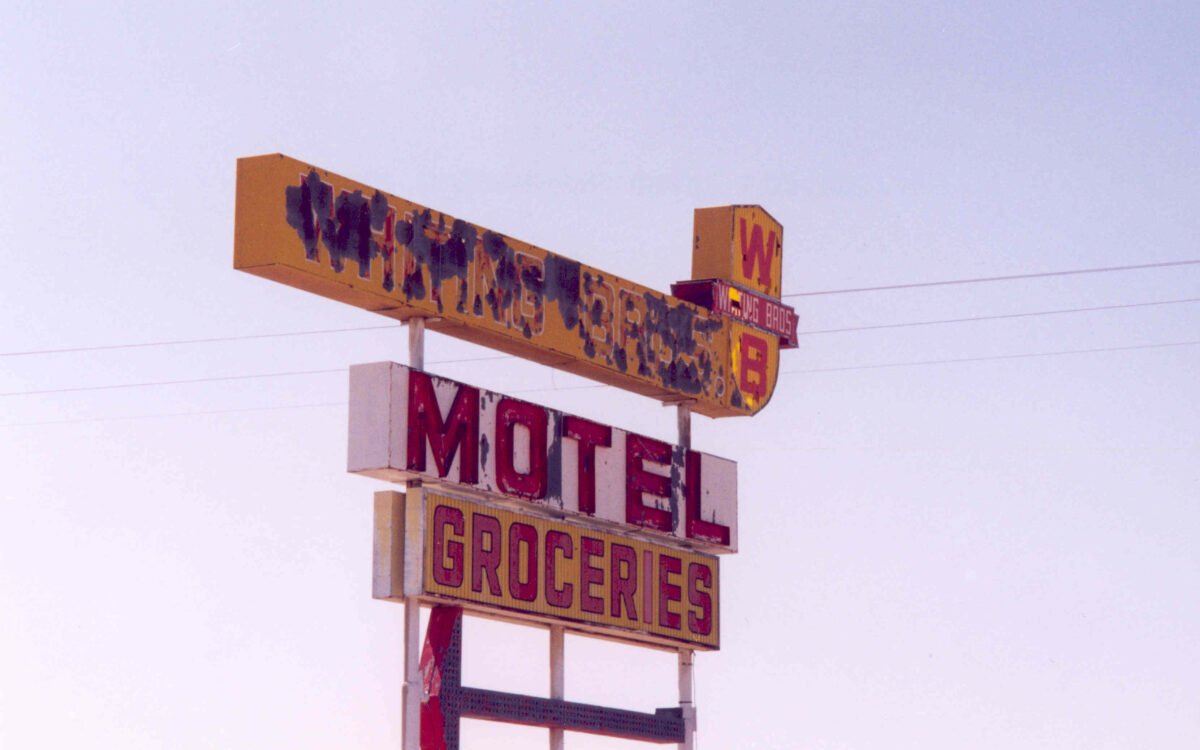
Prices, hours and event dates change — check current details before travelling. The featured image is a historic photograph of a closed motel sign, shown for illustration.