
OBD-II Scanners Explained: How to Diagnose Check Engine Lights Before Visiting a Shop
The check engine light is the most misunderstood warning on your dashboard. It can mean a loose fuel cap, or it can mean a repair bill in four figures.
A scanner turns that guess into a fact. This best OBD2 scanner guide shows how to read the code, what it means, and which tool fits your car.
You do not need a workshop. A basic reader costs less than a tank of fuel, and the whole job takes minutes.
What is an OBD-II scanner?
OBD-II stands for On-Board Diagnostics, second generation. It is the system that has been mandatory on cars sold in the United States since 1996.
The car’s computer watches the engine and the emissions system all the time. When it finds a fault, it stores a trouble code and switches on the check engine light.
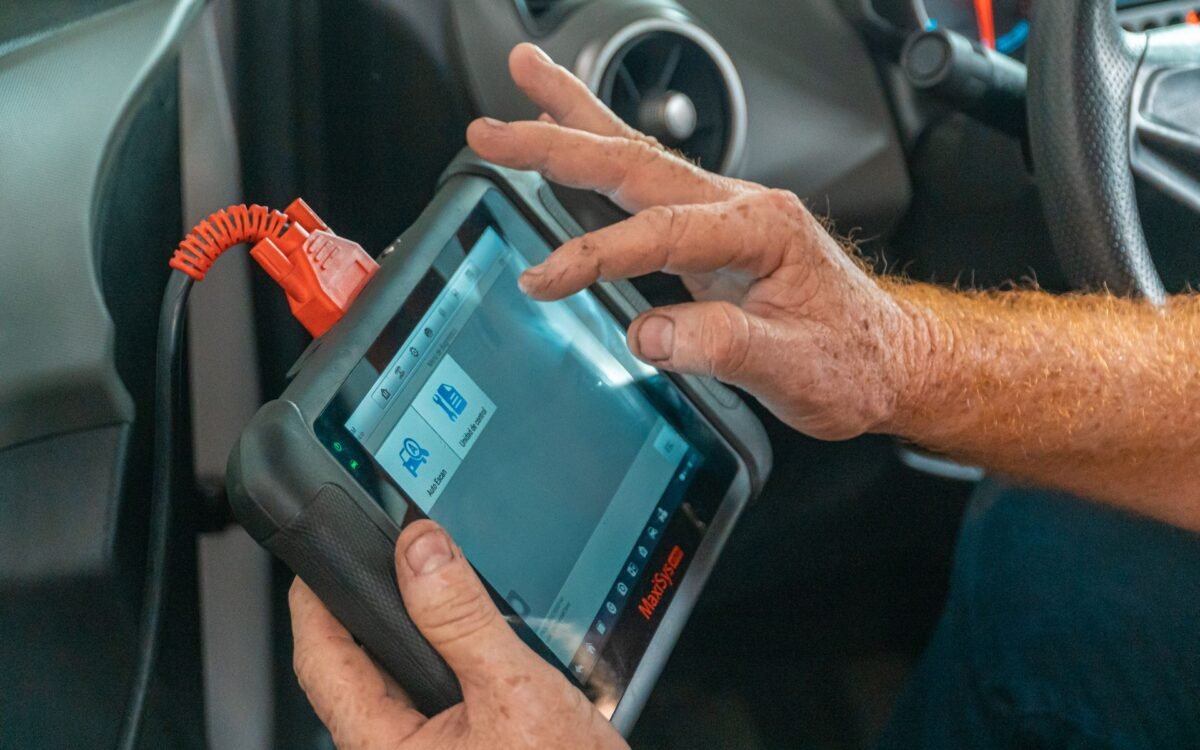
A scanner talks to that computer through a port under the dashboard. It reads the stored codes and shows them in plain text on a screen or a phone.
Our car maintenance coverage follows the same idea: a small check at home can save a large bill at the shop.
Where is the OBD-II port and how do I plug in?
The port is a 16-pin trapezoidal connector, usually under the dashboard on the driver’s side, near the steering column.
Your owner’s manual shows the exact spot for your model. Do not pry panels or pull wiring to hunt for it, and use a shop if the connector looks damaged.
Plug the scanner in firmly, then switch the ignition on with the engine off. The tool powers up from the car and asks you to confirm the vehicle or the protocol.
Choose the “Read Codes” or “Scan” function. The scanner pulls the stored codes from the car’s computer and lists them in seconds.
How do I read a check engine light code?
Write down every code exactly, with the date and how the car was behaving. A code is a starting point, not a verdict on a part.
Some tools also list pending codes, which are faults the computer has seen but has not yet confirmed. Those are worth noting too.
Do not clear the codes yet. Clearing erases information a technician may need, and it resets the readiness monitors a smog test relies on.
DIYCar’s step-by-step guide walks through the same process, and it stresses the same rule: read first, clear later.
What do the letters and numbers in a trouble code mean?
Every trouble code has five characters. The first is a letter that names the system: P for powertrain, B for body, C for chassis and U for network problems.
Most check engine lights involve P codes, since they cover the engine, the transmission and the emissions system.
The first digit after the letter tells you the code’s origin. A 0 means a generic code defined by the SAE standard, common to every car. A 1 means a manufacturer-specific code.
The last three digits narrow the fault down. The middle digit names the subsystem, such as fuel, ignition or emissions, and the final two digits give the exact fault.
So P0301 breaks down as P for powertrain, 0 for a standard code, 3 for the ignition system, and 01 for a misfire in cylinder one. Engineer Fix’s guide to reading a scanner explains the same breakdown in detail.
What are the most common check engine codes?
P0420 means the catalytic converter is not working efficiently. It often points to an ageing converter, but it can also follow a failing oxygen sensor.
P0171 means the engine is running too lean on bank one. It is getting too much air, or not enough fuel, and a vacuum leak is a common cause.
P0300 means random or multiple cylinder misfires. The fuel is not burning properly in one or more cylinders, and the cause can range from spark plugs to injectors.
P0442 means a small leak in the evaporative emissions system. The usual suspects are a loose fuel cap, a cracked hose or a worn seal.
None of these codes names the broken part. Each one says which system saw a problem, and the real cause still needs checking. HiRide’s guide to common codes covers the same four codes with the same warning.
What is the difference between a code reader and a full scan tool?
A basic code reader does one job: it reads and clears engine codes. It is cheap, simple and enough for most drivers.
A full scan tool goes further. It can read ABS, airbag and transmission systems, show live sensor data and run active tests on parts.
That extra reach matters. A basic reader cannot see an ABS or airbag fault at all, so a warning light in those systems stays a mystery.
Somewhere in the middle sit Bluetooth dongles. They plug into the port and turn your phone into a scanner, with live data and repair guidance in the app.
Which type of scanner should I buy?
The right choice depends on what you want to do. Reading a code once a year needs a different tool from diagnosing a fault every weekend.
Prices below are 2026 guide ranges from the editorial sources listed at the end. Check current prices before buying, and watch for subscriptions.
| Type | What it does | Guide price | Best for |
|---|---|---|---|
| Basic code reader | Reads and clears engine codes | $20–$65 | First-time buyers |
| Bluetooth dongle | Phone app, live data, repair reports | $40–$140 | Most drivers |
| Four-system handheld | Engine, ABS, airbag, transmission | $80–$350 | DIY mechanics |
| Pro tablet | Full system, active tests, service resets | $280–$500 | Enthusiasts and pros |
For most drivers, the Bluetooth dongle is the sweet spot. The best-known model pairs with a free app and charges no subscription.
MotorBiscuit’s 2026 buyer’s guide names the BlueDriver Bluetooth Pro, at $99 to $140, as the best smartphone option. It calls it the most recommended consumer tool for a decade.
The cheapest honest start is a basic reader. The FOXWELL NT301, at $50 to $65, reads and clears codes and does nothing else, which is exactly the point.
At the top end, the Innova 5610, at $280 to $350, adds bi-directional control. That lets the tool command parts such as injectors and solenoids during a test.
OBDadvisor’s 2026 picks agree on the same two names, and they add the Ancel BD310 under $50 as the best budget buy for a first scanner.
Watch the subscription trap. The Motor Guy’s comparison warns that several popular scanners now lock live data or code clearing behind a yearly fee after the first year.
Menachite’s 2026 scanner guide makes the same point in a different way: it sorts ten tools into wired readers, Bluetooth scanners and full-system tools, so you buy for your need.
What are live data, freeze frame and Mode 6?
Live data shows sensor readings while the engine runs. You can watch fuel trim, coolant temperature and oxygen sensor voltage in real time.
Freeze frame is a snapshot of the engine’s state when the fault was stored. It shows speed, load and temperature at that exact moment.
Mode 6 shows the raw self-test numbers from the car’s own checks. It can reveal a fault building up before it sets a code.
These three features turn a code into a diagnosis. A code alone says what the computer saw; live data helps you work out why.
Should I clear the code — and when should I not?
Clearing a code switches the light off, but it does not fix anything. If the fault is still there, the light will come back.
Clear first only after you have written the code down and understood it. A loose fuel cap, tightened and cleared, is a fair reason to reset.
Never clear codes just before an emissions test. The readiness monitors reset too, and the test will fail until the car has completed its drive cycle.
If the light is flashing, do not drive on and do not clear it. A flashing light usually means an active misfire that can damage the catalytic converter.
What should I check before buying a scanner?
First, check your car is covered. Most scanners work with petrol cars from 1996 on, but newer models may need CAN-FD or DoIP support.
Second, check the subscription. Some tools charge a yearly fee after the first year for live data or full-system access, while others charge once.
Third, check the systems it reads. If you only need engine codes, a basic reader is enough, but ABS and airbag faults need a four-system tool.
Finally, check the app. A Bluetooth dongle is only as good as its phone app, so look for clear repair reports and free updates.
Our car reviews apply the same test to every product: the best tool is the one that fits your car and your budget, not the most expensive one.
Our automotive coverage covers the same ground for the wider car world, from maintenance schedules to the latest electric models.
When should I still visit a shop?
A scanner reading is a starting point, not a repair diagnosis. Some faults need a lift, a wiring diagram or a shop-grade tool to confirm.
Go to a shop if the light is flashing, if the car loses power, or if the same code returns after you have fixed the obvious cause.
A shop’s tool can also read manufacturer-specific codes and data that a basic reader cannot see. That extra depth matters on newer cars.
Many parts stores will read your codes for free if you drive in. That is a useful check before you spend money on a tool of your own.
For the latest news on cars and motoring, our news desk keeps tracking the tools and tech that change how drivers look after their cars.
Frequently Asked Questions
What does OBD-II stand for?
OBD-II stands for On-Board Diagnostics, second generation. It is the standard system fitted to cars sold in the United States since 1996, and it monitors the engine and emissions systems.
Can any car use an OBD2 scanner?
Almost any petrol car built since 1996 has the port. Some newer models also need support for CAN-FD or DoIP protocols, so check your car is covered before you buy.
Will a scanner tell me exactly which part to replace?
No. A code tells you which system saw a fault, not which part failed. A misfire code can mean a spark plug, an injector, a valve or a compression problem.
Is it safe to drive with the check engine light on?
A steady light usually means a fault that should be checked soon, but the car can often be driven carefully to a shop. A flashing light means stop and arrange service.
How much should I spend on my first OBD2 scanner?
For most drivers, a Bluetooth dongle under $100 or a basic reader under $65 is enough. Spend more only if you want ABS, airbag or transmission coverage.
Sources: MotorBiscuit, OBDadvisor, The Motor Guy, Engineer Fix, DIYCar, HiRide and Menachite. Figures are as reported by those publications as of 25 November 2026.
Prices are 2026 guide ranges — check current prices before buying. A scanner reading is a starting point, not a repair diagnosis.