
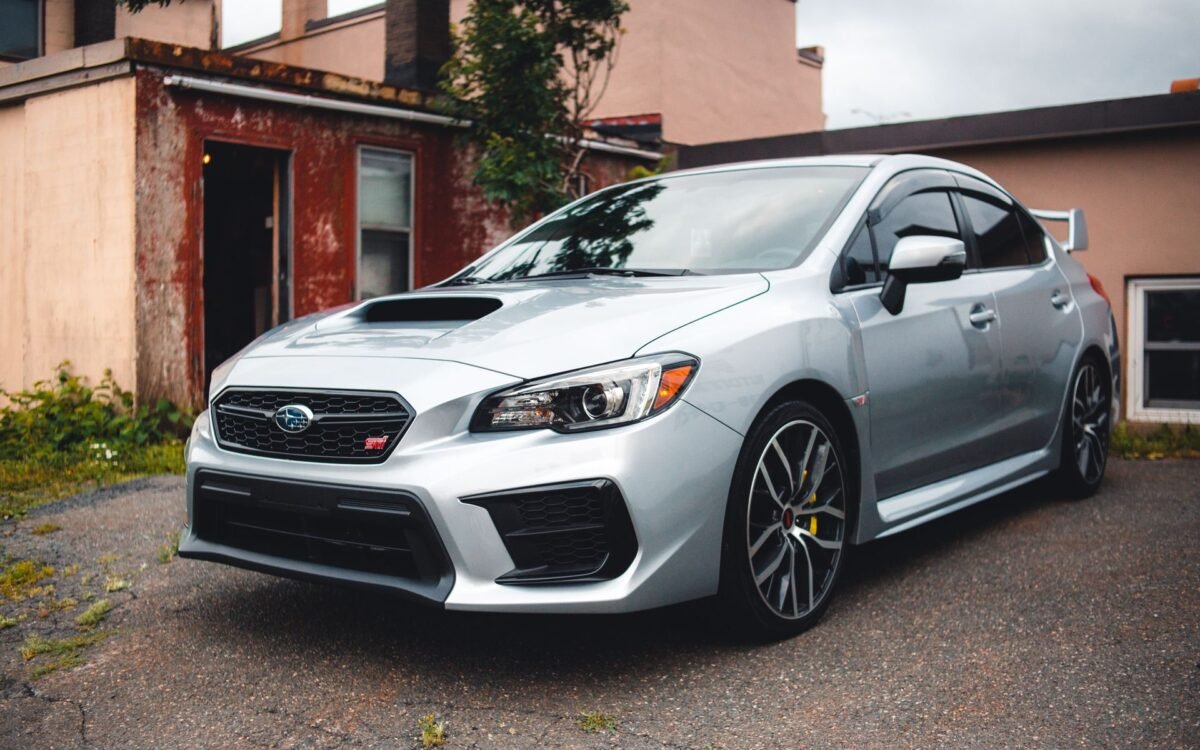
Affordable Performance Sedans Still Worth Driving: Civic Si vs. Elantra N vs. WRX
The best affordable sports sedans still exist, and three names lead the class in 2026. The Honda Civic Si, Hyundai Elantra N and Subaru WRX all cost under $36,000 to start.
Each one is a four-door sedan with a turbo engine and a manual gearbox. Yet they feel very different on the road, and the right pick depends on how you drive.
What makes these three the best affordable sports sedans?
Affordable sports sedans have almost disappeared from showrooms. Most brands now sell crossovers, and the few quick sedans left are often automatic only.
These three survive because they still offer a manual gearbox and real driver involvement. They also seat five people and carry a usable boot, so they work as an only car.
Edmunds ranks the Elantra N first and the Civic Si second among compact sports sedans for 2026. The WRX sits further down its list, but it brings something neither rival offers.
How do the three cars compare on paper?
The numbers tell a clear story before anyone turns a wheel. Hyundai brings the most power, Subaru brings all-wheel drive, and Honda brings the lowest price.
| Honda Civic Si | Hyundai Elantra N | Subaru WRX | |
|---|---|---|---|
| Engine | 1.5L turbo four | 2.0L turbo four | 2.4L turbo flat-four |
| Power | 200 hp | 276 hp | 271 hp |
| Torque | 192 lb-ft | 289 lb-ft | 258 lb-ft |
| Gearbox | 6-speed manual | 6-speed manual or 8-speed DCT | 6-speed manual or CVT |
| Drive | Front-wheel drive | Front-wheel drive | All-wheel drive |
| 0-60 mph | About 6.6 seconds | About 5 seconds | About 5.6 to 6.2 seconds |
| Combined mpg | 31 | 24 | 22 |
| Starting price | $31,495 | $35,100 | $32,495 |
All prices are US-market MSRP before destination charges, as reported in November 2026. Check current prices before buying, because figures change by model year and market.
How much do the Civic Si, Elantra N and WRX cost?
The Civic Si is the cheapest way into this trio, at $31,495. Honda sells it in a single trim, so there is no options maze to work through.
That single-trim approach keeps the choice simple. You pick a colour, and the car already has its sport seats, limited-slip differential and Bose sound system.
The WRX starts at $32,495 for 2026, after Subaru brought back the base trim. That move cut the entry price by $5,230 against the previous year, when the Premium was the cheapest model.
A WRX Premium costs $33,995 and adds heated seats, blind-spot monitoring and push-button start. Prices then climb steeply, with the track-focused tS at $44,995.
The Elantra N starts at $35,100 with the manual gearbox, or $36,600 with the dual-clutch automatic. It is also sold in a single trim, so every car gets the same core hardware.
A limited-production TCR Edition sits above that, at roughly $39,450 to $40,950. It adds a carbon-fibre rear wing, bigger brakes and Alcantara trim inside.
Which one is the quickest?
The Elantra N is the fastest car here by a clear margin. Its 2.0-litre turbo makes 276 horsepower and 289 lb-ft of torque, the most in this group.
Autoweb’s road test of the Elantra N reports a 0-60 mph sprint of around five seconds. That is roughly a second and a half quicker than the Civic Si.
The dual-clutch version adds N Grin Shift, a 20-second overboost that lifts output to 286 horsepower. It is a party trick, but it also helps the car pull harder out of slow corners.
The WRX sits in the middle on pace. Its 2.4-litre turbo flat-four makes 271 horsepower, and the manual car reaches 60 mph in about 5.6 to 6.0 seconds.
Edmunds tested the base WRX and recorded 6.2 seconds to 60 mph on its best run. Launching the car cleanly is tricky, its testers noted, which explains the spread in published times.
The Civic Si is the slowest in a straight line, at about 6.6 seconds to 60 mph. Its 200 horsepower looks modest next to the other two, but the car weighs only 2,952 pounds.
That low weight matters more than the headline figure suggests. The Si feels eager rather than slow, and its engine pulls cleanly through the mid-range.
How do they feel to drive?
The Civic Si has the best manual gearbox of the three, and most reviewers agree on that point. Its short-throw six-speed shifter is light, precise and easy to use every day.
Rev-matching comes as standard, and it can be switched off for drivers who prefer to heel-and-toe themselves. A helical limited-slip differential helps the front wheels put power down cleanly.
The Elantra N is the loudest and most dramatic car here. It pops and crackles from its exhaust, firms up its adaptive suspension in N mode, and feels built for track days.
AutoGuide’s full Elantra N details list an electronically controlled limited-slip differential and 19-inch forged wheels. Those parts explain why it corners so flat and grips so hard.
The WRX feels different again, because it is the only one with all-wheel drive. Power goes to all four wheels, so traction in rain and snow is far better than either front-wheel-drive rival.
Its steering is light, which makes daily driving easy but gives less feedback on a twisty road. The ride is firm and the cabin is noisy, yet the car feels tough and honest.
Which is the easiest to live with every day?
The Civic Si wins the daily-driver contest. Its cabin is the quietest and best finished of the three, with a clean dashboard and a 9-inch touchscreen.
Rear legroom measures 37.4 inches, and the 14.1-cubic-foot boot swallows a weekly shop with ease. The 60/40 split rear seats fold down for longer loads.
Honda also fits ten airbags and its full Sensing safety suite as standard. That includes adaptive cruise control, lane keeping assist and blind-spot information.
The Elantra N is nearly as practical, with the same five seats and a 14.2-cubic-foot boot. Its sport seats grip well in corners but stay comfortable on longer trips.
Its dual 10.25-inch displays look modern, and heated seats come as standard. The firm ride is the main compromise, and its small 12.4-gallon tank means more fuel stops.
The WRX is the roomiest in the rear, with 36.5 inches of legroom, but its cabin is the plainest. Hard plastics cover much of the interior, and the big 11.6-inch touchscreen can feel slow to respond.
Every 2026 WRX now gets EyeSight driver assistance as standard, even with the manual gearbox. That is a first for manual WRX models, and it matters for family buyers.
How much fuel do they use?
The Civic Si is easily the most frugal car here. The EPA rates it at 27 mpg in the city, 37 mpg on the highway and 31 mpg combined.
That gap is large enough to matter over a year of commuting. A driver covering 12,000 miles would use roughly 390 gallons in the Si, against about 500 in the Elantra N.
The Elantra N manages 21 mpg in the city, 29 mpg on the highway and 24 mpg combined with the manual gearbox. The automatic version drops about one mpg across the board.
Its thirst is the price of its performance. The turbo engine works hard, and the short gearing keeps revs high on the motorway.
The WRX is the thirstiest of the three, at 19 mpg in the city, 26 mpg on the highway and 22 mpg combined. All-wheel drive and a bigger engine both add to its fuel use.
None of these cars is cheap to run by family-sedan standards. The Si simply costs the least at the pump, and that advantage grows with every mile.
Which one gives you the most for your money?
Value depends on what you count. The Civic Si is the cheapest to buy and the cheapest to run, which makes it the smartest financial choice.
It also holds its value well, because demand for manual Hondas stays strong. Autoblog calls it one of the best all-round affordable sport sedans you can buy.
The Elantra N costs about $3,600 more than the Si, but it delivers far more performance for that money. It also carries Hyundai’s long powertrain warranty, reported at 10 years or 100,000 miles.
Xcarspace’s 2026 compact sports sedan ranking puts the Elantra N first, at 8.8 out of 10. It rates the Civic Si second at 8.5 and the WRX third at 8.0.
The WRX is the value pick for drivers in wet or snowy places. No other car in this price range offers a turbo engine, a manual gearbox and all-wheel drive together.
Its base trim is a genuine bargain, as SlashGear’s week with the base WRX found. The review calls the sub-$34,000 car tough to beat for the money.
What should you check before you buy?
Start by checking the price on the day, because these figures move. Destination charges add around $1,200 to $1,400, and dealer fees vary by state and market.
Test drive all three back to back if you can. The differences in ride, noise and gearbox feel are hard to judge from a spec sheet alone.
Check insurance quotes too, because performance sedans can cost more to insure than ordinary family cars. A quick quote before signing can prevent an unpleasant surprise.
Look at warranty cover as well. Honda covers the Si for three years or 36,000 miles, with five years or 60,000 miles on the powertrain.
Hyundai’s cover is longer, which matters if you plan to keep the car for many years. Subaru’s cover sits between the two, so compare the small print carefully.
Finally, remember that all three cars are manuals at heart. If you cannot drive a stick, the Elantra N and WRX offer automatics, but the Civic Si does not.
Which affordable sports sedan should you buy?
Buy the Civic Si if you want the best all-rounder. It is the cheapest, the most frugal and the easiest to live with, and its gearbox is a joy.
It suits drivers who want fun on a back road without giving up comfort or economy. It is also the safest pick if this will be your only car.
Buy the Elantra N if speed matters most. It is the quickest car here, the most exciting to drive hard, and the best value in pure performance terms.
It suits drivers who enjoy track days or weekend blasts, and who accept higher fuel bills in return. The dual-clutch version adds convenience without losing the fun.
Buy the WRX if you need all-weather grip. Its all-wheel drive makes it the only sensible choice for snowy winters or muddy rural roads.
It suits drivers who want a rally-bred sedan that still works as a family car. The base trim is the pick, because every WRX gets the same engine and all-wheel drive.
Our Car Reviews coverage will keep tracking this class, because it is one of the last places where a manual gearbox still survives. For now, all three cars earn their place, and the best one is the one that fits your roads.
For a wider view of the class, our Automotive section covers new models and reviews, while our electric vehicle coverage looks at the battery-powered alternatives. The wider market is covered in our latest news.
Frequently Asked Questions
Which is the best affordable sports sedan overall?
The Elantra N takes the overall crown on performance and value, topping both Edmunds and Xcarspace rankings for 2026. The Civic Si is the better all-rounder, and the WRX is the best pick for bad weather.
Is the Civic Si faster than the Elantra N?
No, the Elantra N is much faster. It makes 276 horsepower against the Si’s 200, and reaches 60 mph in about five seconds against the Si’s 6.6 seconds.
Does the WRX come with a manual gearbox?
Yes, every 2026 WRX base model comes with a six-speed manual as standard. A continuously variable automatic is optional on the more expensive Limited and GT trims.
Which of the three is cheapest to run?
The Civic Si is cheapest to run by a clear margin. It returns 31 mpg combined, against 24 mpg for the Elantra N and 22 mpg for the WRX, and it is also the cheapest to buy.
Are these cars still worth buying in 2026?
Yes, because the class is shrinking fast. Manual sports sedans under $36,000 are rare now, and each of these three still offers real driver involvement with everyday practicality.
Sources: Autoblog, Edmunds, Autoweb, AutoGuide, SlashGear, Xcarspace and Carscoops. Figures are as reported by those publications as of 25 November 2026.
Prices are US-market MSRP before destination charges — check current prices and specs before buying. The featured image is a stock photograph for illustration only.