
Electric Aviation and eVTOL Air Taxis: Timeline From Prototype to Commercial Routes
The eVTOL air taxis timeline began with a small, strange-looking prototype flight in 2011. Fifteen years later, the industry is closer than ever to carrying paying passengers, yet no piloted air taxi has a type certificate in the West.
That gap between promise and reality is the story of electric aviation. This guide walks through the whole timeline, from the first prototypes to the commercial routes planned for 2027 and 2028.
What Is an eVTOL Air Taxi?
An eVTOL is an electric aircraft that takes off and lands vertically, like a helicopter. The letters stand for electric vertical take-off and landing, and the idea is to fly short city trips without runways.
Most designs use several electric motors driving propellers or rotors. Some are multicopters that hover and cruise the same way, while others tilt their propellers forward to fly on a wing.
The appeal is simple: quieter than a helicopter, cheaper to run, and able to use small landing pads on rooftops. NASA calls this new market Advanced Air Mobility, and air taxis are its most visible part.
When Did the First eVTOL Prototype Fly?
The first manned multicopter flight took place in 2011, with a prototype built by the German company Volocopter. The early machine was assembled from toy drone parts, which shows how rough the starting point was.
Volocopter kept refining that design for more than a decade. The result is the two-seat VoloCity, a multicopter that has flown many manned test flights in several countries.
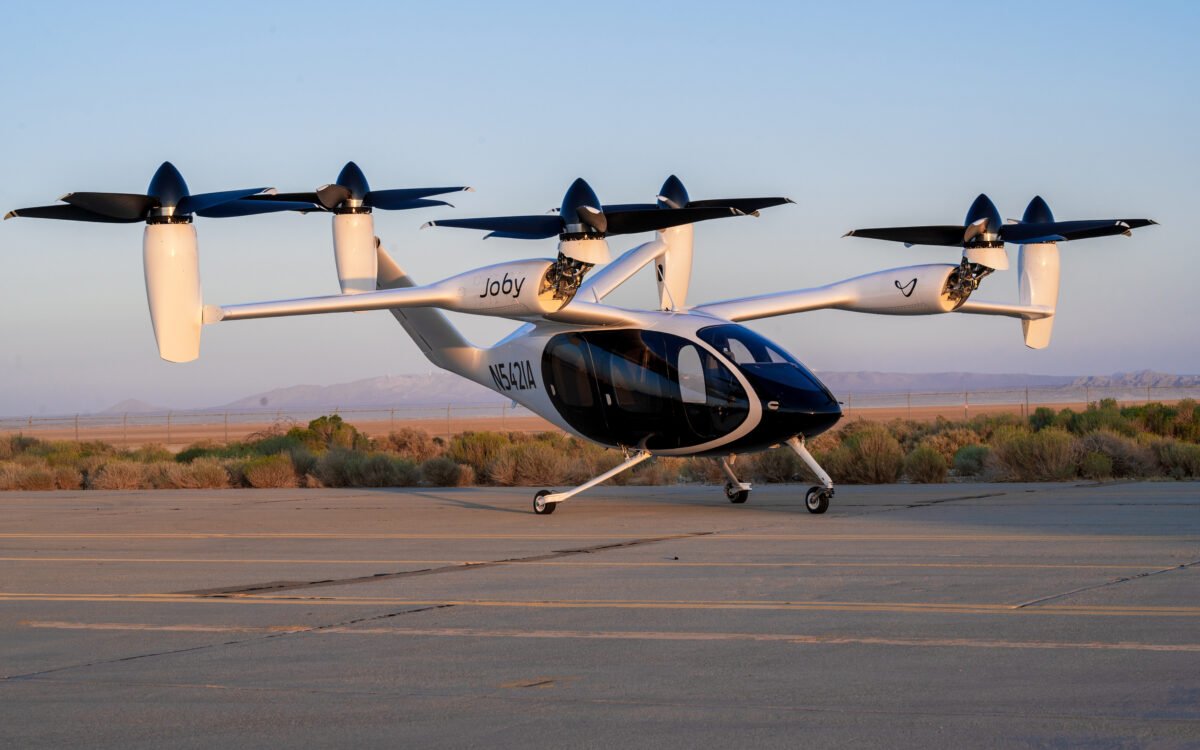
Other pioneers followed quickly. Joby Aviation was founded in 2009 and spent years in quiet development before revealing its tilt-propeller S4 aircraft to the public.
By the late 2010s, the field had exploded. More than 800 start-ups were chasing the air taxi dream at the peak, though only about a dozen serious programmes remain today.
Which eVTOL Was Certified First?
China moved first. The country’s civil aviation regulator, the CAAC, gave the pilotless EHang EH216-S its type certificate on 13 October 2023.
The production certificate followed on 7 April 2024. Then, on 30 March 2025, two operators in Guangzhou and Hefei received the first air operator certificates for passenger-carrying pilotless aircraft.
That makes the EH216-S the only passenger eVTOL in the world with a full set of approvals. It carries two passengers, flies without a pilot, and is used mainly for short sightseeing and tourism flights.
As of November 2026, EHang aircraft were operating at more than 40 sites in China. Public ticket sales had still not started, according to a company report from June 2026.
Where Does Joby’s S4 Stand in 2026?
Joby Aviation’s S4 is the furthest along of any piloted eVTOL in the West. The aircraft carries a pilot and four passengers, cruises at up to 200 mph, and has a published range of about 150 miles.
In its shareholder letter of 4 November 2026, Joby said the first three of the five stages of its FAA type certification path were complete. It had also finished several “for credit” tests on the fuselage, propeller hubs and tail.
The next step is Type Inspection Authorization flight testing, where FAA pilots fly the aircraft for credit. Joby expects that work, including FAA pilot training, in the first half of 2027.
Joby plans to start passenger service in Dubai first, under a six-year exclusive agreement with the city’s transport authority. The target was the end of 2026, though the operator certificate was still pending in November.
Where Does Archer’s Midnight Stand in 2026?
Archer Aviation’s Midnight is close behind Joby. It also carries four passengers plus a pilot, and its published range is about 100 miles with a cruise speed near 150 mph.
Archer closed Phase 3 of the FAA’s four-phase certification process in April 2026. In May it confirmed it had entered the final phase, with the FAA accepting 100 percent of its means of compliance.
Archer is aiming for its first operations in Abu Dhabi, in the United Arab Emirates. It has also been named the official air taxi provider for the 2028 Los Angeles Olympics and Paralympics.
Backing matters in this race. Archer counts a major airline among its partners, with an order for up to 200 aircraft, plus manufacturing support from a large carmaker.
What About the Other Contenders?
Beta Technologies holds a different kind of first. In October 2026, the FAA gave its ALIA A250 a first-of-its-kind Special Airworthiness Market Survey Certificate.
That certificate allows demonstration flights for customers, but it is not a type certificate. Beta’s five-passenger aircraft is still working through the full certification process.
Eve, the air mobility arm of a Brazilian planemaker, has flown an engineering prototype 73 times. It plans a full transition flight, from hover to wing-borne flight, by the end of 2026, with entry into service targeted for 2028.
Vertical Aerospace in Britain has flown its Valo aircraft through a piloted two-way transition. It is targeting certification in 2028, while Wisk Aero continues work on a fully autonomous, pilotless design.
Why Has Certification Taken So Long?
Certifying a new kind of aircraft is slow by design. Regulators must write new rules for machines that are neither aeroplanes nor helicopters, and every novel system needs proof.
The FAA issued its final powered-lift rule in October 2024, which created the legal category these aircraft belong to. A full advisory circular for powered-lift aircraft is planned for summer 2027.
Money is the other bottleneck. Industry analysts estimate that certifying one eVTOL model in the US or Europe costs about 1.5 billion dollars, because so much of the technology is new.
That cost explains the shakeout. More than 13 billion dollars in equity has flowed into the sector since 2019, yet US passenger revenue from eVTOLs remains effectively zero.
Which Cities Will Get Air Taxis First?
Dubai is the most likely first city for a Western air taxi service. Joby has a ready vertiport at Dubai International Airport and plans flights to Palm Jumeirah in about twelve minutes.
Abu Dhabi is the parallel bet. Archer is working through the UAE’s restricted certificate programme there, with operations targeted for late 2026 or early 2027.
In the United States, the FAA’s eVTOL Integration Pilot Program is testing real operations. Eight projects across 26 states were selected in March 2026, with the first operation on 10 July 2026.
New York and Los Angeles are the leading US launch cities. Joby flew its first piloted flight from Manhattan’s Downtown Heliport in April 2026, a symbolic step toward city service.
What Will an Air Taxi Ride Cost?
Early rides will not be cheap. Industry reporting puts launch fares at roughly 80 to 150 dollars for a 20-mile trip, about the price of a premium black-car ride, but in the sky.
Prices should fall as batteries improve and vertiports multiply. The same reporting expects fares to drop toward 20 to 50 dollars for a similar trip by 2030.
The economics depend on volume. An air taxi only makes money if it flies many short trips a day, with quick battery charging between them.
That is why the first routes will be airport shuttles for business travellers. A twelve-minute flight that replaces an hour in traffic is worth a premium fare to some passengers.
What Are Vertiports, and How Many Are Planned?
A vertiport is a small landing pad for eVTOL aircraft, with charging equipment and passenger facilities. Think of it as a heliport rebuilt for electric aircraft.
More than 1,500 vertiports are currently being planned worldwide, according to industry reporting. Most are still on paper, tied to the cities where the first services will launch.
The first real ones are already built. Joby’s four-story vertiport at Dubai International Airport is ready, and other sites are under construction in Abu Dhabi and the United States.
Vertiports need power, space and planning permission. In dense cities, finding rooftop sites and winning local approval can take as long as certifying the aircraft itself.
What Could Still Delay the Timeline?
History says to expect delays. Volocopter planned to fly passengers at the Paris 2024 Olympics, but the service never happened because certification was not ready.
The German company later filed for insolvency and was acquired by new investors. It now holds Europe’s first eVTOL regulatory sandbox for 2026, a smaller but steadier path.
Lilium, another German pioneer, entered insolvency in late 2023 after raising more than a billion dollars. Its assets were bought and a new company continues the work.
Battery limits are the technical ceiling. Today’s batteries give most air taxis a practical range of 100 to 150 miles, which suits city hops but rules out longer regional routes for now.
What Does the eVTOL Air Taxis Timeline Look Like for 2026–2030?
The table below sums up the timeline as it stood in November 2026. Dates after 2026 are company targets and regulator plans, not confirmed facts.
| Year | Milestone |
|---|---|
| 2011 | First manned multicopter flight, Volocopter prototype |
| 2023 | EHang EH216-S earns the world’s first eVTOL type certificate |
| 2024 | FAA issues its powered-lift final rule; EHang gains production certificate |
| 2025 | First eVTOL operator certificates issued in China |
| 2026 | Joby and Archer reach final FAA certification stages; Dubai and Abu Dhabi targets |
| 2027 | FAA pilot flight testing; first US commercial passenger flights targeted |
| 2028 | Archer at the Los Angeles Olympics; Eve and Vertical target entry into service |
| 2030 | Fares expected to fall toward 20 to 50 dollars per short trip |
The honest summary is this: 2026 was supposed to be the launch year, and it was not. No eVTOL is flying ticketed passengers on a city route anywhere yet.
The realistic reading is that 2027 brings the first commercial flights in the Gulf and possibly the US. Wider service, with lower fares and more cities, looks like a 2028 to 2030 story.
Frequently Asked Questions
When will air taxis start carrying passengers?
The first commercial flights are targeted for late 2026 in Dubai and Abu Dhabi, and for 2027 in the United States. All of these dates depend on regulators issuing the final approvals.
Which eVTOL is closest to carrying passengers?
China’s pilotless EHang EH216-S is the only one with full certification, including type, production and operator certificates. In the West, Joby’s S4 leads, with Archer’s Midnight close behind.
How much will an air taxi ride cost?
Expect roughly 80 to 150 dollars for a 20-mile trip at launch. Industry reporting expects fares to fall toward 20 to 50 dollars by 2030 as operations scale up.
How far can an eVTOL air taxi fly?
Most current designs offer a practical range of 100 to 150 miles on a charge. That suits airport shuttles and short city hops, but not longer regional routes.
Are eVTOL air taxis safe?
No piloted eVTOL has a Western type certificate yet, so the safety record is still being built in test flights. Regulators require the same rigour as for any new aircraft before passengers board.
Sources: AeroCorner, Simple Flying, eVTOL.Travel, Pixidia, EV Portal, Drone Intelligence and the eVTOL Index, all checked in November 2026.
Launch dates, fares and certification stages are reported plans that can change. Check the latest regulator and operator announcements before booking, investing or planning travel around them.