
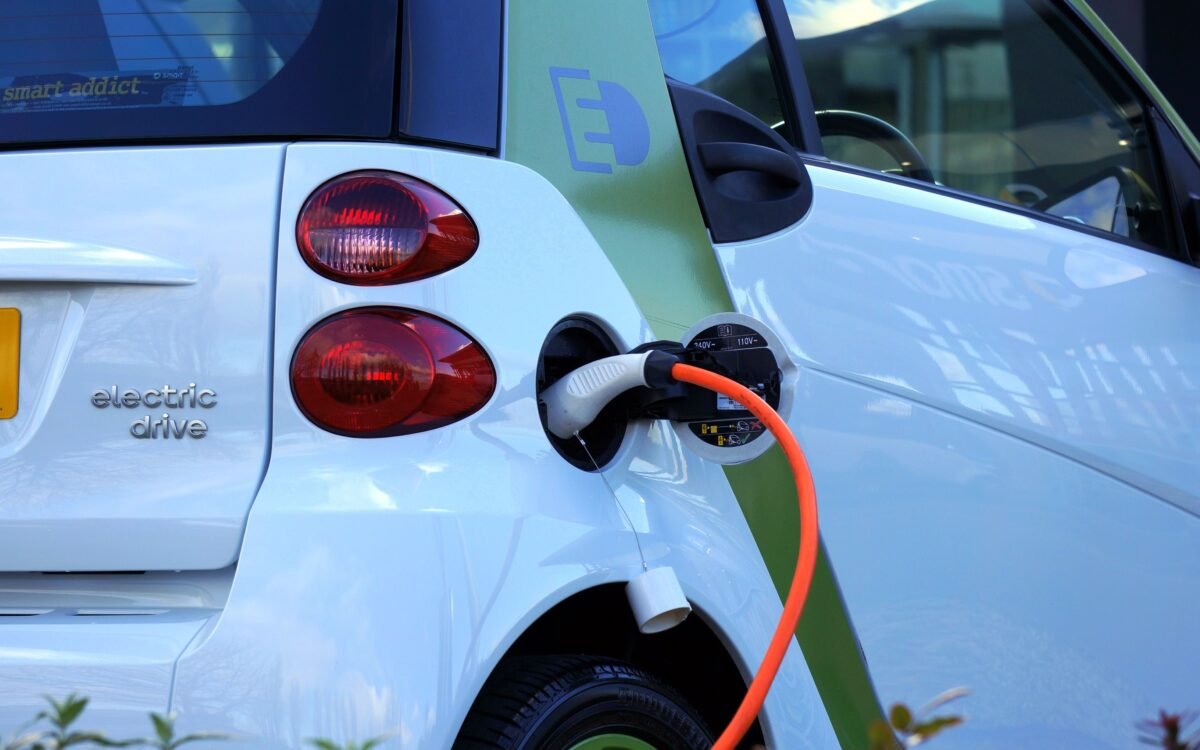
Vehicle-to-Home (V2H) Backup Power: Turning Your EV Into a Whole-House Generator
A power cut used to mean candles, a dead fridge and a silent house. Now the car in your driveway may hold the answer, because vehicle to home V2H EV technology turns an electric car into a backup power source for the whole house.
Instead of buying a separate home battery, owners of a growing number of electric cars can feed power from the car’s battery into their home’s electrical panel. The idea is simple, but the hardware, the costs and the limits need a clear look first.
This guide explains how V2H works, which cars support it, how long a charge lasts, and what a full setup costs in 2026. It also covers the safety rules and the battery questions every buyer should ask before spending.
What Is Vehicle-to-Home (V2H) Power?
V2H is a system that lets an electric car send power back into a home. A bidirectional charger connects the car to the home’s electrical panel, and during an outage the car acts like a standby generator.
The technology has moved from pilot projects to real products in 2026. PowerHornet’s 2026 guide describes V2H as a mature consumer product this year, with several carmakers now selling cars and chargers that support it.
The appeal is the size of the battery. The average EV battery holds 69.5 kWh, enough to run a typical American home for about two days, according to eos-e’s 2026 guide.
That is far more energy than a single home battery holds. A Powerwall 3 stores just 13.5 kWh, so a car battery can hold four to fifteen times more energy, the same guide notes.
For background on the cars themselves, see our electric vehicle coverage, which explains battery sizes and charging in plain terms.
How Does V2H Work?
Normal charging sends power one way, from the grid into the car. V2H reverses that flow, so power moves from the car’s battery back into the home through a special charger.
The car’s battery stores direct current, while a home runs on alternating current. An inverter converts the battery’s DC power into 120/240V AC that matches the home’s voltage and frequency.
In many systems the inverter sits inside the wall-mounted charger rather than the car. PowerHornet explains that the car simply releases DC power down the cable, and the wallbox handles the complex conversion to AC.
A transfer switch or gateway is just as important. It separates the home from the grid during discharge, so power never flows back onto utility lines where it could endanger line workers.
What Is the Difference Between V2H, V2L and V2G?
Three terms get mixed up, and they describe very different things. V2L, vehicle-to-load, is the simplest: the car powers individual appliances through outlets or an adapter, like a giant portable power bank.
V2L output is modest, usually 1.9 to 3.6 kW on most cars. That covers a fridge, a television, lights and phone charging, but not central air or an electric cooker at the same time.
V2H goes further by feeding the home’s panel, so hardwired circuits run as normal. Chariotz puts it plainly: V2L runs a few appliances at a time, while V2H can run an entire house.
V2G, vehicle-to-grid, sends power back to the wider electricity grid rather than the home. It is still mostly in utility pilots, because grid rules and interconnection standards remain complex, PowerHornet reports.
The Ford F-150 Lightning shows the scale gap well. Its Pro Power Onboard system offers up to 9.6 kW across several outlets, far above the 3.6 kW ceiling of most V2L setups, according to Chariotz.
Which EVs Can Power a Home in 2026?
Not every electric car can do this, and the model matters more than the badge. About 14 of the roughly 70 EV models sold in the United States support home backup in 2026, according to eos-e.
The Ford F-150 Lightning is the benchmark. Its Intelligent Backup Power system is the most mature V2H setup on the road, and owners report it switching over automatically when the grid fails.
GM’s Ultium range also supports V2H, including the Silverado EV, Sierra EV, Hummer EV, Blazer EV, Equinox EV and Cadillac Lyriq. The system pairs the car with a bidirectional charger and an enablement kit.
Tesla’s Cybertruck offers V2H through Powershare, with up to 11.5 kW of output. Newer Model 3 and Model Y cars ordered from October 2026 can add backup power only when paired with a Powerwall 3.
Hyundai and Kia cars such as the Ioniq 5, Ioniq 6, EV6 and EV9 offer V2L as standard. Full whole-home V2H is rolling out on newer models like the EV9 with a compatible bidirectional wallbox.
How Long Can an EV Power a House?
The answer depends on two things: the size of the car’s battery and how much power the home draws. The average American home uses about 30 kWh per day, so dividing battery size by 30 gives a rough estimate.
A Ford F-150 Lightning with its 131 kWh battery can back up a typical home for three to ten days, according to NuWatt’s engineering guide. The wide range reflects how much power the household actually uses.
The Lightning’s maker says up to three days at normal use, or up to ten days when only essentials run. Essentials usually mean the fridge, lights, Wi-Fi and a few outlets, not the air conditioning.
Bigger batteries last longer. A Silverado EV with a 200 kWh pack gives roughly 6.7 days at 30 kWh a day, while a Hyundai Ioniq 5 at 77.4 kWh gives about 2.6 days, eos-e calculates.
Most V2H owners plan for essentials, not everything. A 100 kWh truck battery covers two to four days of essential loads at a one to two kW average draw, according to dnaso’s 2026 guide.
| Vehicle | Battery size | Rough backup at 30 kWh/day |
|---|---|---|
| Silverado EV | 200 kWh | 6.7 days |
| F-150 Lightning | 131 kWh | 4.4 days |
| Cybertruck | 123 kWh | 4.1 days |
| Kia EV9 | 99.8 kWh | 3.3 days |
| Hyundai Ioniq 5 | 77.4 kWh | 2.6 days |
| Nissan Leaf | 62 kWh | 2.1 days |
| Powerwall 3 (for comparison) | 13.5 kWh | 0.5 days |
What Equipment Does a V2H Setup Need?
V2L needs nothing more than the adapter that comes with the car. V2H is a real electrical project, and it starts with a bidirectional charger that can move power in both directions.
The charger is the heart of the system. For the Lightning, the 80-amp Charge Station Pro is the bidirectional unit, and it is included with extended-range trucks, Electrified Experts reports.
Next comes the home integration hardware: an inverter and a transfer switch or gateway. This equipment isolates the home from the grid and manages which circuits receive power during an outage.
Some systems use a smart panel that controls power circuit by circuit. Others use a simpler transfer switch that feeds a chosen set of backup circuits, such as the fridge, lights and heating controls.
V2H sits at the sharp end of automotive technology, where cars, chargers and home wiring now meet in one system.
Installation must be done by a licensed electrician. The work involves the main panel, permits and often a utility notification, and local rules vary, so a local professional should confirm what applies.
How Much Does V2H Installation Cost?
Prices vary widely by car, charger and home. A full V2H install, including the bidirectional charger, transfer hardware, labour and permits, costs $4,000 to $8,000 or more, dnaso reports.
Most quotes land around $6,000 to $7,000, the same guide finds. The hardware alone for the Lightning’s Home Integration System runs about $3,800 before installation, according to the same source.
Cheaper paths exist for some trucks. StormWatts found published equipment prices from about $1,100 for a meter-collar transfer switch setup to about $6,400 to $6,750 for GM and Kia bidirectional kits, plus installation.
A federal tax credit once helped. The residential Section 30C credit, worth up to $1,000 for charger installation, expired on 30 June 2026, so buyers should check state and utility rebates instead.
Prices and incentives change often, so check current figures before buying. A licensed electrician can quote the full installed cost for a specific home and car, which is the number that matters.
Is V2H Cheaper Than a Home Battery or a Generator?
On hardware alone, V2H usually wins. NuWatt puts a V2H setup at $1,500 to $8,000, against $12,500 to $14,500 for a Powerwall, because the car owner has already paid for the battery.
The comparison is not quite fair, though. A home battery stays at home, while a V2H car only helps when it is parked and plugged in. A car away from home during an outage gives no backup at all.
Against a petrol generator, V2H is quieter, cleaner and needs no fuel runs. A generator is cheaper to buy and works anywhere, but it needs fuel, maintenance and a safe place to run outdoors.
The wider automotive market is moving this way, with more models gaining bidirectional support each year.
The best value case is a household that already owns a capable EV and lives where outages are common. For those owners, V2H turns a car they already own into backup power at the cost of the charger and wiring.
Does V2H Damage the EV Battery?
This is the question every owner asks, and the honest answer is that the effect is small. Occasional backup use adds far fewer charge cycles than daily driving, so wear from rare outages is minimal.
Most systems also let owners set a reserve level. The car stops feeding the home before the battery runs flat, so there is always enough charge left to drive to safety or to a working charger.
Battery warranties generally cover eight years or 100,000 miles, but owners should read their own warranty terms. Some makers may treat heavy bidirectional use differently, so check the fine print first.
What Should You Check Before Buying a V2H System?
Start with the car. Check whether the exact model and year supports V2H, because support varies by platform and even by model year, and not every EV can feed a home panel.
Next, check the home’s electrical panel. Older panels may need an upgrade before a bidirectional charger can be fitted, and that work adds cost and time to the project.
Ask the utility about its rules. Some utilities require notification or approval before a home can island from the grid, and the paperwork can take weeks in some areas.
Finally, get quotes from a licensed electrician. Prices, rebates and rules vary by place, so a local quote is the only reliable figure for the total installed cost.
Is V2H Worth It in 2026?
For owners of a capable EV in an area with unreliable power, the answer is increasingly yes. The car already holds a huge battery, and the charger turns it into backup power for days.
For owners whose car cannot do V2H, or whose power rarely fails, the case is weaker. The hardware only pays for itself when outages are common or the car was going to be bought anyway.
The direction is clear, though. More models gain support each year, hardware prices are falling, and the car in the driveway is becoming a power station as well as a vehicle.
For the latest developments, follow our news coverage of electric cars and energy technology.
Frequently Asked Questions
Can any electric car power a house?
No. Only EVs with bidirectional charging can feed a home, and most EVs on the road in 2026 cannot. Check the exact model and year before assuming it works.
How long can an EV power a home?
It depends on battery size and use. A 131 kWh truck covers about three days at normal use, or up to ten days on essentials, while a smaller EV battery may last one or two days.
How much does V2H cost to install?
A full setup usually costs $4,000 to $8,000 or more installed, with most quotes around $6,000 to $7,000. Prices vary by car, charger and home, so get a local quote.
Is V2H safe?
Yes, when installed properly. A transfer switch isolates the home from the grid, and a licensed electrician must do the work. Never connect a car to house wiring without approved equipment.
Does V2H work with solar panels?
In many systems, yes. Solar can recharge the car during the day, and the car can power the home at night. Compatibility depends on the inverter and the charger, so confirm both first.
Sources: PowerHornet, Electrified Experts, Chariotz, StormWatts, dnaso and eos-e, all checked 25 November 2026. NuWatt’s guide was also consulted but returned a 429 error to curl.
Prices, vehicle support and rebates change often. Check current figures with a licensed electrician and the carmaker before buying any V2H equipment.