FCC Approves SpaceX Plan for One Million Orbital AI Satellites
The US Federal Communications Commission has approved SpaceX’s plan to deploy up to one million satellites to build data centres in space. The SpaceX orbital AI satellites, known as the Starmind constellation, would process huge amounts of data for artificial intelligence workloads and send the results back to Earth.
The FCC announced the decision on Wednesday, November 25, and the Associated Press reported it on November 26, 2026. The regulator called it the first authorisation in US history for a constellation of data centres in space. Scientists, astronomers and rival satellite operators immediately raised doubts about whether the plan can work, and what it would do to the night sky.
The approval is a milestone for Elon Musk’s long-held ambition to move computing off the planet. It is also a test case: no one has ever tried to run AI data centres at this scale in orbit, and the FCC’s own order acknowledges that SpaceX must prove the idea over the next 15 years.
What did the FCC approve?
SpaceX filed its application at the beginning of the year, arguing that orbital data centres are the most efficient way to meet accelerating demand for AI computing power. The company said the satellites would use solar power with little operating and maintenance cost, easing pressure on power grids and water supplies on Earth.
The FCC agreed. Its authorisation covers up to 1,000,000 orbital compute modules in low Earth orbit, forming a data centre constellation called Starmind. The modules would process massive amounts of data that would be used back on Earth, the FCC said, and bring humans closer to harnessing the full power of the sun.
FCC chairman Brendan Carr, appointed by President Donald Trump, said America was leading the world into the era of super intelligence. He said Wednesday’s move opens a bold new frontier for the computing infrastructure needed to power American leadership and growth. The Associated Press reported that Musk welcomed the decision on social media.
What are the deadlines?
The approval is not a blank cheque. Under the FCC’s order, SpaceX must deploy at least one authorised satellite and place it in its assigned orbit by November 2033. The company must then add more gradually, with all one million satellites in their assigned orbits no later than November 25, 2040.
Musk has previously said SpaceX will start launching the satellites in 2027. That would leave six years to get the first module into orbit, and a further seven to scale from one satellite to a million. Even supporters of the idea acknowledge that the launch rate, manufacturing scale and cost involved are unlike anything attempted in spaceflight.
The FCC said it had received a substantial number of public comments before the decision, including petitions asking it to deny SpaceX’s request. It ruled that deploying the satellites serves the public interest, and said it dismissed topics it did not have authority over, such as environmental concerns.

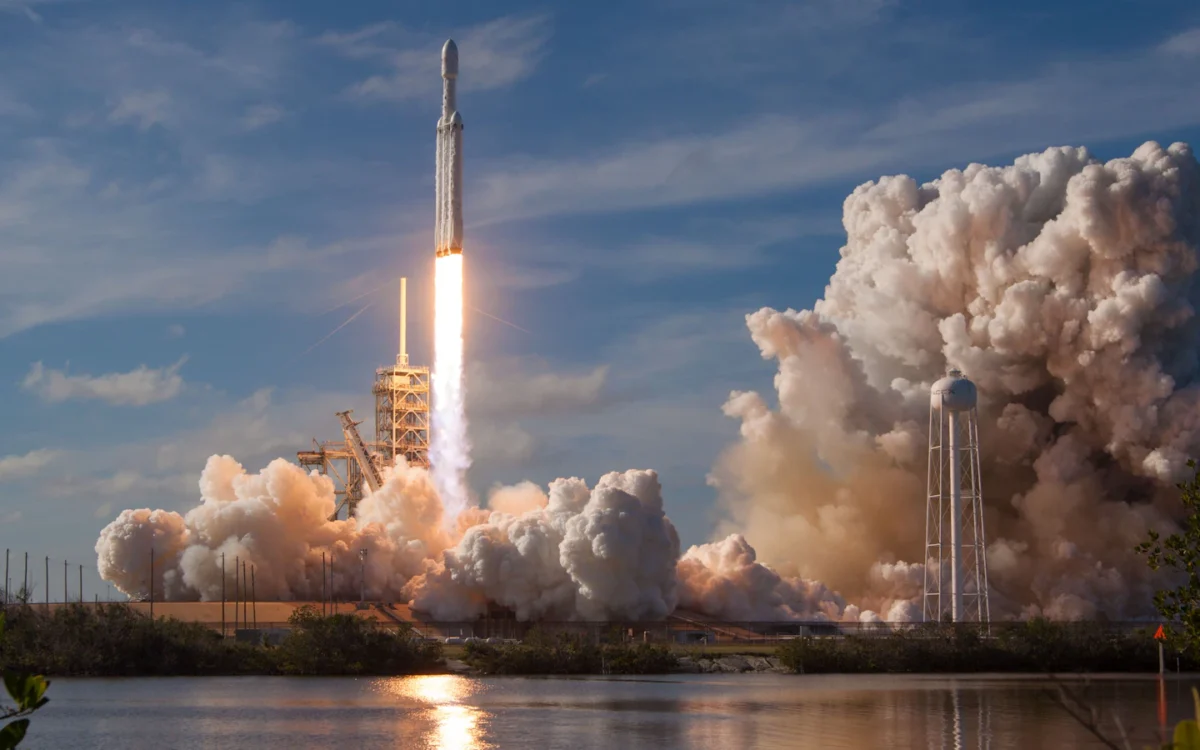
A rocket lifts off from its launch pad. Representative image: Unsplash.
Why are scientists sceptical about orbital AI satellites?
The strongest criticism is physical. Data centres on Earth need huge amounts of water and energy for cooling. Space is cold, but it is also a vacuum, which traps heat inside objects much like a thermos. Heat can only leave a satellite by radiation, and there are basic physical limits to how fast that can happen for a million machines.
Adam Becker, an astrophysicist and author, called the prospect of launching a million satellites to create data centres a fantasy. He told the Associated Press it was not going to happen, and pointed to the cost and difficulty of sending enough material into orbit to build the constellation at all.
Other experts warn about collisions. A million satellites in low Earth orbit would raise the risk of in-orbit crashes, which could create a cloud of debris and trigger a cascading set of collisions. That debris would threaten weather and telecommunications satellites that share the same region of space. The FCC maintained that the Starmind constellation operates consistently with its orbital debris rules.
What about the night sky?
Astronomers are among the most vocal opponents. The American Astronomical Society said it was disheartened and dismayed by the decision. It said the proposed constellation involves larger, and therefore brighter, objects than today’s satellites, and that they would be visible as extremely bright objects for longer periods in the night sky.
The society said the constellation would undermine decades of federal investment in astronomical facilities, and the ability of astronomers and the public to enjoy and study the night sky. Becker echoed that point, calling it pollution of the night sky to the naked eye.
Satellite operator Viasat and Amazon-owned Kuiper Systems were among those who called on the regulator to deny the request. The FCC is also reviewing additional orbital data centre proposals, and says it intends to decide each of them quickly.
Could space data centres still make sense?
Supporters argue that the idea deserves a hearing. Solar power in orbit is constant and abundant, and moving computing off Earth could ease the strain on land, power grids and water supplies. Our report on green data centres explains how liquid cooling and new designs are already changing how AI computing is powered on the ground.
The FCC’s approval does not prove the technology works. It proves the regulator is willing to let SpaceX try. The milestones, one satellite by 2033 and a million by 2040, give the company a long runway, but also a clear test: if the first modules cannot handle heat, cost and debris, the constellation will never reach its full size.
For now, the story is about ambition meeting physics. SpaceX has a history of doing things experts called impossible, from reusable rockets to the largest satellite constellation ever flown. Whether orbital AI data centres join that list, or become the most expensive fantasy in spaceflight, will be decided by engineering, not by an FCC order. Our guide to the edge computing boom looks at how computing is already moving closer to where data is created, and NASA’s Dragonfly mission to Titan shows what ambitious space engineering looks like today. The Technology News coverage will follow the first Starmind launches.
Crewed spaceflight kept moving too — Progress 97 docked with the space station on Thanksgiving Day.
Frequently Asked Questions
What is SpaceX’s Starmind constellation?
Starmind is SpaceX’s proposed constellation of up to one million orbital compute modules, or satellites, that would form data centres in space. The satellites would process large amounts of data for AI workloads using solar power, and send the results back to Earth.
When did the FCC approve the SpaceX satellite plan?
The FCC granted the authorisation on Wednesday, November 25, 2026, calling it the first approval in US history for a constellation of data centres in space. The Associated Press reported the decision on November 26, 2026.
What deadlines must SpaceX meet?
SpaceX must deploy at least one authorised satellite by November 2033, and all one million satellites must be in their assigned orbits by November 25, 2040. Musk has said the company will start launching the satellites in 2027.
Why do scientists doubt orbital AI data centres?
Critics point to the difficulty of cooling computers in the vacuum of space, where heat can only escape by radiation. They also warn about the cost of launching a million satellites, the risk of collisions and space debris, and the effect of bright satellites on the night sky and astronomy.
Who opposed the FCC’s decision?
The American Astronomical Society said it was disheartened and dismayed, while satellite operator Viasat and Amazon-owned Kuiper Systems were among those who urged the FCC to deny the request. The FCC said the constellation was consistent with its orbital debris rules and served the public interest.