For a decade, the cloud was the obvious answer. Send the data to a giant data center, let it do the work, and send the answer back.
That model still works for many jobs. But a growing share of computing is now moving in the opposite direction — closer to the factory floor, the shop, the camera and the car.
Edge computing trends point to a simple shift. Processing happens where the data is created, not hundreds of miles away.
The reason is not fashion. It is physics, regulation and cost. A sensor that must react in milliseconds cannot wait for a round trip to a distant cloud.
What is edge computing, and why is it booming now?
Edge computing means processing data near the device that creates it. The work happens on a gateway, a local server, a base station or the device itself.
Only the results, or a small summary, travel to the cloud. The raw flood of data stays local.
This idea is not new. What is new is the scale. Connected devices now produce more data than networks can cheaply carry, and AI models now need answers in real time.
Our technology trends coverage follows this shift closely. The edge is no longer a niche for factories alone.
How big is the edge computing market in 2026?
The honest answer is that it depends on who is counting. Analyst firms define “edge” differently, so their figures vary widely.
One widely cited forecast, from Mordor Intelligence, puts the edge computing market at $257.76 billion in 2026. It projects growth to $479.97 billion by 2031, at a compound rate of 13.24% a year.
A narrower definition gives a far smaller number. A 2026 market report carried by GlobeNewswire sizes the market at $45.14 billion in 2025, rising to $65.02 billion in 2026.
Research firm IDC took yet another view. Its May 2025 forecast expected global spending on edge computing to reach nearly $261 billion in 2025, growing at 13.8% a year.
The numbers disagree, but the direction does not. Every major forecaster expects edge spending to keep rising through the decade.
What is driving edge computing trends in 2026?
The strongest driver is AI. Companies want AI decisions in real time, and the cloud is often too far away to deliver them.
TechTarget’s look at 2026 trends puts it plainly. AI ambition is now the primary reason organisations adopt edge computing, ahead of basic digitisation.
Consulting firm McKinsey made a similar point. It noted that businesses are training and deploying AI models across many locations, including edge environments, to cut latency and improve resilience.
A second driver is the sheer number of connected devices. Enterprise IoT connections passed 19 billion in 2025, according to Mordor Intelligence, producing exabyte-scale telemetry.
Sending all of that to the cloud would swamp backhaul links and raise egress fees. Processing it locally is cheaper.
A third driver is regulation. Data-sovereignty rules, including the EU Data Act, push organisations to keep certain data inside national borders. Edge sites make that possible.
How does edge AI change the latency equation?
Latency is the time between an event and a response. For many edge uses, it is the whole point.
A typical cloud round trip for an IoT inference takes 100 to 400 milliseconds, according to a 2026 roundup by Proto-stack. Edge inference on modern hardware brings that down to 5 to 50 milliseconds.
That gap decides whether a use case works at all. A video stream analysed at 200 milliseconds per frame manages five frames a second. At 5 milliseconds, it manages 200.
Industrial control is stricter still. Closed-loop motor control often needs a response in under 10 milliseconds. A cloud delay of 200 milliseconds means the bearing has already failed.
The hardware has caught up with the demand. Purpose-built AI chips, known as neural processing units, are now cheap and power-efficient enough for everyday devices.
Our artificial intelligence coverage has tracked their spread from phones into factory sensors and cameras.
As EICTA at IIT Kanpur explains, edge AI puts inference directly on the device or local infrastructure, so decisions happen where the data is generated.
What is distributed cloud architecture?
Distributed cloud architecture is the cloud’s answer to the edge. Instead of one giant data center, the cloud provider spreads small sites across many locations.
Hyperscalers now push their own control planes into carrier facilities and enterprise campuses. AWS Wavelength, Azure Edge Zones and Google Distributed Cloud all follow this pattern.
The idea is to blend cloud convenience with local processing. Developers use the same tools and APIs they know, but the workload runs near the user.
Cloud-connected installations already dominate the market. Mordor Intelligence reports they held 58.19% of edge computing revenue in 2025.
Small edge data centers are part of the same story. These compact facilities sit close to cities, industrial areas and transport corridors, filling the gap between a device and a hyperscale cloud.
How do edge data centers differ from cloud data centers?
A cloud data center is built for scale. It holds tens of thousands of servers, draws megawatts of power, and sits where land and electricity are cheap.
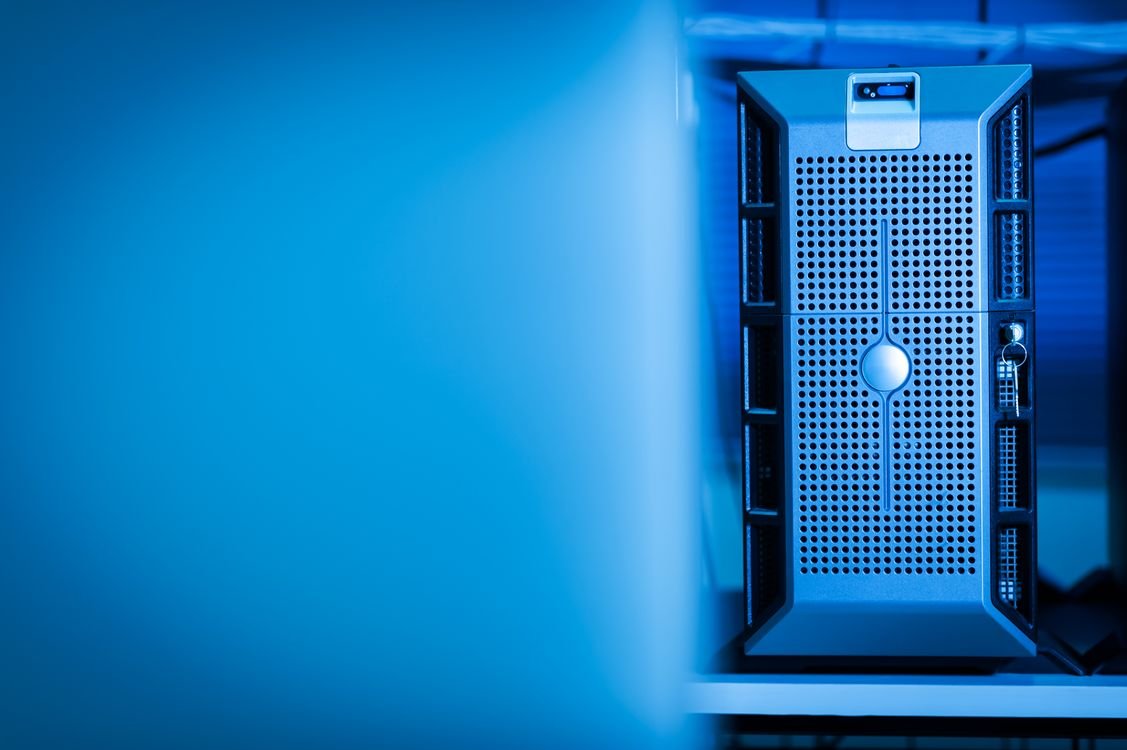
An edge data center is built for place. It is small, often no bigger than a shipping container, and sits close to the users and machines it serves.
The trade-off is efficiency. A hyperscale cloud runs at very high utilisation, while a small edge site may sit half-empty for much of the day. Operators accept that cost because the alternative — slow responses — costs more.
Cooling differs too. Large clouds use advanced liquid cooling and free-air systems. Edge sites rely on simpler air cooling, and in hot climates that limits how much compute each cabinet can hold.
Where is edge computing actually being used?
Manufacturing is the largest single user. Mordor Intelligence puts its share at 22.58% of the edge computing market in 2025.
Factories use edge systems for predictive maintenance, quality inspection and robot control. A camera on a production line can spot a defect in milliseconds, without sending video to the cloud.
Video analytics is the leading application overall, with 28.71% of the market in 2025. Retailers count shoppers, cities manage traffic, and security teams watch for anomalies — all locally.
Retailers also use edge cameras to track stock on shelves and flag empty displays in real time. Cities use it for traffic lights that adapt to congestion, and for public-safety cameras that analyse footage locally rather than streaming it to a central server.
Healthcare is the fastest-growing sector, advancing at 14.66% a year according to Mordor Intelligence. Hospitals use edge processing for imaging and patient monitoring, where privacy rules limit what can leave the building.
Connected vehicles are another frontier. Autonomous systems need instant decisions, and a car cannot wait for a distant server when a pedestrian steps into the road.
What are the risks and limits of moving compute to the edge?
The edge is not a free lunch. Spreading compute across hundreds or thousands of sites creates problems the cloud had solved.
Security is the biggest. Every edge node is a new attack surface, and many sit in places with no IT staff nearby. Mordor Intelligence flags this expansion of the attack surface as a key restraint.
Management is the second problem. Updating software, patching vulnerabilities and monitoring health across a distributed fleet is far harder than managing one data center.
Cost is the third. Edge hardware, rugged enclosures, power and cooling add up. The savings on bandwidth and cloud bills must outweigh those costs, and they do not always do so.
There is also a skills gap. Edge projects mix IT, networking and operational technology, and few teams are fluent in all three. That is why managed services are growing fast, at a forecast 13.87% a year through 2031.
How should a business start with edge computing?
Start with a problem, not a platform. The best first projects have a clear latency, bandwidth or compliance reason to move compute locally.
A good test is simple. If the job needs a response in under 50 milliseconds, or the data cannot legally leave the site, the edge deserves a look.
Pilot in one place first. A single factory line, one store or one clinic is enough to learn what the real costs and failure modes are.
Measure the whole cost, not just the hardware. Include installation, power, connectivity, security updates and the staff time to manage the fleet.
Our technology section covers the practical side of these decisions. The pattern that works is to prove value in one site, then standardise before scaling.
What happens next for edge computing?
The next few years will be about consolidation, not invention. The core ideas are proven; the work now is making them manageable at scale.
Expect three developments. First, AI models will keep shrinking, through techniques like quantisation and pruning, so more intelligence fits on smaller devices.
Second, edge platforms will converge on common standards. Slim Kubernetes distributions and consistent management tools are already becoming the default way to run distributed fleets.
Third, 5G will deepen the edge. Standalone 5G cores already steer traffic to micro data centers at base stations, cutting round-trip latency below 10 milliseconds, according to Mordor Intelligence.
New edge deployments are announced almost weekly. Our latest news coverage reports them as they happen, from factory rollouts to new 5G edge zones.
The cloud is not disappearing. It remains the best place for training large models, storing archives and running heavy batch work. But the balance is shifting.
Processing is moving to where the data lives. The edge computing boom is, at heart, a recognition that distance has a cost — and for more and more work, that cost is too high.
Frequently asked questions
What are edge computing trends in 2026?
Edge computing trends in 2026 centre on AI moving to the edge, smaller edge data centers near cities and factories, and distributed cloud platforms from the big providers. Spending is rising across every major forecast, though exact market sizes vary by definition.
How is edge computing different from cloud computing?
Cloud computing processes data in large, distant data centers. Edge computing processes it near the device that creates it. The two work together: the edge handles fast, local decisions, while the cloud handles training, storage and heavy analysis.
What is edge AI inference?
Edge AI inference means running a trained AI model on a local device or gateway, so it can make predictions without sending data to the cloud. It cuts response times from hundreds of milliseconds to single digits, which matters for vision, control and safety uses.
Why is latency so important for low latency IoT?
Low latency IoT devices must react almost instantly. A factory robot, a medical monitor or a self-driving car cannot wait 200 milliseconds for a cloud answer. Local processing keeps response times in the single-digit millisecond range.
Is edge computing replacing the cloud?
No. Edge computing complements the cloud rather than replacing it. Training large AI models and storing big archives still belong in central clouds. The edge takes over work where speed, bandwidth or data rules make the cloud the wrong place.