
Karachi Building Collapse: Man Pulled Alive After 54 Hours as Toll Hits Eight
Rescue workers in Karachi pulled a man alive from the rubble of a collapsed building on Friday, November 27, 2026, more than two days after the six-storey structure came down. The survivor, 28-year-old marble worker Muhammad Adil, had spent 54 hours buried under concrete — and his rescue brought fresh hope to families still waiting for news of the missing.
The death toll from the collapse has reached eight. Four more bodies were recovered on Friday, and about 10 people were still believed trapped beneath the debris as the search entered its third day. The building, in the Baloch Colony area of Karachi, fell on Wednesday while around 30 labourers were working inside.
The rescue after 54 hours
Rescue 1122, Pakistan’s emergency service, said Adil was pulled from the wreckage of the under-construction building near Baloch Colony on Friday. Sindh Chief Minister Murad Ali Shah called his survival a “miracle,” according to a statement from his office. Rescue 1122 spokesperson Hassaanul Haseeb Khan called the rescue a “breakthrough.”
Adil told rescuers he was not alone. He said two other young men were trapped with him and still alive, but had passed out from severe hunger. He said the three had stayed in contact with each other by phone while buried. The Nation newspaper, citing rescue officials, identified the two men as Asim and Jibran.
Khan told Dawn newspaper that Adil said the two others might still be alive and had been in touch with him, but rescuers searched the area he pointed to and could not find them. The search was continuing on Friday, with heavy machinery clearing debris and crews switching to slower manual work whenever a body was spotted.
Eight dead, about 10 still missing
Three bodies and 14 injured people were recovered on the day of the collapse. More bodies were found on Thursday and Friday, bringing the death toll to eight. At least 14 labourers were injured in total, and one remained in hospital.
Estimates of how many people are still missing vary. Khan told Dawn that relatives had reported 11 people missing at an information desk set up at the site. Rescue 1122 said about 10 people were still believed trapped, and the operation would continue until everyone reported missing had been accounted for.
Relatives gathered at the site, and some protested at what they saw as the slow pace of recovery. A local official, East Deputy Commissioner Kashif Nabi Khuhro, denied the operation was slow and said the building sits on narrow, congested streets that make it hard to bring in heavy equipment. The strain on emergency teams is a theme in other crises too, including the Ebola response in Congo, where fighting has forced some responders to leave.
How the building was built
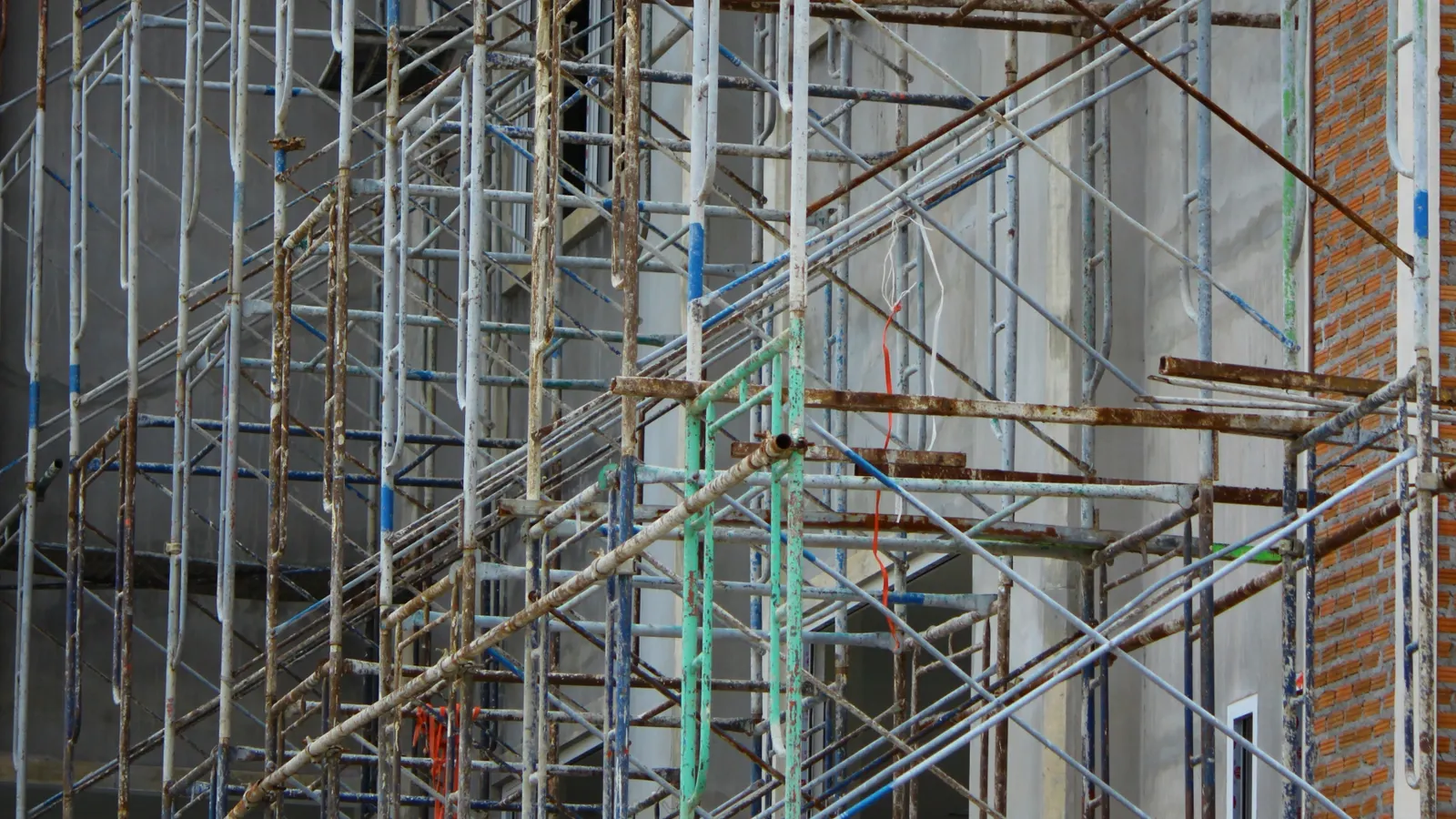
Initial investigations indicate the building was erected on a 600-square-yard plot in the Karachi Administration Employees Housing Society. It received official approval in March 2026 for only a basement, a ground floor and one additional storey. Instead, builders allegedly added six unauthorised floors, turning the structure into a residential complex of more than 20 flats.
Local residents reported that construction on six floors had been completed earlier in the week, and work had just begun on a seventh-floor penthouse. Underground water-boring work had also caused noticeable ground vibrations shortly before the building gave way, according to the early findings.
The pattern is a familiar one in Pakistan’s largest city. Buildings approved for two storeys quietly rise to six or seven in crowded residential areas, while enforcement stays weak. A fuel tanker fire in Cairo earlier in the week showed the same kind of disaster in a different form: a crowded city, a sudden failure, and rescue crews working against time. Both disasters were covered in our our World News stories on rescue efforts this week. In Karachi, the question now is who allowed the extra floors to go up.
Officials sacked, owner to be arrested
Chief Minister Murad Ali Shah ordered sweeping administrative action on Thursday. Among those removed from their posts were Waseem Shamshad, who held dual charge as director general of the Sindh Building Control Authority and as local government secretary, alongside Deputy Commissioner East Nasrullah Abbasi and Senior Superintendent of Police East Zubair Sheikh. Sixteen building control officers were also suspended.
“I will not tolerate any incident that results in the loss of human life or causes suffering to people,” the chief minister said. He directed police to arrest the building’s owner, Salman Tahir, and the builder, Zeeshan, and ordered the project’s architect and structural engineer to be brought into the formal inquiry.
In court, a judicial magistrate remanded four arrested suspects — Yar Muhammad, Afzal Khan, Munir Akram and Saad Tahir — into police custody for five days. The hearing raised sharp questions, because neither the building’s owner nor the main contractor was produced before the court. Defence lawyers said police had arrested site workers and relatives of absent suspects while those chiefly responsible remained at large. The magistrate asked why the owner, the contractor and responsible regulatory officials had not been arrested.
On Friday, a senior civil judge vacated an interim stay order that had shielded the project from action by the building control authority. The owner had filed a civil suit on August 1 and secured a status-quo order on August 4. Despite several chances and a formal warning on October 12, the owner’s side repeatedly failed to argue the case, and the court rejected a request for another extension.

The building control authority has sealed 12 other under-construction buildings in the neighbourhood and launched a review of their ownership records, building plans and regulatory approvals. The investigation into who approved the extra floors is now the central question for the families waiting at the site.
Frequently Asked Questions
Who was rescued alive from the Karachi building collapse?
Muhammad Adil, a 28-year-old marble worker, was pulled alive from the rubble on Friday, November 27, 2026, after spending 54 hours buried under the collapsed building. He was taken to hospital by a Rescue 1122 team. He told rescuers two other men were trapped with him and still alive, but rescuers could not find them in the area he pointed to.
How many people died in the collapse?
Eight people have died. Three bodies and 14 injured people were recovered on Wednesday, when the six-storey building collapsed, and more bodies were found on Thursday and Friday. About 10 people were still believed trapped beneath the rubble, and at least 14 people were injured in total.
Why did the building collapse?
Initial investigations indicate the building was approved in March 2026 for only a basement, a ground floor and one more storey, but builders allegedly added six unauthorised floors, creating more than 20 flats. Work had just begun on a seventh-floor penthouse, and underground water-boring had caused ground vibrations shortly before the collapse. A full inquiry is under way.
What action has been taken against officials and the builders?
Sindh Chief Minister Murad Ali Shah removed the building control chief, the East deputy commissioner and the East police chief, and suspended 16 building control officers. Police were ordered to arrest the owner, Salman Tahir, and the builder, Zeeshan. Four suspects were remanded in custody for five days, and a court vacated a stay order that had shielded the project.
Sources
- NAM News — Death Toll in Karachi’s Baloch Colony Building Collapse Rises to Eight
- The Odd Brief — A Worker Was Pulled Alive From a Collapsed Karachi Building After 54 Hours Under the Rubble
- Republic Policy — Eight Dead in Karachi Building Collapse as Illegal Construction, Regulatory Failure, and Court Stays Come Under Scrutiny