How to Travel Europe on $75 a Day Without Sacrificing Comfort or Food
To travel Europe on a budget of $75 a day is entirely possible in 2026, if you choose the right places and the right habits. It is not a survival challenge, and it does not mean skipping meals or sleeping badly.
The trick is balance. Spend less where the savings are painless, like the bed and the bus, and spend a little where it matters, like a good dinner or one great museum.
This guide uses real 2026 costs from independent travel guides. It shows where the $75 goes, which cities make it easy, and which habits keep the trip comfortable — and it sits alongside our budget travel guides for travellers who want to plan deeper.
Is $75 a day in Europe really possible in 2026?
Yes, with the right route. A realistic 2026 breakdown puts Eastern Europe and the Balkans at roughly €40–60 a day for a backpacker, and Southern Europe at €50–75, according to European Tourism’s 2026 cost guide.
Western Europe is harder. The same guide puts a comfortable budget there at €100–150 a day, and Scandinavia higher still. So $75 a day works best as a mixed-route average, not a Paris-only promise.
The honest version is this: $75 a day buys a dorm bed, good local food, buses and trains, and one paid sight most days. It does not buy a private hotel room in Amsterdam in July.
Where does the $75 go each day?
Five buckets take the money, and each one has its own tricks. The split below is for a mixed route of cheaper and mid-priced cities, in shoulder season.
| Daily expense | Budget range | What it buys |
|---|---|---|
| Bed | $20–35 | Dorm bed, or a private room in the east |
| Food | $15–25 | Bakery breakfast, market lunch, one sit-down dinner |
| Local transport | $5–10 | Day passes, metro cards, walking most places |
| Sights and fun | $5–15 | One paid sight, or a free walking tour plus a tip |
| Buffer | $5–10 | Coffee, laundry, SIM data, small surprises |
The bed is the biggest line, usually 35–45% of a budget traveller’s spend. Fix the bed first, and the rest of the budget falls into place.
Intercity travel sits outside the daily figure. Budget €15–25 per hop by bus or early-booked train, and count it separately so a travel day does not wreck the maths.
Where should you go to travel Europe on a budget?
Geography is the biggest lever you have. The same $75 buys a comfortable day in Sofia or Tirana and a tight one in Copenhagen, so route choice matters more than willpower.
The cheapest cities for backpackers in 2026 are Sofia, Bucharest, Belgrade, Kraków, Budapest, Tirana, Sarajevo, Skopje, Riga and Vilnius, according to BookingMentor’s 2026 city guide.
Sarajevo is Europe’s cheapest city break in 2026, at about €27 a day for a backpacker, in the Post Office City Costs Barometer reported by Roavelle. Bucharest follows at about €35, and Tirana at about €28.
Portugal and Greece remain the best value in the south. Lisbon and Athens are the cheapest entry points to Southern Europe, and both pair well with cheaper overland hops east.
The practical rule is simple: spend most nights in the east and south, and treat Paris, Amsterdam or Zurich as short, planned splurges rather than the base of the trip. Our European travel guides cover the routes in more detail.
How do you sleep well for less?
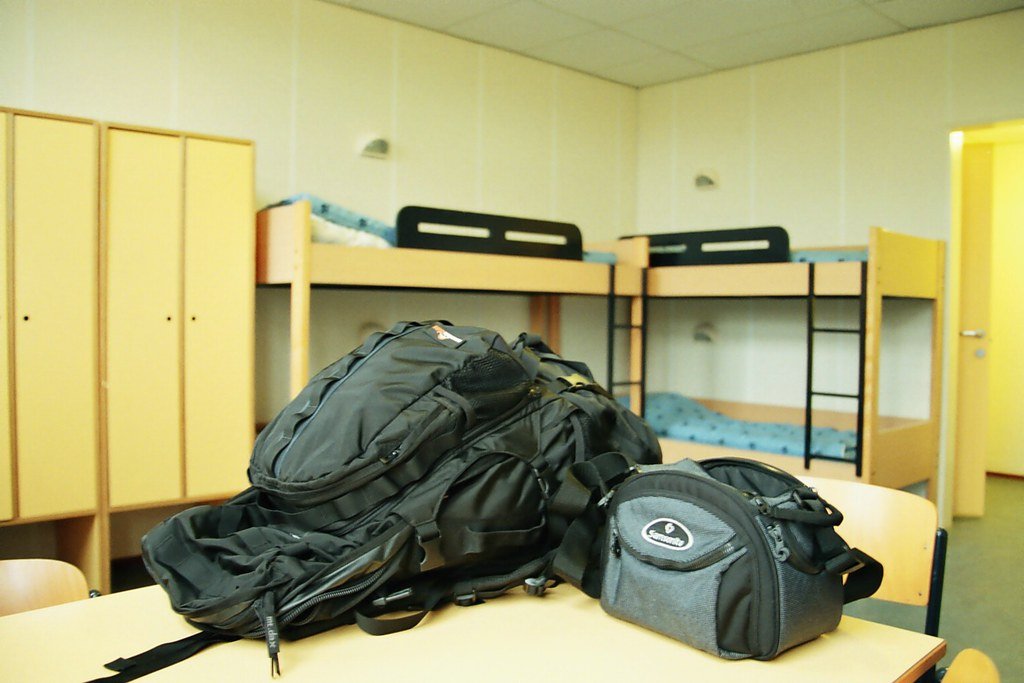
Hostels have changed. The grim 20-bed dorms still exist, but design-led chains now compete on comfort, with pod beds, good showers and proper blackout curtains.
A dorm bed in June 2026 runs about €20–40 in Western Europe and €12–25 in the east, according to European Tourism. Private doubles in guesthouses run €50–90 in most of the south and east.
Book the bed, not the brand. A well-reviewed small hostel in a quiet street beats a famous party hostel with paper walls, and it usually costs the same or less.
Three habits cut the bill further. Travel in shoulder season, when the same bed can cost a third less. Book midweek nights, when weekend demand is gone. And stay slightly outside the old town, where a ten-minute walk saves €10 a night.
Private rooms are worth it sometimes. A private room in a hostel in Kraków or Budapest can cost less than a dorm bed in Paris, and it buys sleep, which buys a better next day.
How do you eat well without blowing the budget?
Food is where budget travel in Europe is most generous. Plan on €20–35 a day eating cheaply but well, or €10–18 if you self-cater some meals, according to European Tourism’s 2026 figures.
The formula is simple: bakery breakfast, market or set-menu lunch, and one modest sit-down dinner. That is three real meals, not a diet of bread and regret.
Set menus are the secret weapon. In Spain, Portugal and Italy, the lunch menu of the day is often the best value meal in the city, and it is eaten by locals, not tourists.
Markets do the heavy lifting. A supermarket breakfast, fruit from a market stall and bread from a bakery cost a few euros, and they taste better than a hotel buffet twice the price.
Eat one street away from the main square. Prices fall fast with distance from the postcard view, and the food usually improves at the same time.
How do you get around Europe cheaply?
Transport is the second-biggest lever after the bed. The rule is to book early, walk locally, and treat the bus as your friend rather than a last resort.
City-to-city buses booked ahead start around €5–15, and trains booked two to three months out are often shockingly cheap, at €19–39 on routes that cost €90 or more on the day.
Walk everywhere inside a city. Most European old towns are compact, and walking is free, healthy and the best way to find the cheap lunch spot.
A rail pass suits some routes and wastes money on others. A 7-day flexi Interrail pass costs around €380 for adults in second class in 2026, according to Travee’s 2026 transport guide, so count your travel days before buying.
Budget flights fill long gaps for €20–50 if you pack to the personal-item rules. Miss the size limit and the fee wipes out the saving, so measure the bag before you leave.
What can you see for free — or almost free?
The bucket people forget is sightseeing. Big-ticket sights have got noticeably pricier: the Louvre now charges €22 for EEA citizens and €32 for everyone else, after a January 2026 change.
Budget €8–15 a day for one paid sight, and fill the rest with free things. Every great European city has them, and they are often the best part of the day.
Free walking tours run in almost every city. Tip the guide fairly — €10 is normal — and you still come out ahead of a €25 bus tour that shows you less.
Churches, viewpoints, parks and old-town streets cost nothing. Many museums have a free evening or a free first Sunday each month, so check the calendar before you pay.
Pick one paid sight a day and make it count. A single great museum beats three rushed ones, and it leaves money for the dinner that follows it.
When should you travel to cut costs?
Timing quietly cuts the bill by about a third. Shoulder season — April to June and September to October — is the single best money-saving decision in this guide.
Summer weekends are the most expensive nights in Europe. Hostel dorms in Paris, Barcelona and Amsterdam can pass €60 on a summer weekend, against €20–40 on a normal weekday.
The cheapest-city lists for autumn 2026 show daily budgets of €27–65 in the Balkans and the east, in Lentii’s round-up of affordable European cities.
Winter is cheapest of all in the north and west, but the days are short and some sights close. For a first trip, late September is the sweet spot of price, weather and daylight.
What mistakes drain a Europe budget fastest?
Most budget blowouts are not bad luck. They are the same few habits, repeated, and each one is easy to avoid once you know it.
The first is the walk-up train fare. Buying at the station on the day can cost three or four times the advance price, and it is the most expensive single mistake in this guide.
The second is eating and drinking on the main square. A coffee there can cost triple the price two streets away, and the view is the same from the next café over.
The third is the taxi habit. One airport taxi can cost more than a day’s food budget, while the bus or train from the same airport usually costs a few euros.
The fourth is over-packing the route. Every extra city change costs a travel day and a transport fare, so fewer bases with day trips beat a new bed every night.
Can you see Europe properly on $75 a day?
Yes, if “properly” means slow and local rather than fast and famous. Ten days in four cities beats ten days in ten cities on every measure except the passport stamp count.
A realistic route: three nights in Lisbon, three in Madrid, two in Barcelona and two in Porto, with buses and early trains between them. Each city is walkable, affordable and full of free sights.
Or go east: Kraków, Budapest, Belgrade and Sarajevo in two weeks, where $75 a day buys comfort rather than compromise. The food is excellent, the hostels are good, and the crowds are thinner.
The point of the budget is not to spend $75. It is to spend $75 well, on the things that make the trip memorable, and to skip the things that do not. For more ideas, see our latest travel stories and the news desk for what is changing in European travel.
Frequently Asked Questions
Is $75 a day enough to travel Europe on a budget in 2026?
Yes, on a mixed route through Eastern, Central and Southern Europe in shoulder season. It covers a dorm bed, good local food, transport and one paid sight a day, but not a private hotel room in Paris or Amsterdam in July.
Which European cities are cheapest for budget travellers?
Sofia, Tirana, Sarajevo, Bucharest, Belgrade, Kraków, Budapest, Skopje, Riga and Vilnius lead the 2026 cheapest-city lists. Sarajevo is the cheapest overall, at about €27 a day for a backpacker.
How much does food cost per day in Europe on a budget?
Plan on €20–35 a day eating cheaply but well — a bakery breakfast, a market or set-menu lunch, and one modest sit-down dinner. Self-catering some meals brings that down to €10–18 a day.
Do I need a rail pass to travel Europe on a budget?
Not always. A 7-day flexi Interrail pass costs around €380 in 2026, so it only pays off if you travel by train most days. Early-booked trains and buses are often cheaper for slower routes with fewer hops.
What is the best month to travel Europe on a budget?
Late September is the best balance of price, weather and daylight. April to June is nearly as good, while July and August bring the highest beds, the biggest crowds and the longest queues.