Building a Timeless Capsule Wardrobe: 20 Investment Pieces That Work Year-Round
A capsule wardrobe essentials list is not a shopping list. It is a shortlist of pieces that work together, season after season, so getting dressed stops being a daily puzzle.
The idea is simple: twenty well-chosen items, in colours that match, can make dozens of outfits. The hard part is choosing the right twenty — and resisting the rest.
This guide gives you the exact twenty, the maths that proves they save money, and the quality checks that keep them working for years. Prices are 2026 guide ranges — check current prices before you buy.
What is a capsule wardrobe, and where did the idea come from?
A capsule wardrobe is a small, deliberate collection of clothes in which every item works with most of the others. The aim is an outfit for any occasion without owning excessive clothes.
The term appeared in American publications as early as the 1940s, for small collections designed to harmonise in colour and line. London boutique owner Susie Faux revived it in the 1970s.
Faux argued for a core of essentials that never go out of fashion — skirts, trousers, coats — topped up with a few seasonal pieces. The history of the capsule wardrobe shows how durable that idea has been.
It went mainstream in 1985, when Donna Karan launched Seven Easy Pieces. Her seven interchangeable workwear pieces dressed one woman for a whole working day, from office to evening.
The idea has never really gone away. It resurfaces whenever closets get too full and mornings get too slow — which, for most of us, is right now.
Why do capsule wardrobes actually save money?
The case for a capsule rests on one calculation: cost per wear. Divide what an item costs, including care, by the number of times you wear it. The result is the real price.
A $30 shirt worn ten times costs $3.00 per wear. A $200 shirt worn 200 times costs $1.00 per wear. The expensive shirt is cheaper, as cost-per-wear guides explain.
The average American household spent $2,041 on clothing in 2023, according to the Bureau of Labor Statistics. Much of it bought pieces worn a handful of times, then discarded.
The Ellen MacArthur Foundation found that garments were worn 36% fewer times in the early 2010s than fifteen years earlier. We spend roughly the same — and wear each piece far less.
A capsule flips that. Twenty pieces worn often beat a hundred worn rarely, on money and on waste. The fashion industry produces about 92 million tonnes of textile waste a year, the widely quoted UN figure.
That waste figure is disputed — some analysts put it far lower — but the direction is not. The economics of capsule wardrobes show that buying less and wearing more is the most effective personal lever on fashion’s footprint.
How do you choose a colour palette that never clashes?
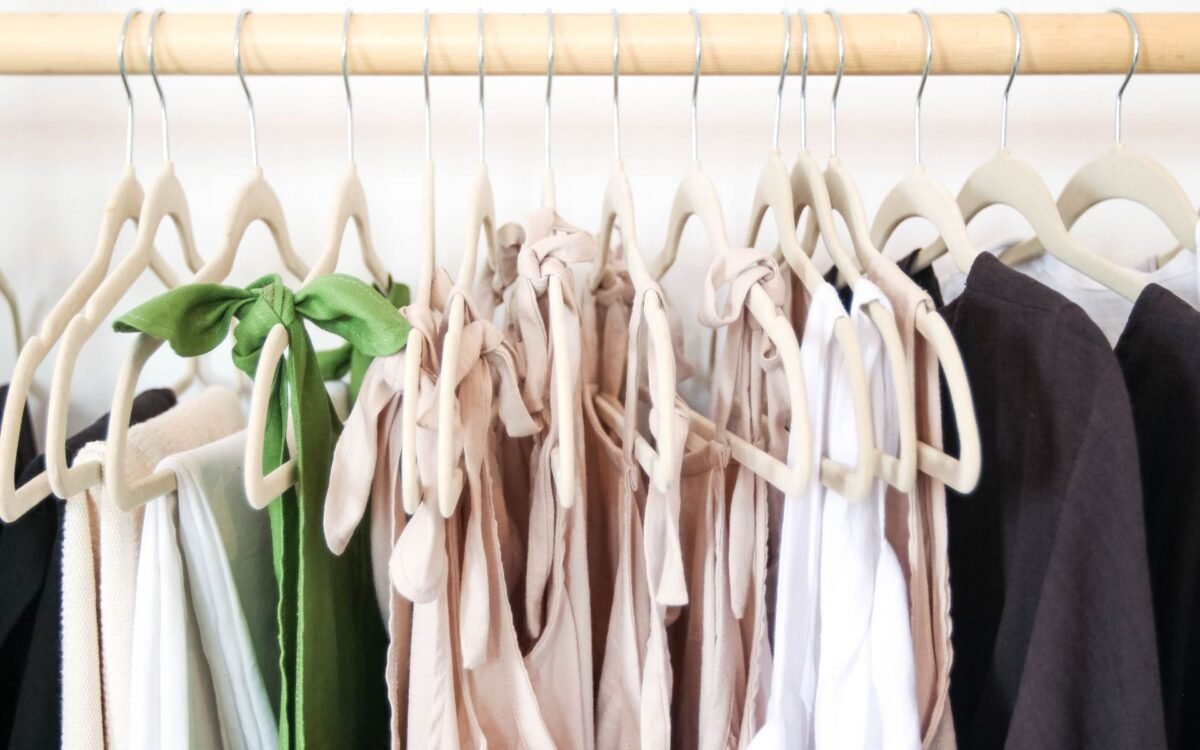
Every capsule starts with colour, not clothes. Pick three neutrals and one or two accents, then buy nothing outside them. When everything matches, everything combines.
Good neutral bases are black, navy, white, cream, camel, grey and olive. Accents add life: burgundy, forest green, soft blue or terracotta, depending on what suits you.
A simple split works well: about 70% neutrals and 30% accent pieces. Your accent shows up in knitwear, a dress or a scarf — never in every item at once.
Test the palette before you buy. Lay your existing clothes on the bed and remove anything that clashes with your chosen colours. What is left is your starting point.
For more ideas on building a wardrobe that fits your real life, see our Fashion & Style coverage.
What are the 20 capsule wardrobe essentials?
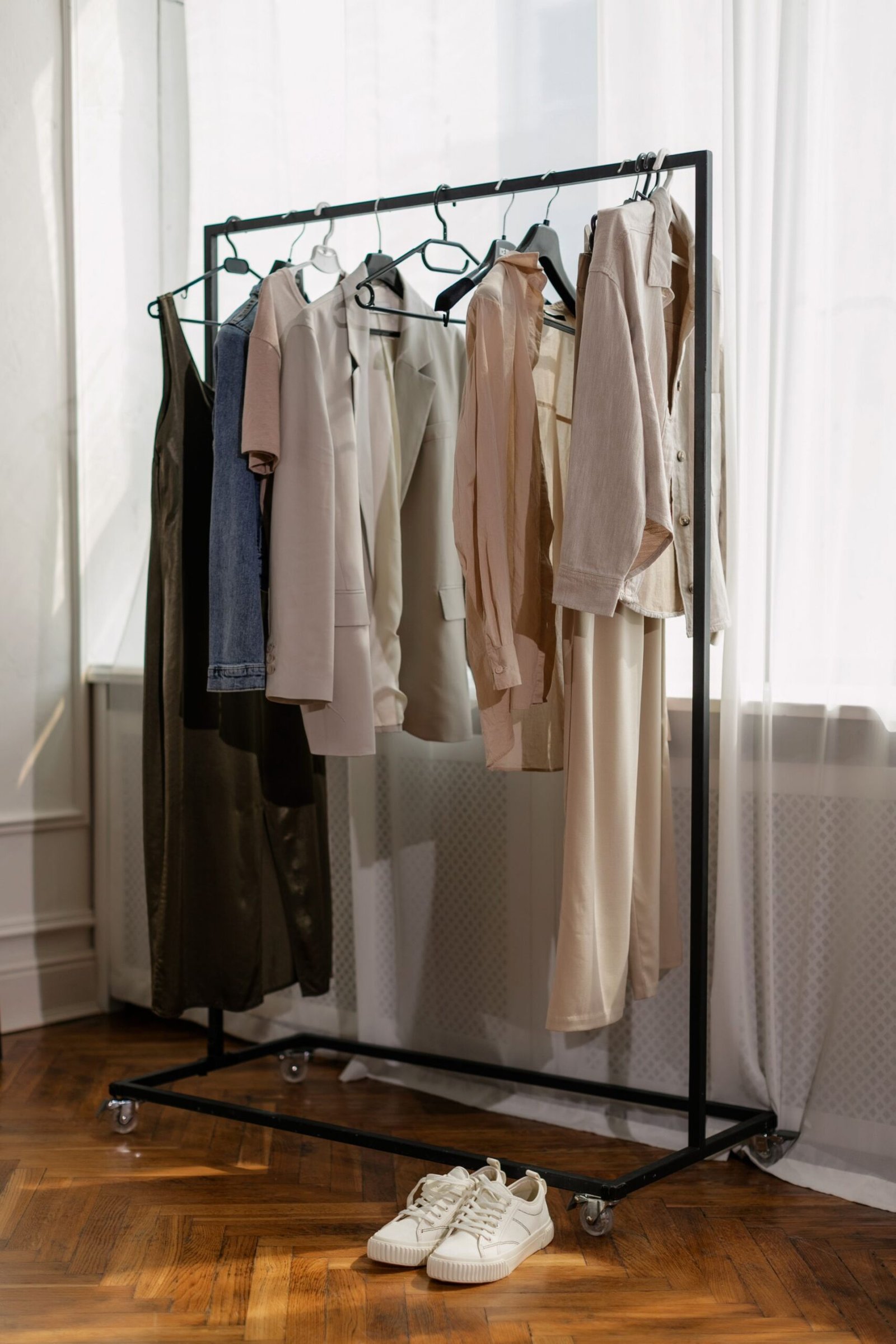
Here are the twenty pieces. They suit most lifestyles and climates, and each one earns its place by pairing with at least three other items on the list.
| # | Piece | Why it earns its place | Buy it right |
|---|---|---|---|
| 1 | White cotton shirt | Pairs with everything; smartens jeans and softens tailoring | Crisp cotton, no sheerness, collar that holds its shape |
| 2 | White T-shirt | The base layer under blazers, knits and jackets | Heavyweight cotton, bound neckline, no twisting seams |
| 3 | Black T-shirt | Same job in a darker tone; doubles as evening wear | Same quality checks as the white one |
| 4 | Fine-knit sweater | Light warmth that layers under coats and over shirts | Merino or cashmere blend; tight, even knit |
| 5 | Chunky knit sweater | Cold days and relaxed weekends in one piece | Wool or recycled wool; ribbed cuffs that stay put |
| 6 | Tailored blazer | Turns jeans into an outfit and dresses up a dress | Half-canvassed, natural shoulder, sleeves at the wrist |
| 7 | Trench coat | Rain, wind and polish in a single classic layer | Cotton gabardine, storm flap, belt that ties cleanly |
| 8 | Leather jacket | The one piece that adds edge to anything plain | Full-grain leather, smooth zips, lining that does not snag |
| 9 | Dark straight-leg jeans | The hardest-working bottoms you will own | Rigid or low-stretch denim, dark wash, no fading |
| 10 | Black tailored trousers | Work, dinners and smart days, all covered | Wool or wool blend, flat front, hem that grazes the shoe |
| 11 | Wide-leg trousers | Comfort and drama for warmer days and evenings | Fluid fabric that drapes; high waist that sits flat |
| 12 | Midi skirt | Dresses up with heels, down with trainers | A-line or pleated; fabric with weight, not cling |
| 13 | Little black dress | The fastest answer to any invitation | Simple cut, knee length, fabric that does not crease |
| 14 | Slip dress | Summer alone, winter under knits and blazers | Bias cut, adjustable straps, lined bodice |
| 15 | White trainers | Comfort that still looks intentional | Leather, minimal branding, removable insoles |
| 16 | Leather loafers | Smart without heels; office to airport | Stitched soles, leather lining, no squeaking |
| 17 | Ankle boots | The cold-weather anchor for jeans and dresses | Block heel, side zip, leather that polishes well |
| 18 | Structured tote | Work, travel and shopping in one bag | Full-grain leather, strong handles, interior pocket |
| 19 | Small crossbody bag | Evenings and hands-free days | Adjustable strap, secure clasp, fits phone and keys |
| 20 | Silk scarf | Colour, pattern and polish for one small price | Real silk, hand-rolled edges, a print you love |
Count shoes and bags in the twenty, or keep them separate — either works, as long as you count honestly. Underwear, sleepwear and gym kit sit outside the capsule.
Notice what is missing: no trend pieces, no occasion-only buys, no duplicates. Each item covers several jobs, which is exactly why twenty is enough.
A year-round 20-piece capsule list follows the same logic: multi-functional pieces in a shared palette, chosen to transition between seasons without a new wardrobe each time.
How do you audit your closet before buying anything?
Never build a capsule by shopping first. Start with what you own: pull everything out, try it on, and sort it into keep, repair, sell or donate.
Keep only what fits, flatters and matches your palette. A useful test: if you have not worn it in 90 days and it is not seasonal or formal, it goes.
Count what survives the audit against the twenty-piece list. Most people already own half the capsule — the gaps, not the whole list, are what you buy.
Buy the gaps one at a time, starting with the piece you would wear most. A step-by-step capsule building guide recommends wearing each new item for two weeks before buying the next, which stops impulse mistakes.
How do you spot quality worth paying for?
Investment pieces earn their price through wear count, so quality checks matter more than labels. Start with fabric: natural fibres — cotton, wool, linen, silk — usually outlast cheap blends.
Check the seams: straight stitching, no loose threads, no puckering. Pull a seam gently; if the stitches gape, the garment will not survive many washes.
Look at the details. Buttons should be sewn through the shank, zips should run smoothly, and linings should be attached — not flapping free. These are the signs of a garment built to last.
Fit is quality too. A perfect fabric in the wrong size will sit unworn, and an unworn garment has infinite cost per wear. Slow-fashion cost-per-wear analysis shows tailoring a good piece is often cheaper than replacing it.
The same discipline applies beyond fashion — our personal growth guides cover the habit of choosing quality over quantity in every part of life.
How do you make 20 pieces feel like 100 outfits?
The maths is generous. Ten tops, five bottoms and three layers create 150 combinations before shoes and accessories enter the picture. Variety comes from pairing, not volume.
Try these formulas: white shirt, black trousers and loafers for work; the same shirt with jeans and trainers for the weekend. One top, two lives.
Change the layer, change the outfit. A slip dress under a chunky knit reads as a skirt; under a blazer it reads as evening. Accessories do the rest — scarf, bag, shoes.
Keep a note on your phone of outfits that worked. After a month you will have a personal lookbook, and mornings will take minutes instead of half an hour.
A capsule guide built on mix-and-match outfits makes the same point: twenty pieces that all work together beat forty that only match one other thing each.
How do you adapt a capsule wardrobe for every season?
A year-round capsule does not mean the same twenty pieces in January and July. It means a stable core with three to five seasonal swaps.
In summer, swap the chunky knit and leather jacket for a linen shirt and a light blazer. In winter, add thermal layers under the same trousers and dresses.
Store off-season pieces clean and folded, with cedar or lavender against moths. When the season turns, the swap takes an hour — not a shopping trip.
The core never changes: shirt, jeans, blazer, trench, dress, shoes. Seasons change what goes over and under them, which is why the list works all year.
Our Lifestyle coverage has more seasonal guides for keeping a small wardrobe working through every month of the year.
How do you care for investment pieces so they last a decade?
Care is where cheap wardrobes quietly cost more. Wash cold, wash less, and air clothes between wears — most items do not need washing after one outing.
Dry cleaning should be rare, not routine. Steam instead of ironing where you can, and use a fabric shaver to keep knits looking new for years.
Repair early: a loose button, a fraying hem or a worn heel is a ten-minute fix. Left alone, each one becomes a reason to throw a good garment away.
Store knitwear folded, never hung, or the shoulders will stretch. Keep shoes with trees or stuffing, and bags stuffed so they hold their shape.
A sustainable capsule wardrobe guide for 2026 puts it plainly: extending a garment’s active life is the single most effective way to cut its footprint — and its cost per wear.
What mistakes ruin a capsule wardrobe?
The biggest mistake is buying all twenty pieces at once. A capsule built in a weekend is a guess; one built over months is a system that fits your real life.
The second is buying trends. A statement piece that only matches one outfit breaks the maths — every item should pair with at least three others.
The third is ignoring your life. A capsule for an office worker looks nothing like one for a new parent or a frequent traveller. Build for the days you actually live.
And the fourth is chasing perfection. A capsule is a working wardrobe, not a museum. If a piece stops working, replace it — the system survives one swap.
Follow our latest news for more practical guides on living well with less — new ideas every week.
Twenty pieces, one palette, and a little maths: that is the whole secret. Start with the audit, buy the gaps slowly, and let cost per wear — not the price tag — decide what is expensive.
Frequently asked questions
How many pieces are in a capsule wardrobe?
Most guides settle on 20 to 40 pieces, depending on climate. This guide uses 20 core pieces, with shoes and bags counted inside the twenty.
How much does a capsule wardrobe cost to build?
It depends on quality, but a mid-range twenty-piece capsule often costs $1,200 to $2,500 in total. Spread over five years of wear, that is far less than replacing fast-fashion pieces every season.
Can a capsule wardrobe work for men too?
Yes — the principles are identical. Swap the dress and skirt for a second pair of chinos and a polo shirt, keep the same palette rules, and the maths works the same way.
How often should you replace capsule pieces?
Good pieces last years, not months. Expect to replace one or two items a year as they wear out, and audit the whole capsule each season to catch gaps early.
Is a capsule wardrobe worth it if you love fashion trends?
Yes, if trends are the garnish, not the meal. Keep the twenty-piece core timeless and add one or two trend pieces a season — then let them go when the season ends.