Every chief technology officer faces the same question in 2026. Should the company build on an open source vs proprietary LLM, or pay a vendor for a closed model through an API?
The answer is worth real money. Open-weight models now cost 80 to 95 percent less per token than leading proprietary models, according to recent comparisons.
Yet the cheapest option is not always the smartest one. Proprietary models still lead on complex reasoning, coding agents and multi-step work.
This guide breaks down the real cost, performance, privacy and licensing picture. It uses published 2026 figures, not vendor promises.
What does open source vs proprietary LLM actually mean?
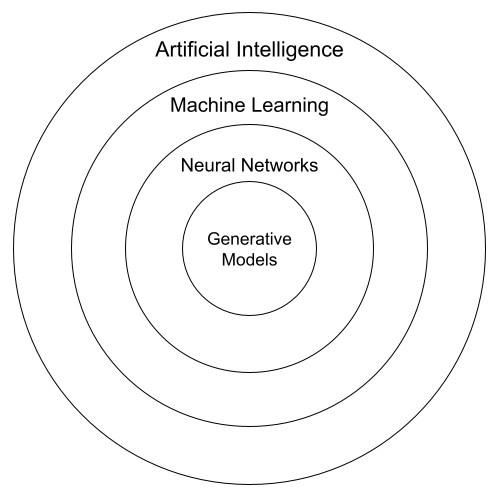
An open-weight model ships with its trained weights available to download. Anyone can run it on their own servers, fine-tune it and shape it.
A proprietary model is different. You access it through a vendor’s API. The vendor runs the model, updates it and sets the price.
The words matter here. “Open source” once meant a permissive licence such as MIT or Apache 2.0. Today many open-weight models carry custom community licences with conditions.
Llama 4, for example, is free for most companies. But its licence asks very large users to request a separate licence from Meta.
The distinction shapes everything else. Cost, control and legal risk all flow from which kind of model you pick.
Our artificial intelligence coverage tracks these models as they change. The wider technology section covers the tools and teams built on them.
How close is the performance gap in 2026?
The gap has narrowed fast. On general knowledge tests, open models now sit within three to five points of the best proprietary models, as one complete 2026 guide reports.
DeepSeek V3.2 scored 87.0 on the MMLU general knowledge benchmark. GPT-4o scored 88.7 and Claude Sonnet 5 scored 89.0 in the same comparisons.
For everyday work such as summarising, classifying and answering questions, that gap is invisible to most users.
Coding tells a different story. On SWE-bench, which tests fixing real software bugs, proprietary models still lead by a wide margin.
Claude Sonnet 5 reached 65 percent on SWE-bench Verified. DeepSeek V3.2 reached 35 percent and Llama 4 Maverick reached 22 percent.
The pattern is clear. Open models handle routine language work well. Proprietary models still win where accuracy on hard, multi-step tasks matters most.
| Model | Type | Input price / 1M tokens | Output price / 1M tokens | MMLU score |
|---|---|---|---|---|
| DeepSeek V3.2 | Open-weight | $0.28 | $0.42 | 87.0 |
| Llama 4 Maverick | Open-weight | $0.20 | $0.60 | 84.0 |
| GPT-4o | Proprietary API | $2.50 | $10.00 | 88.7 |
| Claude Sonnet 5 | Proprietary API | $2.00 | $10.00 | 89.0 |
| Gemini 2.5 Pro | Proprietary API | $1.25 | $10.00 | 87.5 |
Prices are as reported in mid-2026 comparisons. Always check current rates before budgeting, because providers change them often.
What does each option really cost?
Per-token prices tell only half the story. A team processing 10 million tokens a month would pay about $3.50 with DeepSeek V3.2, against about $50 with GPT-4o at published rates.
That is a saving of roughly 93 percent. At high volume, the difference runs into thousands of dollars a month.
But self-hosting is not free. A rented data centre GPU costs money every hour, whether it is busy or idle. An API charges only for the tokens you use.
One break-even analysis found that a small 27-billion-parameter model on a single rented GPU breaks even at about 12 percent load. A large Mixture of Experts model on expensive GPUs may never beat the cheapest API endpoint.
A detailed comparison of self-hosting and cloud APIs puts the hardware needs in plain terms. A 7-billion-parameter model runs on a single gaming GPU, while a 70-billion-parameter model needs two high-end cards.
The rule of thumb from several 2026 guides is simple. Below about 50 million tokens a month, a managed API is usually cheaper and simpler.
Above that volume, self-hosting starts to pay. The exact crossover depends on your GPU rent, your model’s speed and how steady your traffic is.
Total cost of ownership goes beyond tokens and GPUs. Self-hosting needs engineering time for deployment, updates, monitoring and security.
One guide estimates that running open models in production needs roughly half to one full-time engineer for operations. Proprietary APIs need almost none of that.
How does Mixture of Experts change the math?
Mixture of Experts, or MoE, is the design behind many leading open models. It splits a model into many smaller “expert” networks.
Only a few experts run for each word the model produces. A model with 400 billion total parameters may activate just 17 billion at a time.
That is why Llama 4 Maverick and DeepSeek V3.2 are so cheap to run. They deliver near-frontier quality while using far less computing power per token.
MoE also explains the new wave of very large open models. DeepSeek’s latest models carry hundreds of billions of parameters in total, yet cost little to serve.
The trade-off is hardware. Large MoE models need a lot of memory to hold all their experts, even if only some are active.
For a company choosing a model, the lesson is practical. Ask how many parameters are active per token, not just how many the model has in total.
What about data privacy, security and control?
This is where open models shine brightest. When you run a model on your own servers, your data never leaves your infrastructure.
That matters for hospitals, banks, law firms and any company under strict data rules. A proprietary API means sending prompts to a vendor’s servers.
Most vendors offer zero-data-retention options and regional hosting. Those help, but they still depend on trusting the vendor’s promises and policies.
Control goes further than privacy. With an open model, you choose when to update it. A vendor can change a proprietary model overnight and shift its behaviour.
That stability matters for regulated work. A model that answers the same question differently after an update can break a compliance workflow.
Vendor contracts deserve the same care as the technology. Check where your data is stored, how long prompts are kept, and whether your data trains future models.
Some vendors let you opt out of training. Others do not. Get the answer in writing before you send sensitive prompts through an API.
On the other side, vendors handle security patching, uptime and scaling for you. Self-hosting puts all of that on your own team.
A company with no operations staff may find that burden heavier than the privacy gain. The choice depends on your risk profile and your team.
What do the licences actually allow?
Licences are the fine print that trips up many teams. Not every model called “open” is open in the same way.
Three tiers now exist, according to licensing analysis published in November 2026. The first tier is plain permissive licences.
MIT and Apache 2.0 allow commercial use, modification and redistribution. Apache 2.0 adds a patent grant that MIT lacks.
DeepSeek’s V4 models use MIT. Qwen3, Gemma 4 and OpenAI’s gpt-oss models use Apache 2.0. These are the safest picks for most companies.
The second tier pairs a permissive licence with a vendor usage policy. The weights are open, but a separate policy restricts certain uses.
The third tier uses bespoke community licences. Llama 4 is the best-known example, and its terms carry real teeth.
If your products exceed 700 million monthly active users, you must ask Meta for a licence. It may grant or refuse it at its own discretion.
Llama 4’s multimodal models are also withheld from individuals and companies based in the European Union. That exclusion catches many European teams by surprise.
Some newer licences add revenue caps instead. One Mistral licence limits free use to companies below $20 million in monthly revenue.
The practical rule is simple. Read the licence file of the exact model version you plan to use. The vendor’s name tells you nothing.
How should an enterprise choose?
Start with the workload, not the model. List what the AI will actually do each day, and how much accuracy each task needs.
Routine tasks such as summarising documents, sorting support tickets and drafting replies are ideal for open models. They are cheap, fast and good enough.
Complex work such as multi-step coding agents, scientific reasoning and agentic workflows still belongs with proprietary models. The accuracy gap there is real.
Next, count your tokens. Estimate monthly volume honestly, including the input tokens that prompts and documents consume.
Below a few million tokens a month, the API wins on simplicity. Above 50 million, self-hosting deserves a serious cost model.
Then check your data rules. If prompts contain patient records, client secrets or regulated personal data, self-hosting or a zero-retention API is the safe route.
Finally, test before you commit. Run your own evaluation on your own data, with your own prompts, for at least two weeks.
Benchmarks measure general ability. They do not measure how a model handles your documents, your customers and your edge cases.
What is the smartest setup in 2026?
Most successful companies do not pick one side. They route each task to the model that fits it best.
A common pattern is now standard. A cheap open model handles high-volume routine work, while a frontier proprietary model handles the hard cases.
A router or simple rule decides which task goes where. Easy questions go to the open model. Hard ones go to the proprietary model.
This hybrid setup captures most of the savings. It keeps the quality where quality matters and cuts the bill where it does not.
It also protects against lock-in. If one vendor raises prices or changes a model, you can shift traffic to another model without rebuilding everything.
Routing also helps with cost control. Set a monthly budget per team and let the router shift traffic when spending spikes.
That stops one heavy workflow from eating the whole budget. Follow our latest news coverage to catch price changes and new model releases as they happen.
Start small if you are unsure. Move one low-risk workflow to an open model first, measure the results, then expand.
The market will keep shifting. Open models are improving fast, and proprietary prices keep falling. Review your choice every six months.
Frequently asked questions
Is an open source LLM really free?
The weights are free to download, but running them is not. You pay for GPUs, electricity, engineering time and maintenance.
For low volumes, a hosted API for an open model is often cheaper than self-hosting. The savings appear at high, steady volume.
Which is better for a small business?
A proprietary API is usually better to start with. It needs no infrastructure, no operations staff and no upfront cost.
Move to open models when volume grows, when data must stay in-house, or when the monthly API bill becomes painful.
Can I fine-tune a proprietary model?
Most vendors offer fine-tuning on their platforms, but the model stays on their servers. You cannot download it or run it elsewhere.
Open models can be fine-tuned on your own hardware. The tuned model is yours to keep, move and deploy as you wish.
Are open models safe for regulated industries?
They can be, because data stays on your own servers. That control is exactly why hospitals and banks often prefer them.
Safety still depends on your setup. You must secure the servers, control access and monitor what the model produces.
Will open models catch up with proprietary ones?
On general knowledge and routine tasks, they already have. On complex reasoning, coding agents and multi-step work, the gap remains.
The gap is closing, but slowly at the top end. Expect open models to keep winning on cost while proprietary models keep the hardest tasks.
The open source vs proprietary LLM choice is not a loyalty test. It is a business decision about cost, quality, control and risk.
Measure your workloads, count your tokens, read the licences and test on your own data. Then pick the setup that earns its place in your budget.