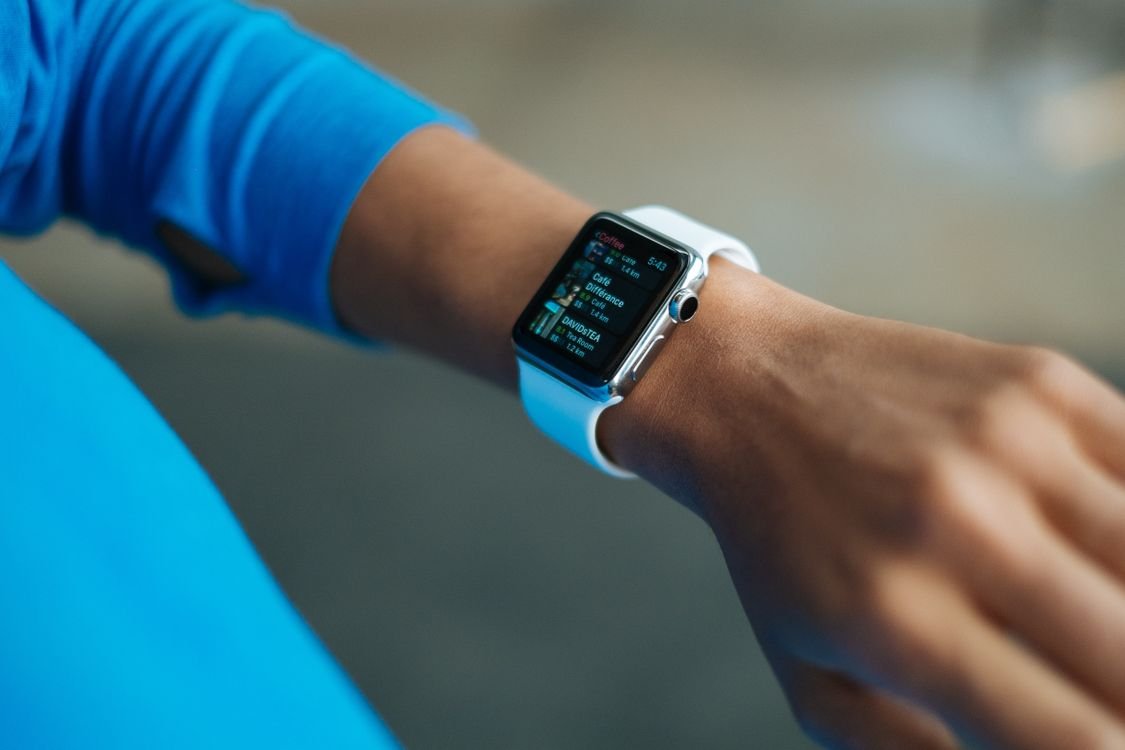
Your watch used to count steps. Then it counted your heart rate, your sleep and your workouts. Now the newest devices want to follow your blood sugar, your stress hormones and your recovery, all day and all night.
That is the shift behind next gen health wearables. The question is no longer how far you walked. It is what your body is doing underneath the numbers, and whether a small device can read it well enough to be useful.
The market has noticed. Wearable technology topped the American College of Sports Medicine’s fitness trends survey for 2026, and about one in four adults in the United States now owns a smartwatch.
More than 80 million Americans actively use fitness trackers, according to industry reporting. The devices are moving from the gym into everyday health routines.
What are next gen health wearables?
Next gen health wearables are devices that track the body’s signals continuously, rather than taking one measurement at a time. They sit on the wrist or the finger, and they record data while you sleep, work and exercise.
The first generation counted steps and calories. The second added heart rate, sleep stages and blood oxygen. The newest generation adds recovery scores, stress tracking and glucose monitoring.
The change is not just more sensors. It is the idea that a single night of sleep or one morning reading tells you little. A continuous record shows patterns instead.
A rising resting heart rate over a week can hint at illness before you feel ill. A glucose spike after the same meal, repeated daily, can show how your body handles food.
That promise is what sells the new devices. It is also what makes accuracy matter more than ever.
How do smart rings track sleep and recovery?
Smart rings are the quietest success story in wearables. They have no screen, no notifications and no daily charging routine. You wear one to bed and forget it is there.
That is the point. A ring sits close to the finger’s arteries, and optical sensors read heart rate, heart rate variability (HRV), skin temperature and blood oxygen through the night.
From those signals, the app builds a picture of your sleep: how long you spent in light, deep and REM sleep, and how ready your body looks for the day ahead.
Oura, the market leader, reports more than 2.5 million active rings in use, and its Ring 4 added a women’s health AI model in March 2026 for cycle prediction and pregnancy monitoring.
Samsung’s Galaxy Ring brought the same idea to a wider audience, with sleep tracking, heart rate and snore detection built into the Samsung Health app.
The appeal is simple. A watch can feel heavy at night and needs charging every day or two. A ring runs for days and stays out of the way.
What is continuous glucose monitoring — and who is it for?
Continuous glucose monitoring, or CGM, is the most talked-about addition to consumer wearables. A small sensor worn on the upper arm measures glucose in the fluid between cells, and reports a reading every minute.
For people with diabetes, CGM is a medical tool, prescribed and regulated. For everyone else, it has become a wellness product that shows how food, exercise and sleep move blood sugar.
Ultrahuman pairs its Ring Air with an optional M1 glucose monitor, built on Abbott FreeStyle Libre sensor hardware. The app then links glucose responses to meals, exercise and sleep.
The CGM part is not cheap. One 2026 review put the cost at about $299 a month for two sensors, while the ring itself is a one-time purchase with no mandatory subscription.
That price shapes who buys it. It suits curious self-trackers and people working on metabolic health, not casual buyers.
It also raises a fair question. A glucose reading is useful only if you know what to do with it. A spike after lunch is normal. A pattern of spikes is information.
Can a ring really measure your blood chemistry?
The most striking research of 2026 came from a laboratory, not a shop. Engineers at the University of California San Diego built a smart ring that measures chemical biomarkers directly from sweat.
The device, called CHARM, was described in Nature Communications in July 2026. It weighs 5.1 grams and can monitor glucose, ketones, lactate, alcohol, uric acid and vitamin C at the same time.
It draws sweat passively through a hydrogel, with no exercise or electric stimulation needed. In the published tests, it ran for about 12 hours of continuous monitoring.
The researchers validated it in everyday settings, not just in a lab. They also report that its calibration stayed stable for about two months.
This is still a prototype. No company sells a ring like it yet, and the paper itself notes that commercial rings measure only physical signals such as heart rate and temperature.
But it shows where the field is heading. The next step after counting heartbeats is reading chemistry, and a ring is a natural place to do it.
How accurate is wearable sleep tracking?
Accuracy is where enthusiasm meets reality. Consumer wearables are good at some things and weaker at others, and the gap matters when people act on the numbers.
For telling sleep from wakefulness, the best devices reach 88 to 93 percent accuracy, according to wearable sleep tracker accuracy statistics compiled from validation studies published in Nature Digital Medicine.
For sorting sleep into stages, the picture is rougher. Deep sleep classification matches laboratory polysomnography only 65 to 72 percent of the time. REM sleep detection averages 68 to 76 percent.
Oura’s Ring 4 performs better than most rivals, with 75.5 to 90.6 percent accuracy across sleep stages in independent testing. It was also found about 5 percent more accurate than the Apple Watch in four-stage sleep classification.
The practical lesson is simple. Trust the trends, not the single night. A device that says your deep sleep fell by half over two weeks is telling you something. A device that says you got 42 minutes of deep sleep last night is giving you an estimate.
What should you know about recovery scores?
Recovery scores are the newest selling point. Oura has its Readiness Score, Whoop has its Recovery Score, and Samsung has its Energy Score. Each one turns a night of data into a single number.
The idea is useful. A low score after a hard week can suggest rest. A high score can suggest you are ready to train. Athletes have used versions of this for years, and AI-powered health insights now interpret the signals for everyday users too.
But a score is a model, not a measurement. It combines heart rate variability, resting heart rate, temperature and sleep into one figure, using rules the company does not fully publish.
That means two devices can disagree about the same night. It also means a score can be wrong in ways that feel personal, because it arrives as a verdict on your body.
Use the score as a prompt, not a diagnosis. If it is low for three days running, look at your sleep and stress. If it is low once, after a late night, it is probably telling you what you already know.
How do subscriptions and costs change the picture?
The hardware is only part of the price now. Several leading wearables charge a monthly fee for the insights that make the device useful.
Whoop built its whole business on this model. Its band costs little up front, but the membership runs about $200 to $359 a year, and the company raised $575 million in 2026 at a $10.1 billion valuation.
Oura charges $5.99 a month for full access to its scores and insights. Samsung and Garmin, by contrast, include their health features with the hardware and charge no subscription.
This changes the real cost of ownership. A $300 ring can cost $500 over three years once the subscription is added. A $400 watch with no fee can end up cheaper.
It also changes the decision. Before buying, ask what you get without the subscription, and whether the paid features are the ones you actually want.
What about privacy — who owns your health data?
A wearable knows when you sleep, when your heart races and how your body responds to food. That is some of the most personal data a device can collect.
Most companies say the data belongs to you and is not sold. But the details sit in privacy policies that few people read, and the rules differ between companies and countries.
Health data can also be used in ways buyers do not expect. Insurers, employers and advertisers have all shown interest in wearable data, and regulations have not kept up everywhere.
There are practical steps worth taking. Check whether the app lets you download and delete your data. Check whether health data is shared with third parties. Turn off anything you do not need.
Remember too that a device that tracks your body continuously can also be lost, stolen or hacked. A ring is small, and a lost ring is a lost record of your health.
How do you choose the right wearable?
Start with the question you want answered. A device is only useful if it measures something you will act on.
If sleep is your priority, a smart ring is hard to beat. It is comfortable at night, lasts days on a charge and is built around sleep and recovery.
If you want one device for everything, a smartwatch is the safer choice. It adds notifications, apps, GPS and fall detection, and the Apple Watch remains the default all-rounder.
If training load matters most, Whoop and Garmin are built for athletes. They focus on strain, recovery and long-term trends rather than step counts.
If glucose is your interest, a CGM add-on is the only honest option today. No ring or watch measures blood sugar directly yet, despite what some marketing suggests.
Then check the boring details. Battery life, subscription cost, comfort, water resistance and whether the app works with your phone. These decide whether you still wear it in six months.
See our gadgets and devices coverage and technology section for the latest devices as they arrive.
What comes next for health wearables?
The next few years will bring more chemistry and less guesswork. The CHARM ring shows that sweat-based sensing works in a ring. Other teams are working on similar sensors for the wrist.
Non-invasive glucose remains the hardest problem. Several companies have announced rings that estimate glucose risk from optical signals, and some have reached the market through crowdfunding.
At CES 2026, exhibitors showed smart rings with ECG and sleep apnoea risk features, aimed at remote health monitoring.
Treat these claims with care. An estimate of diabetes risk from a ring is not the same as a glucose measurement, and regulators have not cleared such devices as medical tools.
What is more certain is the direction. Devices will track more signals, for longer, with less effort from the wearer. The winners will be the ones that prove their numbers, not just display them.
Our latest news coverage will keep following the field as it changes.
The step counter is not going away. It is just no longer the point.
Frequently asked questions
What are next gen health wearables?
Next gen health wearables are devices that track the body’s signals continuously, such as heart rate variability, temperature, blood oxygen, sleep stages and glucose.
They include smart rings, smartwatches and continuous glucose monitors, and they turn a constant stream of data into patterns and recovery scores.
How accurate is wearable sleep tracking?
Wearables are good at detecting sleep versus wakefulness, reaching 88 to 93 percent accuracy in validation studies. They are weaker at sorting sleep into stages.
Deep sleep and REM detection match laboratory tests roughly 65 to 76 percent of the time, so trends over weeks are more useful than a single night’s numbers.
Do I need a CGM if I do not have diabetes?
A continuous glucose monitor can show how food, exercise and sleep affect your blood sugar, which some people find useful for lifestyle changes.
It is a wellness tool for people without diabetes, not a medical device, and it costs around $299 a month in some bundles. Anyone with a health condition should talk to a clinician first.
Do smart rings work for fitness?
Smart rings track heart rate, activity and sleep well, and their recovery scores suit people who want rest and readiness guidance.
They are weaker than watches for live exercise tracking, because they have no screen or GPS, and heart rate accuracy drops during intense exercise above about 150 beats per minute.
Is my health data private?
Your health data is stored by the company behind your device, and the rules on sharing, deletion and export differ between companies.
Check the privacy policy before you buy, use the app’s data export and deletion tools, and remember that a wearable collects some of the most personal data any device can hold.