

The New Venture Capital Playbook: What Seed Investors Demand Before Writing Checks
Seed funding in 2026 is no longer a bet on a good idea. The seed funding requirements investors apply today look more like the Series A checklist of a few years ago: real customers, real revenue, and numbers that prove the business works.
That shift has caught many founders off guard. A strong pitch and a working prototype were once enough to open a seed round. Now they are only the starting point.
The good news is that the new rules are knowable. Investors publish their criteria, market data firms track every round, and the benchmarks are public.
This guide sets out what seed investors actually demand in 2026, with the numbers behind each requirement, so you can prepare before you ask anyone for money.
What has changed about seed funding in 2026?
The biggest change is timing. What used to qualify as Series A traction is now the floor for a serious seed conversation. That is the finding of an analysis of early-stage investor expectations in 2026.
A prototype, a strong founder story and a large market slide were once a seed pitch. Today that package reads as a pre-seed story.
Valuations tell the same story. Carta data shows the median seed post-money valuation reached an all-time high of about $24 million in 2026, on a median round of roughly $3.1 million.
Yet the number of seed rounds actually fell, as investors burned by the 2021 vintage became stricter gatekeepers.
AI companies sit at the top of the market. Crunchbase data cited in 2026 reports shows AI startups commanding a 1.3x valuation premium at seed, with a median deal size of $4.6 million versus $2.5 million for non-AI companies.
The lesson is not that only AI companies can raise. Every founder now competes against a higher bar, and the bar is set in numbers, not adjectives.
What are the seed funding requirements investors actually check?
Investors check four things before they write a check: the team, the market, the traction, and the economics. A 2026 readiness checklist for seed founders frames the same four pillars. They are drawn from CRV’s March 2026 founder guide.
First, execution ability matters more than pedigree. Investors want evidence that this team can ship, sell and learn fast — not just impressive CVs.
Second, the market must be large enough. CRV’s guide looks for total addressable markets in the billion-dollar range or higher, with a clear reason why now is the right moment.
Third, traction must be real. By seed stage, the validation question is largely settled. Investors want evidence that customers use the product, pay for it and stay.
Fourth, the unit economics must make sense. Founders should be able to explain their numbers from memory: what they are, which way they move, and why.
None of these is a pass-or-fail line for the whole market. They are the standard that serious investors apply.
How much traction do seed investors expect?
Traction is the first filter, and the numbers are specific. For B2B software companies, CRV’s 2026 guide puts roughly $500,000 to $1 million or more in annual recurring revenue behind the stronger seed rounds.
Other benchmarks set the floor lower but still meaningful. A 2026 funding-stage benchmark puts the typical seed expectation at $300,000 to $500,000 in ARR. The median round in that data is about $3.1 million.
For software companies, the floor for a serious seed conversation is often stated as $20,000 to $50,000 in monthly recurring revenue, with month-over-month growth of 15 to 20 percent or higher.
Investors look for 15 to 25 percent month-over-month growth for high-conviction institutional rounds. Below 10 percent, founders spend meetings answering questions instead of fielding term sheets.
Retention is the other qualifier. B2B companies need annual retention around 90 percent. Consumer companies need day-30 retention of 40 percent or above. Below those lines, growth rate stops mattering.
Which unit economics matter most at seed?
Unit economics are the language of the seed meeting. Three numbers carry most of the weight: the LTV to CAC ratio, the burn multiple, and CAC payback.
The lifetime value to customer acquisition cost ratio answers one question: does each customer return more than they cost to win? The minimum viable ratio is 3 to 1. Elite companies in 2026 show 5 to 1 and above.
CAC payback measures how fast acquisition pays for itself. CRV’s guide looks for payback under 12 months at seed. Investors need the ratio moving in the right direction, with real data rather than projections.
The burn multiple has become the most scrutinised efficiency metric in 2026 diligence. It is net cash burned divided by net new ARR in the same period.
Below 1.0x is exceptional, and between 1.0x and 2.0x is healthy. Above 3x, investors doubt the company’s capital efficiency at scale.
What does net dollar retention tell a seed investor?
Net dollar retention, also called net revenue retention, measures whether existing customers spend more over time than the ones who leave.
It is widely described as the most reliable single signal of product-market fit an investor can read.
The formula is simple: starting revenue plus expansion, minus contraction and churn, divided by starting revenue. New customers sit outside the math entirely.
Benchmarks for 2026 put the median for private B2B software companies at about 102 to 105 percent. The top quartile sits near 110 to 120 percent, and best-in-class companies clear 120 percent.
That distinction matters. Many founders quote 110 percent as the standard, but a 2026 guide to net revenue retention notes that 110 percent is actually the top quartile, not the median.
SaaS Capital’s 2026 survey of more than 1,000 private B2B software firms put the median at 103 percent, with the 90th percentile at 117.9 percent.
The key is to publish the components, not a single percentage. Expansion, contraction, churn and the starting base should all be visible. A founder who shows them earns trust.
What should a seed pitch deck prove?
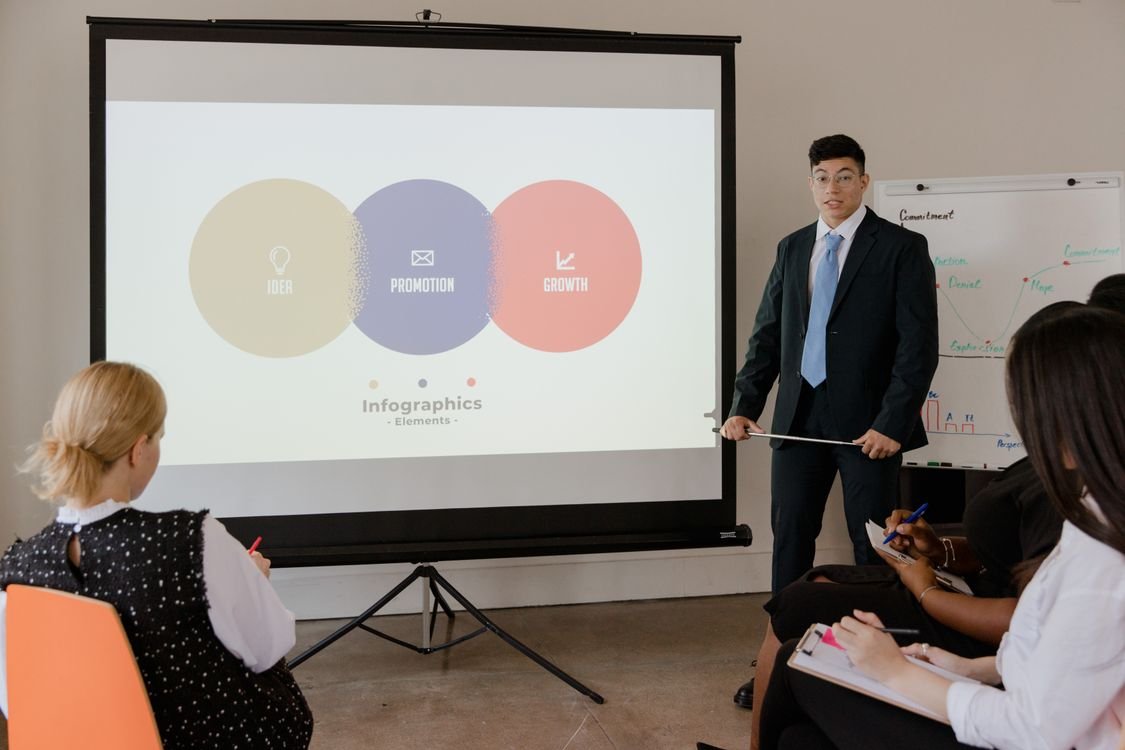
The pitch deck is still the founder’s main weapon, but its job has changed. In 2026, the deck must prove the business, not just describe it. The metrics slide is where that proof lives.
An analysis of SaaS pitch decks in 2026 argues that five numbers belong on the metrics slide. They are revenue growth, net revenue retention, logo churn, CAC payback, and gross margin. Each answers a question the investor would otherwise ask out loud.
The order of the deck matters too. Investors advise putting the strongest metric on slide two. If investors see traction immediately, they stay engaged.
Beyond the metrics, the deck needs a sharp market slide, a clear problem and solution, a credible team slide, and a specific ask. The ask should state the amount, what it funds, and the milestones it buys.
How much should you raise, and on what terms?
Most seed and pre-seed rounds in 2026 are raised on SAFEs — simple agreements for future equity — rather than priced equity rounds. That means the number founders actually negotiate is the valuation cap, not a formal valuation.
Carta data shows typical post-money SAFE caps of about $10 million for raises of $250,000 to $1 million, and about $15 million for raises of $1 million to $2.5 million. For SAFEs above $2.5 million, the median cap reached $35 million in the second quarter of 2026.
Dilution follows simple maths on a post-money SAFE: the amount raised divided by the cap. Raise $1 million on a $10 million cap and you sell 10 percent. Raise $3 million on a $15 million cap and you sell 20 percent.
The median founder gives up around 20 percent at seed, a figure that has held steady for about seven straight quarters. Carta’s priced-round benchmarks put median seed dilution at 19.4 percent on a $4.5 million median raise.
How much to raise is a judgement call with two constraints: enough to reach the next round’s milestones, with no more than 18 to 24 months of burn. Raise too little and you run out of money. Raise too much and you sell equity you did not need to sell.
The average gap between seed and Series A has stretched to around 616 days, according to 2026 funding data. Founders should plan for a two-year gap, not a one-year sprint.
What role does the team play in the seed decision?
At seed stage, the team is still the largest single factor in the decision — but the way investors judge teams has changed. Pedigree opens doors. Evidence closes rounds.
Investors look for founder-market fit: a specific reason why this team is uniquely positioned to win. That is not passion. It is evidence from the work the founders have already done.
The team slide should answer one question: why will this group out-execute everyone else chasing the same market? If it cannot, no amount of traction will save the round.
What are the most common reasons seed rounds fail?
Most failed seed rounds fail for the same handful of reasons, and almost all are fixable before the first meeting.
The first is raising too early. Founders pitch seed investors with a pre-seed story: an idea, a prototype, and a large market slide. The investors pass, and the founders conclude the market is cold. The real problem was timing.
The second is weak retention. Growth looks impressive until an investor asks how many customers stay. A company growing 20 percent a month with 15 percent monthly churn is running in place, and investors see it immediately.
The third is unclear economics. Founders who cannot state their CAC, LTV, burn multiple and payback from memory look unprepared. Investors read that as a founder who does not run the business on numbers.
The fourth is an unfocused market. “Everyone” is not a market. Investors want a sharp first segment, a beachhead, and a credible path from there to the billion-dollar opportunity.
The fifth is a messy cap table. Too many small SAFEs or unclear terms will slow or kill a seed round. Clean it up before you pitch, not during diligence.
How do you prepare for seed diligence?
Diligence at seed stage is lighter than at later stages, but it is still real. Investors check references, verify numbers, and test the founder’s claims. Preparation makes the difference between a fast close and a slow death.
Start with a data room. It should hold the pitch deck, financial model, cap table, key contracts, and cohort data. Everything an investor asks for should already be in one place.
Prepare customer references. Investors will ask to speak to customers, and the best founders offer names before being asked. A customer who praises the product unprompted is worth more than any slide.
Prepare for the hard questions. Why now? Why you? What happens if a large competitor enters? What is your biggest risk, and what are you doing about it? Honest answers build trust. Evasive ones destroy it.
When should you raise — and when should you wait?
Timing a seed round is one of the hardest decisions a founder makes. Raise too early and you sell equity cheaply, or fail entirely. Raise too late and you run out of money.
The practical test is simple: raise when you can show the numbers investors ask for, and when the money buys a clear next milestone. If you cannot show traction, wait and build. If the round would only buy six months, wait and strengthen the story.
Market conditions matter, but less than founders think. A 2026 guide to what investors want across funding stages notes that capital now goes to founders who demonstrate proven demand and disciplined costs.
Predictable revenue and a path to profitability matter too. Those qualities win in any market.
A well-run seed round closes inside six months. Founders should plan for three to six months of pitching and start before they need the money. The worst time to raise is with three months of runway left.
The best time to raise is when you do not need to. That is when you negotiate from strength, choose your investors, and set terms that protect the company for the long run.
The bottom line
Seed funding in 2026 rewards preparation. Investors want a validated problem, a working product, early traction, and sound economics. The numbers are public and the playbook is knowable.
Founders who meet the new seed funding requirements do not need to be lucky. They need to be ready: customers who stay, metrics they can defend, a deck that proves the business, and a team that can execute.
The cheque follows the evidence. Build the evidence first, and the round takes care of itself.
Frequently asked questions
What are the seed funding requirements in 2026?
Seed investors in 2026 expect a validated problem, a working product, early traction and sound unit economics. Typical benchmarks include $300,000 to $500,000 in ARR for B2B software, 15 to 20 percent month-over-month growth, and a burn multiple below 2.0x.
How much do seed investors expect in revenue?
For B2B software, stronger seed rounds show roughly $500,000 to $1 million or more in ARR, according to CRV’s 2026 guide. Other benchmarks put the floor at $300,000 to $500,000 in ARR.
What is a good LTV to CAC ratio at seed stage?
The minimum viable LTV to CAC ratio is 3 to 1, meaning each customer returns at least three times what they cost to acquire. Elite companies in 2026 show 5 to 1 and above. Investors also look for CAC payback under 12 months.
What is net dollar retention, and what do investors want?
Net dollar retention measures whether existing customers spend more over time, after expansion, contraction and churn. The 2026 median for private B2B software is about 102 to 105 percent. The top quartile is near 110 percent, and the best clear 120 percent.
How much equity do founders give up in a seed round?
The median founder gives up around 20 percent at seed, a figure that has held steady for about seven quarters. On a post-money SAFE, dilution equals the amount raised divided by the valuation cap, so a $3 million raise on a $15 million cap sells 20 percent.


