Machine Learning Finds Why Some Molecular Cage Catalysts Work 10,000 Times Better
Chemists have found a faster way to design better catalysts, and the results are striking. In a new study, molecular cage catalysts that looked almost identical turned out to differ in performance by more than 10,000 times. Now machine learning can explain why.
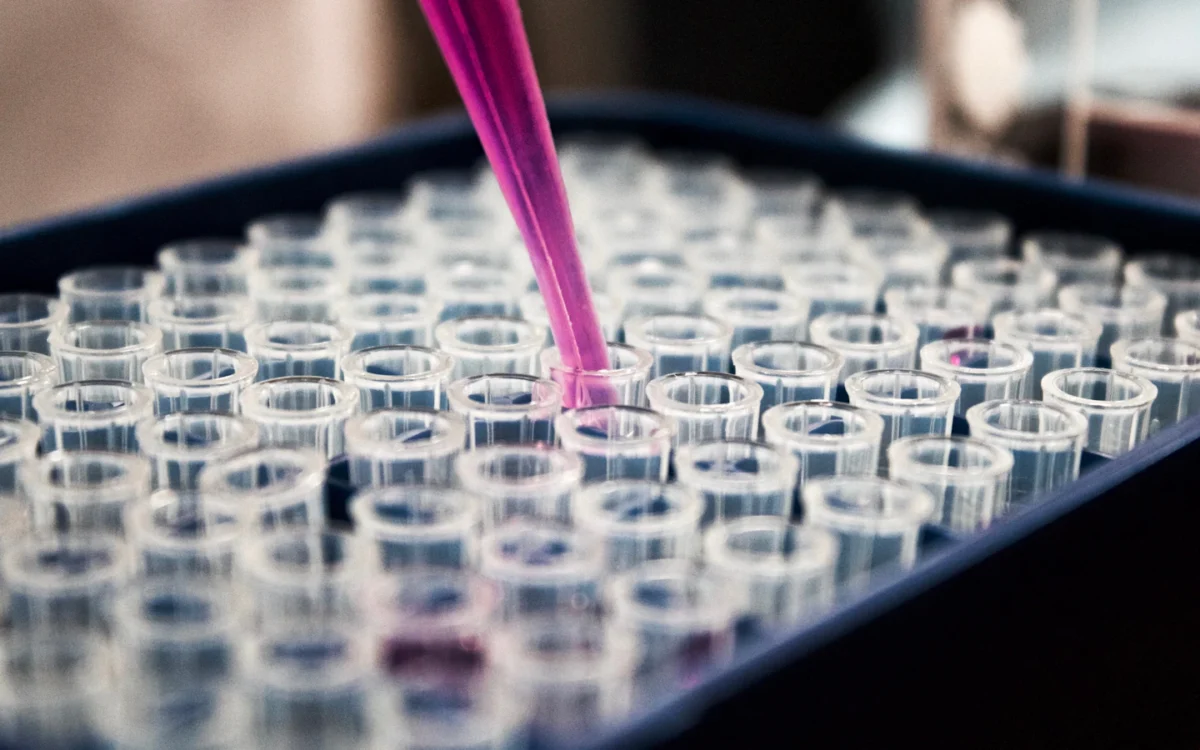
The work comes from researchers at the universities of Birmingham, Edinburgh and Oxford. They combined a rapid screening method with machine learning to test 30 different molecular cage catalysts in a single study. The approach could speed up the search for catalysts used to make medicines, fuels, fertilisers and plastics.
Catalysts are essential to modern manufacturing. They speed up chemical reactions without being used up themselves, and they enable about 90 percent of all chemical manufacturing processes worldwide. A better catalyst can mean less energy, less waste and higher yields.
What are molecular cage catalysts?
Molecular cages are tiny, hollow structures that act like miniature reaction chambers. They trap molecules inside them and speed up chemical reactions, much like natural enzymes do in the body. That is why chemists call them artificial enzyme-like catalysts.
The cages in this study are built from palladium and organic linkers. They are small enough that dozens of them can be tested in a single experiment, yet their shapes can vary in subtle ways. Those small differences turned out to matter enormously.
The team tested the cages on the nitro-aldol reaction, an important reaction that forms carbon-carbon bonds. It is a standard test for this kind of catalyst, and it matters because carbon-carbon bonds are central to making many chemicals.
The best cage was more than 10,000 times more active than the least effective one. That range, spanning four orders of magnitude, is what made the study so useful for machine learning. With such a wide spread of results, the computer could learn which features actually drive performance.
How did the team test 30 cages so quickly?
Traditionally, finding a better cage catalyst has meant slow trial and error. Each candidate had to be prepared, isolated, characterised and tested one by one. That process is laborious, and it limits how many designs a team can try.
The Edinburgh team, led by Professor Paul Lusby, developed a rapid screening approach that skips those steps. The cages are assembled and assessed immediately in solution, without isolating each one first. That allowed the team to evaluate 30 distinct palladium-based molecular cage structures in a single study.
Dr Laura Bickerton, a postdoctoral researcher in Lusby’s group who led the experimental work, said the method opens up designs that were previously out of reach. “This method allows us to access and investigate a wide range of molecular cages that would otherwise be difficult to isolate and study, giving us new insights into how we can tune catalyst functionality,” she said.
The speed had another benefit. Because the team could test so many cages, they found nine new active catalysts for the nitro-aldol reaction. It was one of the most comprehensive studies of its kind to date.
Dr Jamie Lewis, a cage expert at the University of Birmingham, put the advance in context. “Traditionally, discovering better cage catalysts has relied heavily on laborious trial-and-error experimentation and computationally expensive modeling. In this work we show how we can speed up this process to rapidly identify new catalytic cages,” he said.
What did machine learning reveal?
Once the experiments were done, the data went to Professor Fernanda Duarte’s group at the University of Oxford. The team used machine learning to work out why some cages performed so much better than others, instead of guessing from a handful of examples.
Dr Tomasz Piskorz, a postdoctoral researcher in the Duarte group who led the computational work, described the approach. “We describe cages using physically motivated features that capture their shape, size, volume and electrostatics. Machine learning can correlate such features with reactivity, leading to a model with remarkable accuracy,” he said.
The model was a random forest trained on molecular descriptors. It predicted the energy barrier of the reaction with a mean absolute error of 0.4 kilocalories per mole and an R-squared value of 0.9. In plain terms, it could predict how well a new cage would work before anyone made it.
The analysis also identified the design rules that matter most. Compact, rigid cages performed best as catalysts. The precise arrangement of metal atoms inside the cage mattered more than the overall size of the cavity. The electrical environment inside the cage helped make the reaction easier. And subtle differences in the angles between parts of the cage structure were among the strongest predictors of activity.
Further calculations using density functional theory, a standard quantum chemistry method, confirmed the findings on a selection of cages. That gave the team confidence that the machine learning model was capturing real chemistry, not just patterns in the data.
Why does this matter for manufacturing?
Better catalysts have practical consequences. More efficient catalysts can reduce energy consumption, improve yields and decrease waste. That supports net-zero and sustainability goals across industries including pharmaceuticals, agrochemicals and advanced materials.
The study, published in the Journal of the American Chemical Society, offers a blueprint for future work. The combined screening and data-driven method can now be applied to other reactions and other cage designs. Instead of testing candidates one by one, chemists can screen widely, learn the rules, and then target the most promising structures.
That shift matters because catalyst discovery has long been a bottleneck. A new medicine or material often depends on a reaction that only works well with the right catalyst. Speeding up that search could shorten the path from laboratory discovery to real products.
The work also shows how artificial intelligence is changing chemistry. Machine learning did not replace the experiments here. It made sense of them, finding patterns across 30 cages that would have been hard to spot by eye. The researchers expect the same strategy to help design catalysts for reactions that have not been tried yet.
The story fits a wider pattern of science turning data into design. Solid-state batteries are another field where new materials could transform technology, while fault-tolerant quantum computing and commercial nuclear fusion show how long-term research can move toward practical use. More coverage is available in more Science and Innovation.
Frequently Asked Questions
What are molecular cage catalysts?
Molecular cage catalysts are tiny, hollow molecular structures that act like miniature reaction chambers. They trap molecules inside them and speed up chemical reactions, mimicking the way natural enzymes work. In this study, the cages were built from palladium and organic linkers, and they were tested on the nitro-aldol reaction.
Why did the cages differ in performance by 10,000 times?
Small structural differences had large effects. Machine learning showed that compact, rigid cages worked best, and that the precise arrangement of metal atoms inside the cage mattered more than the size of the cavity. The electrical environment and the angles between parts of the cage were also strong predictors of how well each catalyst performed.
How did machine learning help design better catalysts?
The team first measured the activity of 30 cages using a rapid screening method. Then a machine learning model, trained on features such as shape, size, volume and electrostatics, learned to predict catalytic activity with high accuracy. That means chemists can now predict how a new cage design will perform before making it in the laboratory.
What could these catalysts be used for?
Catalysts enable about 90 percent of chemical manufacturing worldwide, including the production of medicines, fuels, fertilisers and plastics. More efficient molecular cage catalysts could reduce energy use, improve yields and cut waste, supporting sustainability goals in pharmaceuticals, agrochemicals and advanced materials.
Who carried out the research?
The research was carried out by teams at the universities of Birmingham, Edinburgh and Oxford, and published in the Journal of the American Chemical Society. Professor Paul Lusby of Edinburgh led the team, Dr Laura Bickerton led the experiments, and Professor Fernanda Duarte’s group at Oxford led the machine learning analysis.
Sources
- Phys.org — Why molecular cage catalysts show enormous differences in performance
- University of Oxford — New method combines experiment and computation to find more efficient catalysts
- Journal of the American Chemical Society — Expanding Chemical Space Enables Data-Driven Structure-Activity Relationships in Cage Catalysis