

Comet 161P Hartley-IRAS Reaches Closest Point to the Sun
A comet that has spent more than two decades in the cold outer reaches of the Solar System is now at its closest point to the Sun. Comet 161P/Hartley-IRAS reaches perihelion — the nearest point in its orbit to the Sun — around November 27 to 28, and it will not come this close again until 2048.
The comet is faint, but it is within reach of a small telescope. Observers in the Northern Hemisphere can find it in the constellation Sagitta, high in the western sky after dark. Its soft green glow shows up best in long-exposure photos.
The return has been watched closely all year. The comet was recovered in July, passed closest to Earth in early October, and has been brightening slowly ever since. This weekend marks the peak of its 21-year journey.
What Perihelion Means for This Comet
Perihelion is the point in an orbit where an object comes nearest to the Sun. For Comet 161P, that distance is about 1.28 astronomical units — around 191 million kilometres, or a little more than the distance from the Earth to the Sun. One astronomical unit is the average distance between the Earth and the Sun.
The comet follows a long, stretched-out path. It takes about 21.5 years to complete one orbit, swinging out to 14.2 astronomical units — far beyond Saturn — before falling back toward the Sun. Its orbit is also tilted steeply, at nearly 96 degrees, and it travels in the opposite direction to the planets.
The two main orbit records give slightly different dates for this perihelion. JPL data listed by TheSkyLive puts it on November 28, while other records put it on November 27. The gap is small, and it does not change what observers will see: the comet is at its closest to the Sun this weekend.
The comet’s last perihelion was on June 20, 2005. Its next one will not come until May 17, 2048. Anyone who misses this return will wait more than two decades for the next chance.
Where and When to Look
The comet sits in Sagitta, the Arrow, a small constellation near the bright star Altair. Around 7 p.m. local time, it stands about 30 degrees high in the west. That is high enough for a clear view over rooftops and trees.
To find it, start at Zeta Aquilae, a third-magnitude star in the constellation Aquila. The comet lies about 6.3 degrees north-northeast of that star — roughly the width of three fingers held at arm’s length. A star chart or a phone app that maps the sky will help.
The comet shines at about 10th to 11th magnitude, which is far too faint to see with the naked eye. A small telescope with a 4-inch mirror will show it as a soft, round patch of light. Larger telescopes reveal more detail around its centre, or nucleus. Astronomy.com reported that the comet has held a fairly steady brightness in recent weeks.
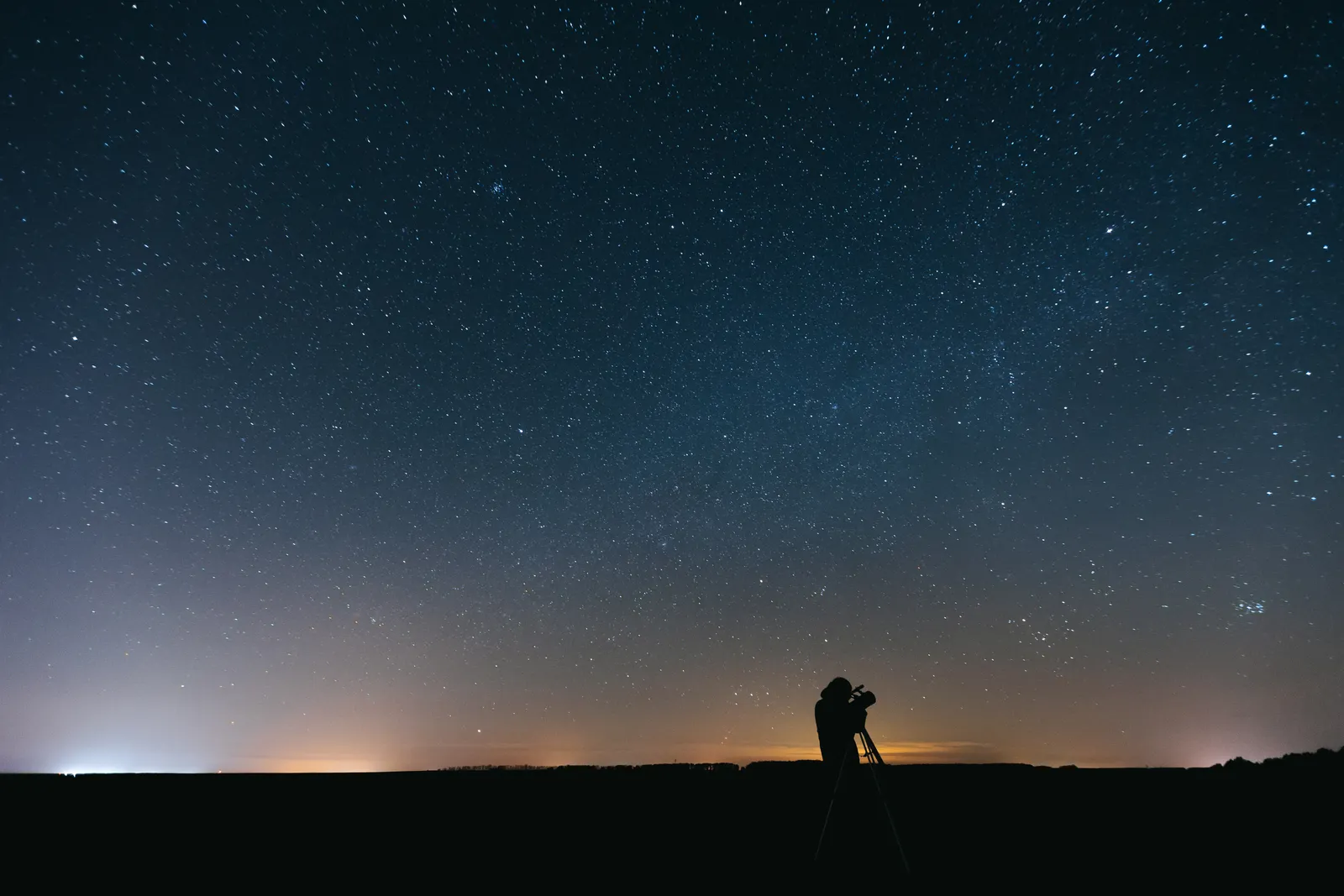
The comet has no long tail to spot. What it does have is a green glow, caused by gases in its coma — the cloud of gas and dust around its nucleus — shining in sunlight. The glow is clearest in photographs taken with long exposures. A well-known pattern of stars called the Coathanger sits about 2.1 degrees northeast of the comet and makes a handy signpost.
A Comet Found Twice
Comet 161P was found in November 1983, and two finders spotted it almost at the same time. Australian astronomer Malcolm Hartley first saw its trail on a photographic plate taken at Siding Spring Observatory on November 4, 1983. Days later, on November 10, the Infrared Astronomical Satellite, known as IRAS, picked up the same object.
Checks soon showed that both sightings were of one comet. The discovery was announced on November 25, 1983. It was the sixth and final comet found by IRAS, and one of 12 comets found by Hartley.
The comet was recovered for this return on July 18, 2026, by Hirohisa Sato at Siding Spring Observatory. It was fainter than expected at first, but it has brightened steadily since. Its closest approach to Earth came on October 2, when it passed about 75 million kilometres away.
Comets like this one are old ice and rock, left over from the birth of the Solar System. Each return gives astronomers a fresh chance to study material that has barely changed in billions of years. That is why even a faint comet draws attention.
Why This Return Matters
Most comets never come near Earth, and most returns are routine. This one matters because it is rare. A 21-year orbit means that each perihelion is a once-in-a-generation event for observers. The last time it came this close, in 2005, it reached only 11th magnitude — much the same as now.
The data gathered this time will feed into orbit records that stretch back to 1983. Each set of observations sharpens the picture of where the comet will go next, including a close pass by Jupiter in 2028.
Space agencies keep close watch on small bodies of all kinds. Earlier this year, the Hera spacecraft arrived at the Didymos asteroid system to study the crater left by an earlier impact test. And in deep space, the Euclid telescope broke a quasar distance record, showing how much modern telescopes can still reveal. Even NASA’s Voyager 1 is now one light-day from Earth, still sending back data after nearly half a century.

For skywatchers, the value is simpler. A faint green smudge in a small telescope is a direct look at a traveller from the edge of the Solar System. It is a quiet event, but it is one that will not repeat soon.
The comet will fade slowly in the weeks ahead as it heads back out toward the dark. For now, it hangs in Sagitta each evening, a small green light at the closest point of a 21-year loop. A telescope, a dark sky and a little patience are all it takes to see it before it goes.
Frequently Asked Questions
When exactly does Comet 161P reach perihelion?
JPL data puts perihelion on November 28, 2026, while other orbit records give November 27. Either way, the comet is at its closest point to the Sun this weekend, November 27 to 28.
Can I see Comet 161P with the naked eye?
No. At about 10th to 11th magnitude, it is far too faint for the naked eye. You need at least a small telescope with a 4-inch mirror, a dark sky, and a star chart to find it in Sagitta.
Why does the comet look green in photos?
Gases in the comet’s coma, the cloud around its nucleus, glow green in sunlight. The colour shows up best in long-exposure photographs. The comet has no long tail.
When will Comet 161P come back?
Its orbit takes about 21.5 years. After this perihelion, the next one comes on May 17, 2048.


