

New Standard Sharpens Ancient Carbon Dioxide Readings From Fossil Leaves
Scientists have set the first sampling standard for reading ancient carbon dioxide levels from fossil leaves. The method, published in Scientific Reports on November 28, cuts errors in carbon dioxide reconstructions by up to 16 percent. It gives researchers a shared way to count the tiny pores on fossil leaves — and to trust each other’s numbers.
Leaves record the air around them. Stomata are microscopic pores on a leaf’s surface. A plant opens them to take in carbon dioxide and releases water vapour through them. When carbon dioxide is plentiful in the air, a plant needs fewer pores. When it is scarce, the plant grows more. Fossil leaves preserve these pores, so counting them can reveal how much carbon dioxide was in the air millions of years ago.
That idea is not new. What is new is a standard way to do the counting. Until now, there was no agreed protocol. Different teams counted different parts of a leaf, in different numbers, and their results were hard to compare. The new standard aims to fix that.
How Leaves Record Ancient Air
Three traits of stomata carry the signal: density, index and size. Density is how many pores sit in a given area. Index is the share of all leaf-surface cells that are pores. Size is how large each pore is. Together, these three numbers shift in step with the carbon dioxide in the air.
The link works because plants tune their leaves to the air they breathe. In a high-carbon-dioxide world, a leaf can take in enough gas through fewer, smaller pores, and it loses less water that way. In a low-carbon-dioxide world, it needs more pores to gather the same amount of gas. That trade-off is written into the leaf’s surface, and it survives in fossils.
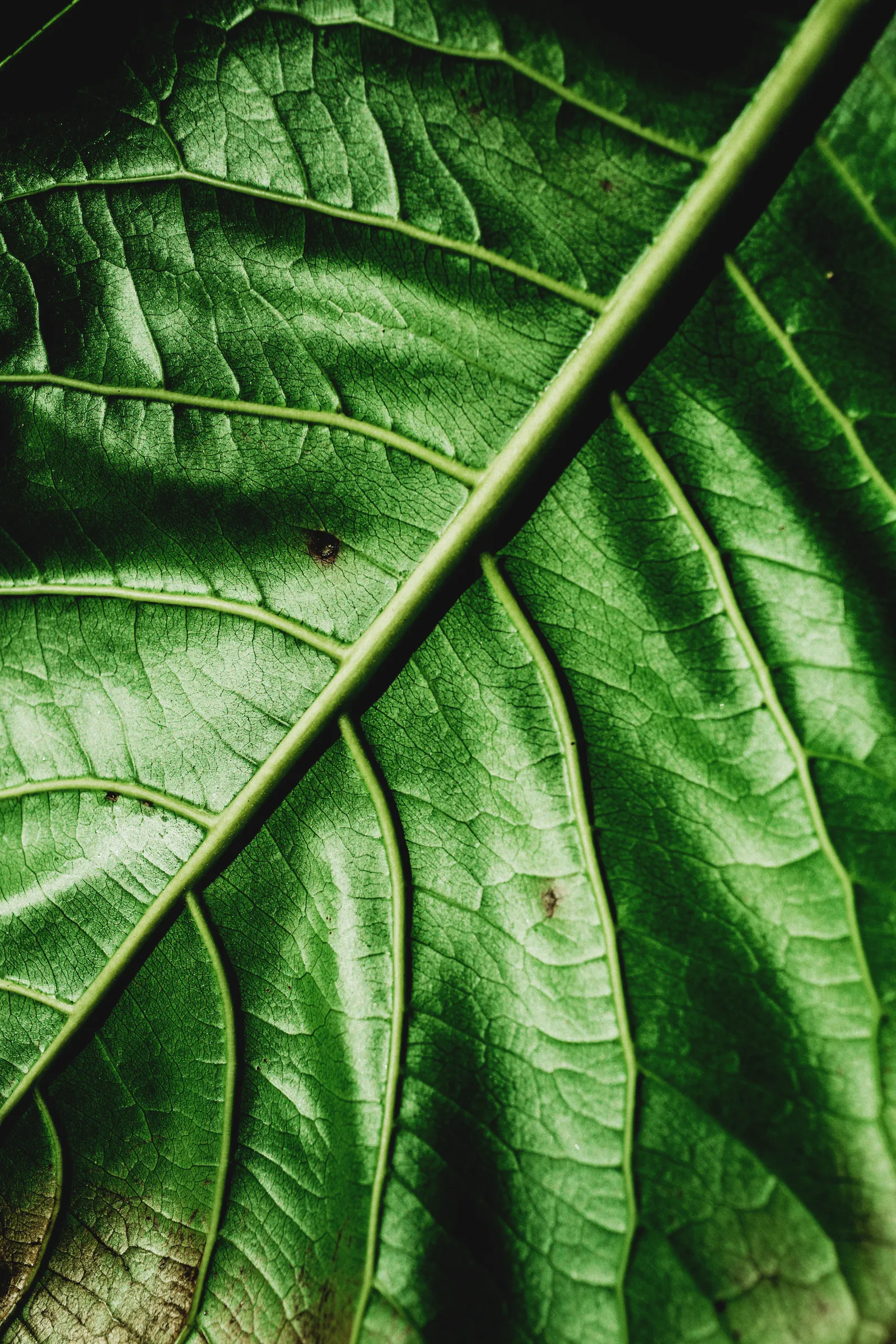
Leaves are sensitive records in other ways too. Spring greening is weakening as air pollution rises, which shows how closely plant life tracks the air. Fossil leaves extend that record far back in time, long before humans kept measurements.
The Problem: No Two Teams Counted the Same Way
The trouble starts with the leaf itself. Pores are not spread evenly across a leaf. One patch can hold far more pores than another patch a few millimetres away. Count one patch and you get one answer; count another and you get a different one. That within-leaf variation was the heart of the problem.
Sample size makes it worse. Count too few patches and the result is noisy. Count too many and the work becomes slow and costly, with little gain. Without a rule for how many samples to take and where to take them, each team made its own choice — and their results could not be lined up side by side.
The result was a quiet drag on the whole field. Studies of ancient carbon dioxide fed into climate models, but the numbers carried hidden error from the way the leaves had been counted. A standard was needed, and no one had set one.
What the New Standard Does
The team, based at the Laboratory of Geology of Lyon in France, tested four sampling strategies on a Cretaceous conifer called Frenelopsis. The Cretaceous is the period that ended about 66 million years ago, when dinosaurs still walked the Earth. Frenelopsis was chosen because its leaves are well preserved and their pores are clear to count.
The winning approach uses a cumulative mean. That means the counter keeps adding samples and watches the running average. When the average stops moving much with each new sample, the count is good enough. The method balances sample size against variability: enough samples to be steady, but not so many that the work becomes wasteful.
The standard also accounts for where on the leaf the samples come from, so the variation across a leaf is built into the count rather than ignored. Put together, the steps form a framework the paper calls robust and efficient — steady enough to trust, and light enough to use.

The team also tested whether AI could do the counting. They tried Cellpose, a cell-counting AI tool, on the same leaves. It did not beat the human eye. Manual counting still performed better than the AI, at least for this task. AI-written maths proofs are already shaping science, but here the old method — a person at a microscope — still wins.
Why It Matters for Climate History
Applying the new standard cuts errors in ancient carbon dioxide reconstructions by up to 16 percent. That is a large gain for a field that works with small differences. A sharper record of past carbon dioxide means a sharper picture of how the Earth responded when its air held more or less of the gas.
That picture matters for climate models. Models are tested against the past: if they can reproduce ancient climates, they are more likely to get the future right. Cleaner data from fossil leaves gives those models a firmer test. The stakes are practical, not just academic — coastal cities in Africa are sinking, according to satellite data, and the future of such places depends in part on how well we understand a warming world.
The paper lists no funding for the work and no competing interests. It was received in February 2026 and accepted on November 20. The journal notes that it is sharing the article early, before the final Version of Record, so that other researchers can use the standard sooner.
Fossil leaves are small, quiet records of a very old sky. With a shared way to read them, those records just got sharper — and the story they tell about Earth’s past air is now easier to trust.
Frequently Asked Questions
What are stomata?
Stomata are microscopic pores on the surface of a leaf. A plant opens them to take in carbon dioxide from the air and releases water vapour through them. Their number, share and size shift with the carbon dioxide in the air.
Why do fossil leaves hold carbon dioxide clues?
Fossil leaves preserve the stomata on their surfaces. Because the number and size of the pores respond to carbon dioxide in the air, counting them in a fossil leaf can reveal how much carbon dioxide was in the air when the plant was alive.
What does the new standard change?
It sets how many samples to take and where on the leaf to take them, using a cumulative-mean approach that keeps adding samples until the average settles. It accounts for variation within a leaf, so results can be compared between studies.
How much more accurate are the readings?
Applying the standardised protocol cuts errors in ancient carbon dioxide reconstructions by up to 16 percent, according to the study.


