Texture Over Clutter: How Bouclé, Travertine, and Linen Elevate Minimalist Spaces
Elevated minimalist home decor starts with a simple trade. You take things out of the room, then you put feeling back in through surfaces.
A bare room with flat white walls and glossy furniture can look clean in a photo. In real life it often feels cold, like a waiting room nobody chose to sit in.
Bouclé, travertine and linen change that without adding clutter. Each one brings a different kind of texture, and together they make a quiet room feel rich.
This guide shows how the three materials work, how to layer them, and where to start if your room feels flat.
Why does texture matter more than colour in a minimalist room?
Colour is the usual way to add interest to a room. In a minimalist room, though, the palette is deliberately small, so colour has little room to work.
Texture fills that gap. A nubby fabric, a pitted stone and a slubbed linen each catch light differently, so the eye keeps finding something new.
Restylit argues that in 2026 texture has replaced colour as the main language of residential design. The claim fits what designers are actually doing this year.
Michael Interieurs puts it plainly: texture is rising because it makes a restrained, low-colour room feel rich rather than bare. That is the whole job here.
What is bouclé, and why is it everywhere in 2026?
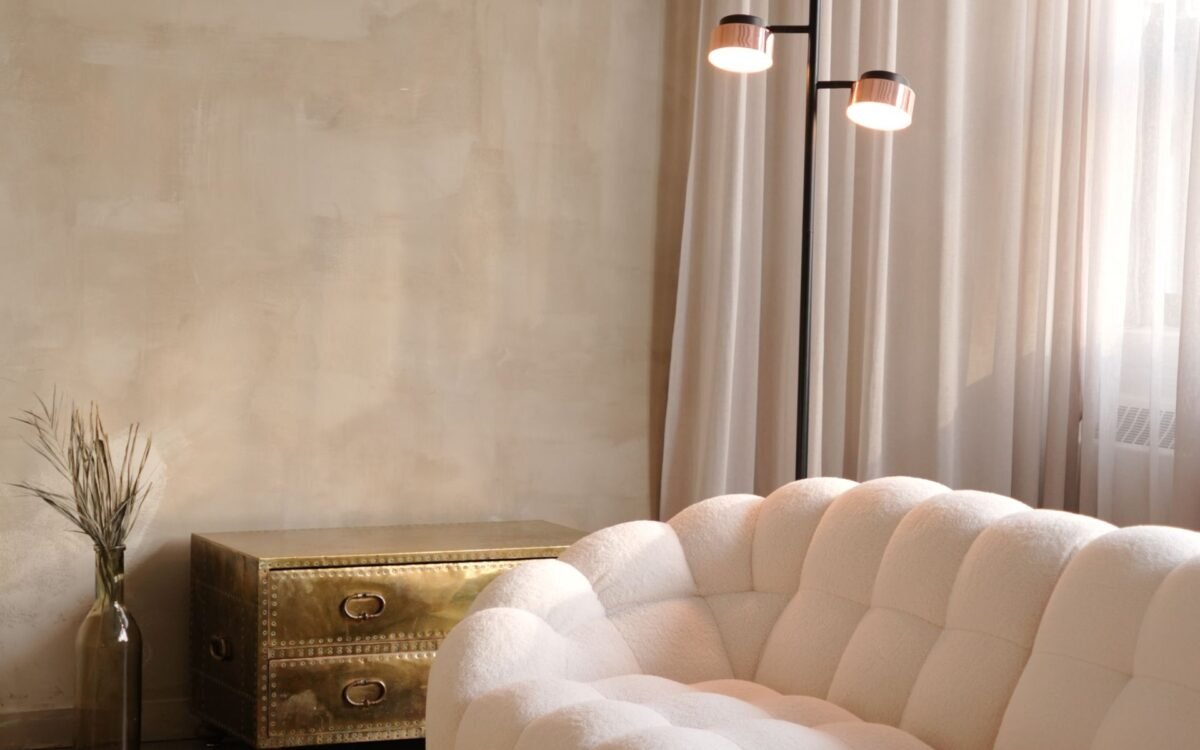
Bouclé is a looped yarn fabric with a nubby, cloud-like surface. Coco Chanel made it famous in the 1950s, and it has returned as the most sought-after sofa fabric of 2026.
It works because it does two jobs at once. It looks soft and inviting, and it feels warm to the touch, which matters in a room with few objects.
Restylit notes that bouclé brings visual and tactile texture at the same time, and that it ages well. That staying power is why designers keep choosing it.
A bouclé sofa or armchair is usually the biggest texture in the room. One piece is often enough, because its surface is so strong that a second one can tip the room into fluff.
How does travertine change a room without adding clutter?
Travertine is a natural stone full of small holes and soft veins. It is cool, heavy and visibly imperfect, which is exactly the point.
A low travertine coffee table acts like a sculpture. It anchors the seating area and gives the room weight, yet it takes up no more space than any other table.
Unlike a patterned rug or a busy print, stone adds interest without adding visual noise. The eye reads its pits and veins as detail, not as decoration.
It also photographs beautifully and lasts for decades. A travertine piece is one of the few decor buys that looks better the longer you live with it.
Why is linen the quiet hero of minimalist decor?
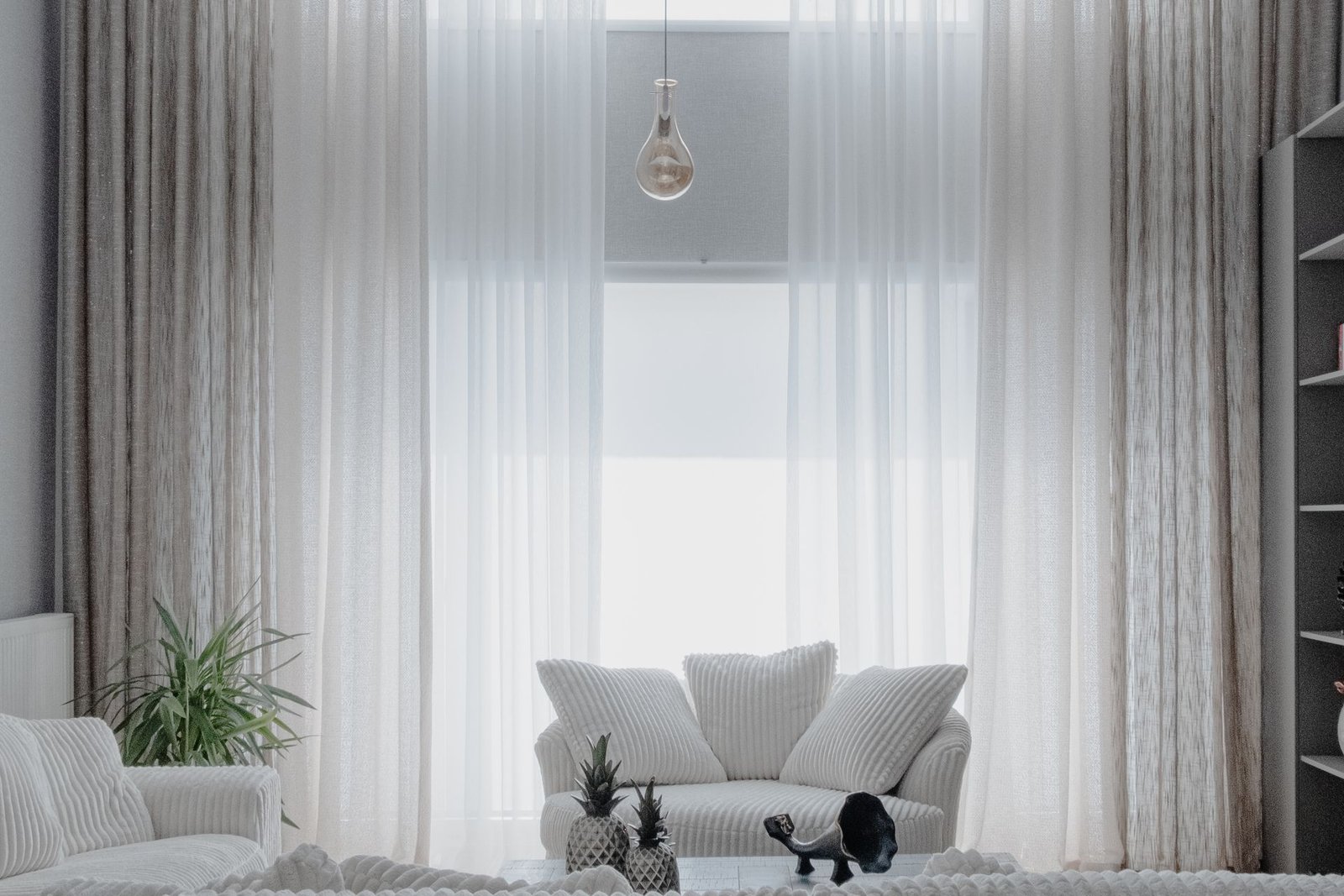
Linen is the softest voice in this trio, and that is its strength. Its slubbed weave and natural wrinkles stop a room from looking too perfect.
Floor-length linen curtains soften a hard window wall. They filter daylight into a warm glow, and they move slightly with the air, which keeps the room feeling alive.
Linen cushions and throws do the same job on a smaller scale. They add a fine, crisp texture next to bouclé, which is coarse and nubby by comparison.
Restylit calls raw linen the textile that best represents the tactile home, because its rough texture and natural colours suit the whole approach. It is hard to disagree.
How do you layer bouclé, travertine and linen together?
Start with one hero per texture family. A bouclé sofa, a travertine table and linen curtains give you three clear layers without any overlap.
Then repeat each material once, in a smaller form. A bouclé cushion echoes the sofa, a stone vase echoes the table, and a linen throw echoes the curtains.
Keep the colours close together. Cream, oatmeal, warm sand and mushroom let the textures do the talking, while a wider palette would fight them for attention.
Half Off Home describes the same idea: when the palette is this quiet, the surfaces have to do the talking. Pick three or four materials and repeat them, not three or four colours.
If you want more room-by-room ideas, our interior design coverage shows the same layering idea at work in bedrooms and dining rooms alike.
What is the five-material palette, and does it really work?
Designers working in warm minimalism often use a five-material rule. The idea is that a monochromatic room needs at least five distinct textures to avoid looking flat.
The five are usually limewash walls, wool bouclé, slub linen, white oak and travertine. Each one brings a different touch, from chalky plaster to porous stone.
| Material | Where it goes | What it adds |
|---|---|---|
| Limewash | Walls and ceiling | Chalky, soft light |
| Bouclé | Sofa or armchair | Nubby warmth |
| Linen | Curtains and cushions | Fine, airy drape |
| White oak | Floor and tables | Silky open grain |
| Travertine | Coffee table or plinth | Cool, heavy stone |
Vishal Decor Ideas sets out the full formula, including the share each material takes in the room. It is a useful starting point, not a law.
You do not need all five to succeed. Two or three contrasting materials are usually enough, and five is the ceiling for most real homes.
How much texture is too much in a small room?
Small rooms punish excess faster than big ones. Every extra texture competes for attention, and the room starts to feel busy instead of calm.
The safe rule is three textures in a small room. A bouclé chair, a linen curtain and one stone object will read as layered without crowding the space.
NufsArt makes the same point: two or three contrasting materials are usually enough to make a space feel designed. More is not automatically better.
Scale matters too. In a small room, choose finer textures — a tight bouclé, a honed travertine, a light linen — and let the room breathe around them.
How do you keep textured materials clean and looking good?
Texture has a practical cost. Nubby fabrics catch dust, linen wrinkles, and porous stone stains if it is left unsealed.
For seating, choose performance bouclé on pieces people sit on every day. Keep the delicate, high-pile versions for low-contact pieces like cushions or a reading chair.
NufsArt warns about this trade-off directly: highly textured pieces can collect dust or snag, so performance fabrics belong on frequently used seating. That advice is worth following.
Travertine needs sealing when it is new, and spills should be wiped up quickly. Linen, meanwhile, looks better slightly wrinkled, so stop ironing it and let the fabric be itself.
Vacuum bouclé with a soft brush attachment once a week. That keeps dust out of the loops before it settles in and dulls the fabric.
What does elevated minimalist decor cost?
The honest answer is that it costs what you choose to spend. Texture is not a price bracket, and a calm room does not need a luxury budget.
Spend the most on the piece you touch every day, usually the sofa. A well-made bouclé sofa will outlast several cheaper ones, so it is the wrong place to save.
Travertine is the big-ticket item in this trio. If a solid stone table is out of reach, a smaller stone tray or vase gives you the same material for far less.
Linen is the cheapest way in. A pair of ready-made linen curtains or a set of linen cushion covers can change a room for a fraction of the cost of new furniture.
Start small if the budget is tight. One linen curtain panel or a single stone tray can show you whether the look suits your home.
Prices vary widely by supplier and region, so treat any figure you see online as a starting point. Check current prices before buying anything.
Where should you start if your room feels flat?
Start with the biggest surface you already own. In most living rooms that is the sofa, and a bouclé throw or cushion is the fastest way to test the look.
Next, change the light. Floor-length linen curtains soften the whole room at once, and they cost less than a single piece of furniture.
Then add one hard, cool object. A travertine tray on the coffee table gives the room a stone anchor without committing you to a heavy purchase.
Our home decor coverage has more ideas in the same spirit, and our Home & Living section covers the wider picture.
If the room still feels cold, look at the walls. A limewash finish or a warm off-white paint does more than any single object, because it changes the light itself.
Home Proficiency describes the same sequence: own fewer, better things, then add warmth back with texture, wood, soft light and a few pieces that mean something. That is the whole method in one sentence.
Frequently Asked Questions
What is elevated minimalist home decor?
It is minimalism with warmth added back in. The room stays uncluttered, but natural materials like bouclé, travertine and linen give it texture, depth and a lived-in feel.
Is bouclé practical for a family living room?
It can be, if you choose the right fabric. Performance bouclé resists stains and snagging, while delicate high-pile bouclé suits low-traffic chairs and cushions better.
Does travertine stain easily?
Unsealed travertine is porous and can stain, especially from wine, coffee and oil. Seal it when it is new, wipe spills quickly, and it will last for decades.
Can I mix bouclé, travertine and linen in one room?
Yes, they are made to work together. Bouclé brings softness, travertine brings weight, and linen brings lightness, so the three balance each other naturally.
How do I keep a textured minimalist room from looking messy?
Repeat each material once and keep the colours close together. Two or three textures are enough, and every object should earn its place in the room.
Sources: Vishal Decor Ideas, Half Off Home, Michael Interieurs, Restylit, NufsArt, AVALW and Home Proficiency.
Figures are as reported by those publications as of 25 November 2026. The featured image is a stock photograph for illustration only.