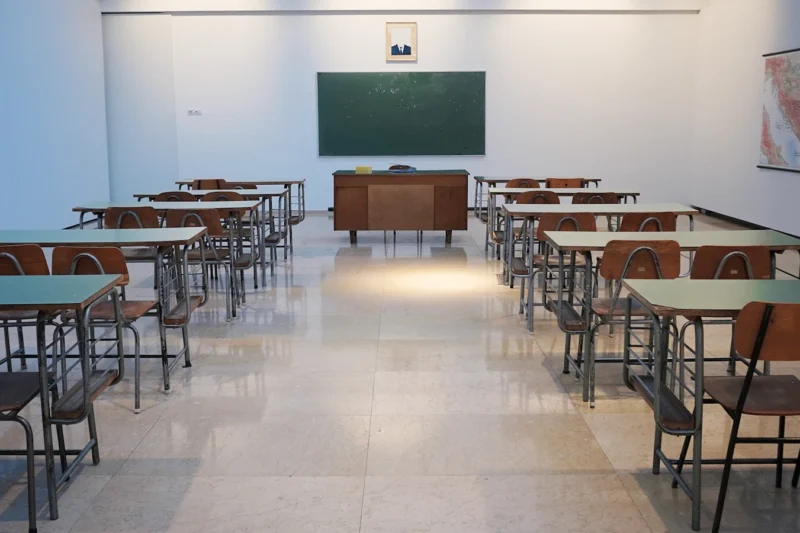
One in Four GCSE Students Now Gets Exam Support as Ofqual Reports Extra Time Gap
Exam support has become a routine part of school life in England. New figures from Ofqual, published on November 26, 2026, show that up to one in four students taking GCSE, AS and A-level exams had an approved access arrangement in the 2025-26 academic year.
The headline finding is the scale. Between 18.3% and 26.7% of students being assessed had at least one approved arrangement. That is between 268,270 and 390,595 young people across England.
Extra time remains by far the most common form of help. Ofqual reported that 25% extra time was approved for between 16.7% and 24.3% of students.
The figures also show a gap that has not closed. Students in independent schools and colleges were far more likely to receive extra time than students in state-funded secondary schools. That difference will renew questions about fairness, evidence and access.
What did Ofqual actually publish?
Ofqual published official statistics on access arrangements for GCSE, AS and A level for the 2025-26 academic year. The release counts arrangements approved by exam boards for students being assessed in England. It also covers modified question papers supplied for the 2026 summer exams.
Access arrangements are changes agreed before an exam. They can include extra time, a reader, a scribe or a modified paper. Their purpose is to let students with a disability, a special educational need, an injury or an illness show what they know.
The numbers come as ranges, not single figures. Exam board data on arrangements is not directly linked to exam entries. Ofqual matches the two sets of records, and some matches are uncertain. The lower figure counts only the students Ofqual is confident about. The upper figure adds the uncertain cases.
Ofqual expects the upper figures for 2025-26 to fall next year. Some approvals were for students who will sit exams in 2027, not 2026. The release is labelled official statistics in development, which means the method may still change.
How common is extra time in exams?
Extra time dominates the picture. Ofqual reported that 25% extra time was approved for 244,915 to 356,125 young people in 2025-26. The range in 2024-25 was 17.1% to 22.8%, so the latest figures are broadly similar to the year before.
The long rise in support has levelled off. The lower estimate for students with any arrangement climbed every year from 13.7% in 2021-22 to 18.5% in 2024-25. In 2025-26 it stayed broadly flat at 18.3%.
Readers were the second most common support. A computer reader or a human reader was approved for 4.9% to 7.3% of students, or 71,120 to 106,925 young people. A scribe or speech recognition software came third, at 1.6% to 2.6% of students.
Why do independent schools report more extra time?
The gap between school types is the most sensitive finding. Between 23.3% and 31.7% of students in independent schools and colleges had 25% extra time. In state-funded secondary schools, the figure was 14.9% to 20.7%.
Ofqual describes that gap as broadly similar to 2024-25. The figures then were 22.9% to 28.6% for independent settings and 15.0% to 19.0% for state-funded secondary schools. In other words, the difference is persistent, not new.
There are several possible explanations, and the data alone cannot settle them. Independent schools may identify needs earlier, or have more staff time to gather evidence and apply. State schools may face the same needs but lack the capacity to document them. Differences in the student intake may also play a part.
Rates also vary sharply by setting. Extra time was the most common arrangement everywhere, but the share ranged from 8.1% to 17.5% of students in other centres, such as private exam centres and hospital schools, up to 66.3% to 100% in non-maintained special schools. That spread is expected, given the very different needs of the students each setting serves.
What about modified exam papers?
Exam boards fulfilled 64,480 requests for modified papers in 2025-26. That was down 4.7% from 67,660 the year before. The boards produced 3,685 different modified papers, against 17.1 million standard papers used.
Enlarged print was the most requested format. There were 25,595 requests for 18-point bold papers, 19,060 for non-interactive electronic question papers and 12,580 for 24-point bold papers.
What should families and schools take from the figures?
The first lesson is practical. Arrangements are agreed before exams, not on the day. Extra time and scribes need an application to the exam board, with evidence, through the Joint Council for Qualifications online system. Families should talk to the school’s special educational needs coordinator early, in Year 10 or Year 12, rather than in the spring of the exam year.
Once approved for a long-term condition, an arrangement can last up to 26 months. Arrangements for temporary conditions cover one exam series only. Any student with a disability under the Equality Act 2010 is legally entitled to reasonable adjustments, which are a form of access arrangement.
The second lesson is about evidence. Ofqual withdrew its older access arrangements statistics in July 2025 after finding they had overstated numbers. Older headlines, including a much-quoted figure for independent school candidates, came from that withdrawn data and should not be used. The new figures use a better matching method, and Ofqual has revised last year’s numbers slightly as a result.
For schools, the figures underline how much work sits behind exam season. Arrangements need rooms, staff and devices, so they should be mapped against the timetable early. As schools tighten phone-free policies, they also need a clear route for students who need a phone for a medical reason, in exams and in lessons.
The wider question is whether the system is fair. Support that helps a student show what they know is the point of the rules. But when one type of school secures extra time far more often than another, regulators and policymakers will be asked whether the barrier is need, evidence or resources. The way universities are redesigning admissions and assessments shows the same fairness debate is playing out beyond school exams. For now, Ofqual’s message is that the overall picture is similar to last year, and the gap has not closed.
Readers who want the broader education picture can browse the latest Education News coverage. Students preparing for tests can read about active recall and spaced repetition as study methods, and about micro-credentials and industry certificates.
Frequently Asked Questions
What are GCSE access arrangements?
Access arrangements are changes agreed before an exam, such as 25% extra time, a reader, a scribe or a modified paper. They help students with a disability, a special educational need, an injury or an illness show what they know. Schools apply to the exam board with evidence, and the arrangement must be approved in advance.
How many students had extra time in 2025-26?
Ofqual reported that 25% extra time was approved for between 16.7% and 24.3% of students being assessed in England, or 244,915 to 356,125 young people. Overall, between 18.3% and 26.7% of students had at least one approved access arrangement of any kind.
Why are the figures given as ranges?
Exam board data on arrangements is not directly linked to exam entries, so Ofqual has to match the records. The lower figure counts only students it is confident about, and the upper figure adds uncertain cases. Some approvals were also for students sitting exams in 2027, so Ofqual expects the upper figures to fall next year.
Why do independent schools report more extra time than state schools?
Between 23.3% and 31.7% of students in independent schools and colleges had 25% extra time, against 14.9% to 20.7% in state-funded secondary schools. Ofqual calls the gap broadly similar to last year. The data does not prove a single cause, and differences in identification, evidence gathering, staffing and student intake may all contribute.
Can older extra time figures still be quoted?
No. Ofqual withdrew its older access arrangements statistics in July 2025 after finding they had overstated numbers. Headlines based on that withdrawn data, including a widely quoted figure for independent school candidates, should not be used. The new release uses an improved matching method and has revised last year’s figures.