
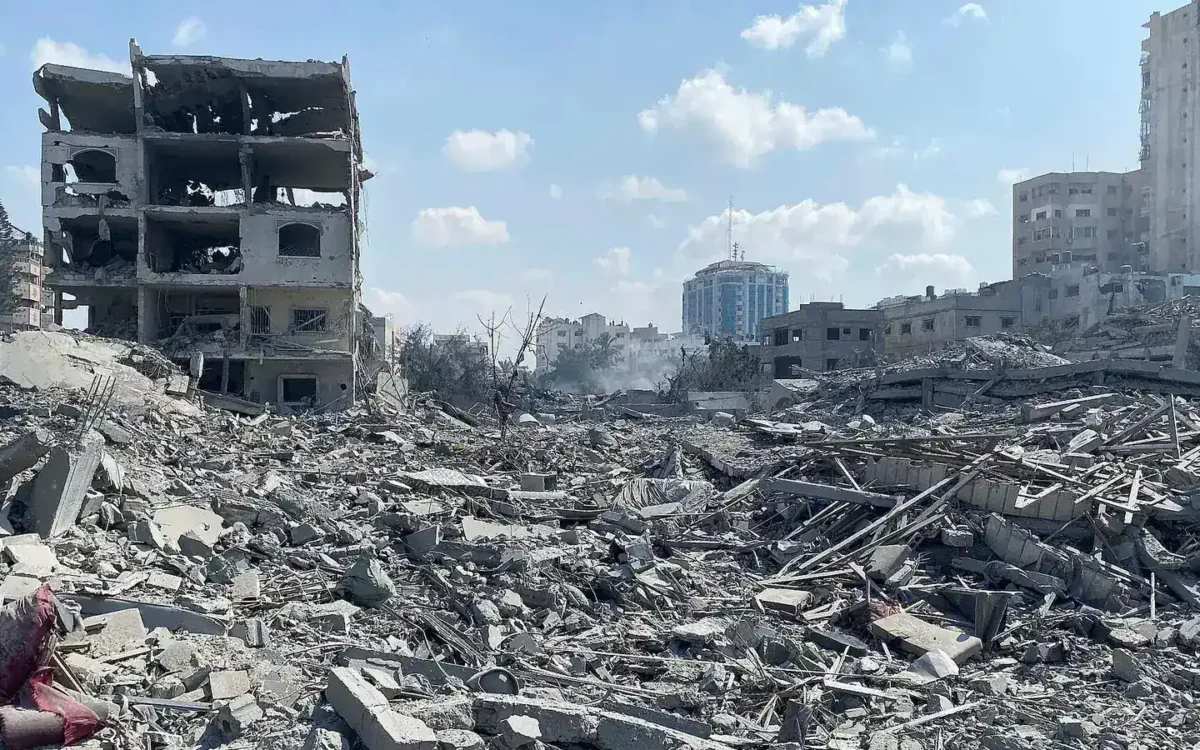
Israel Kills Hamas Official Khaled Abu Nada in Gaza Strikes
Israeli strikes killed at least 10 people in Gaza on Thursday, November 26, 2026, including a senior Hamas official, in a third consecutive night of attacks despite a ceasefire that is now a year old. The killings have pushed the fragile truce closer to collapse.
Medics said an Israeli airstrike hit an apartment in Deir al-Balah, in the central Gaza Strip, killing Khaled Abu Nada and his wife. Abu Nada was a member of Hamas’ political office and the Hamas-appointed deputy minister of education in Gaza.
He was the third senior Hamas official Israel has killed since Tuesday. Two senior security officials were killed in the two previous days, and Israel’s defence minister warned on Thursday that the campaign will continue unless Hamas disarms.
The Israeli military said Abu Nada oversaw Hamas’ economic portfolio. It said he managed the group’s banking and investment network and directed funds toward militant activities and force buildup.
What happened in Gaza overnight?
The strike on Deir al-Balah was the most prominent attack of the night, but it was not the only one. Reuters reported that three other airstrikes killed seven people in the Tuffah neighbourhood, the Beach refugee camp and Sheikh Radwan in Gaza City.
Later on Thursday, medics said Israeli gunfire killed a 62-year-old man in the eastern Bureij refugee camp. The Israeli military said it was not aware of such an incident.
The Israeli military did not immediately comment on the seven deaths in Gaza City. The pattern matches recent weeks: strikes described as targeted killings that also kill civilians living nearby.
Israel has continued to carry out attacks it says target Hamas, but the attacks have also killed many civilians. The broader ceasefire plan, backed by United States President Donald Trump, has not halted the violence or secured Hamas’ disarmament.
Who was Khaled Abu Nada?
Abu Nada held two roles that made him a target. He was the deputy education minister in Gaza’s Hamas-run government, and he was also a member of Hamas’ political office.
Hamas confirmed his death and his place on its political office. It had no immediate comment on Israel’s other claims about him.
Israel’s military said his death may weaken the group’s ability to sustain its finances and support its military capabilities. It described him as the man who ran Hamas’ economic network, moving money through banks and investments.
Hamas rejected that framing. It said Israel’s targeting of academics and civilian figures was a “heinous crime” and argued that Abu Nada was a civilian official, not a military commander. The two sides have argued for months over who counts as a legitimate target under the ceasefire, and the dispute is now at the heart of the crisis.
What did Israel’s leaders say after the strike?
Israeli Prime Minister Benjamin Netanyahu said the attack was one of a series of targeted killings carried out recently against Hamas members and senior officials. He said Israel has killed about 80 Hamas militants in the past month.
“No terrorist is immune, and no one in the Hamas leadership will manage to evade us,” Netanyahu said.
Defence Minister Israel Katz went further on Thursday. In a post on social media, he warned that Hamas must disarm voluntarily or the Israeli military will disarm it by force, in an operation he called Gideon’s Chariots II.
Katz said the operation would include another evacuation of one million Gaza residents to the south. He said 70 percent of Gaza’s territory had been destroyed and was under Israeli military control, and that Hamas’ control over the rest was an illusion.
The warning raises the prospect of a renewed large-scale ground operation and another mass movement of Gaza’s population, much of which has already been displaced multiple times since the war began in October 2023.
How did Hamas respond?
Hamas chief Khalil al-Hayya said on Thursday that the group was not prepared to withstand continued Israeli attacks. His statement was a rare sign that Hamas may retaliate, after months in which it has largely held its fire.
“The equation of killing and blockade cannot be accepted under the ceasefire agreement,” Hayya said. He said the group would discuss with other Palestinian factions how to respond to “Israeli violations and the policy of daily killing,” without giving details.
Hayya narrowly escaped assassination himself in a 2025 Israeli airstrike in Qatar that killed his son and aides. Katz also threatened on Thursday that al-Hayya’s turn would come.
Hamas said the continued policy of assassination violates the Gaza ceasefire agreement and international law. It holds Trump’s Board of Peace politically and morally responsible for failing to stop the attacks and for providing cover that encouraged further killings.
Hamas announced in July 2026 that it had agreed to hand over its weapons to a Palestinian committee of technocrats under Trump’s Board of Peace. That disarmament has not happened, and the deadlock is now the central dispute.
How bad is the toll since the ceasefire?
At least 1,600 Palestinians and five Israeli soldiers have been killed since the ceasefire was agreed in October 2025, according to respective Palestinian and Israeli tallies. The numbers show a truce that exists on paper but not on the ground.
Israeli troops now control around two-thirds of Gaza, up from more than half at the time of the ceasefire. Hamas controls a thin piece of territory along Gaza’s coast.
The wider war has killed more than 74,000 Palestinians since 2023, according to Gaza’s health authorities. It has caused a hunger crisis and internally displaced Gaza’s entire population.
The figures underline why each new round of killings is so dangerous. Aid corridors into Gaza are already under scrutiny, and every escalation makes it harder to get food and medicine to people who need them.
Netanyahu is also facing pressure at home, where his long-running corruption trial continues. The Gaza campaign, the threats of a new offensive and the dispute over disarmament all feed into a political situation with no clear exit.
What happens next depends on two questions. Will Hamas answer the killings with attacks of its own, ending the ceasefire in all but name? And will the Board of Peace and the ceasefire guarantors act before Katz’s threatened evacuation of a million people becomes real? The regional war has already spread far beyond Gaza, and each new killing pulls it wider.
The more World News whether the truce survives the week.
Frequently Asked Questions
Who was Khaled Abu Nada?
Khaled Abu Nada was a member of Hamas’ political office and the Hamas-appointed deputy minister of education in Gaza. Israel’s military said he also oversaw Hamas’ economic portfolio, managing its banking and investment network. Hamas confirmed his death but rejected Israel’s claims, calling the targeting of academics and civilian figures a heinous crime.
How many people were killed in Gaza on November 26?
Medics said at least 10 people were killed, including Abu Nada and his wife in Deir al-Balah. Three other strikes killed seven in Gaza City, and Israeli gunfire later killed a 62-year-old man in the Bureij refugee camp.
Why is Israel threatening to displace one million Gazans?
Defence Minister Israel Katz said Hamas must disarm voluntarily under President Trump’s plan or the military will disarm it by force in an operation called Gideon’s Chariots II, including another evacuation of one million Gaza residents southward. Hamas agreed in July 2026 to hand over its weapons to a technocratic committee, but disarmament has not happened.
Is the Gaza ceasefire still in place?
Formally, yes. The ceasefire was agreed in October 2025 and is now a year old. In practice, at least 1,600 Palestinians and five Israeli soldiers have been killed since it was agreed, and Israel has carried out three consecutive nights of airstrikes this week. Hamas says the killings violate the agreement; Israel says it is targeting Hamas leaders.
What could happen next in Gaza?
Hamas chief Khalil al-Hayya said the group will discuss a response with other Palestinian factions, raising the risk of retaliation, while Israel has threatened a new offensive and mass evacuation. Much depends on whether Trump’s Board of Peace and the guarantors intervene.